
Review · SUMO EXPERIENCES IN TOKYO
Tokyo: Sumo Morning Training Visit
Professional sumo training is not a staged cultural show. You sit close to the clay ring as working wrestlers stretch, stamp, shove, and collide with startling force. The best part is the access: a real sumo stable and a rare look at the discipline behind the tournament spectacle.
I like the raw physical detail, from the heavy slaps to the speed and balance that seem impossible on such large bodies. I also like the small-group setting and the chance to take a group photo with the wrestlers afterward. The catch is simple: you may sit on the floor in silence for 60 to 120 minutes, often with little explanation from the host.
Key points to know before booking
- This is working practice, not a performance: Training can be quiet, repetitive, intense, and subject to change based on the wrestlers’ condition.
- The location arrives late: Your actual stable and directions are normally sent by email about two to three days before the visit.
- Plan for floor seating: Ask in advance about a chair if you have knee or mobility problems.
- Tournament months change the schedule: In January, May, and September, practice may last only about 30 minutes.
- Silence matters inside the stable: Phones must be silent, loud talking is forbidden, and flash photography is not allowed.
- Arrive early for the best view: Seating is free, and people at the back may have an obstructed view.
Seeing sumo before the crowds arrive
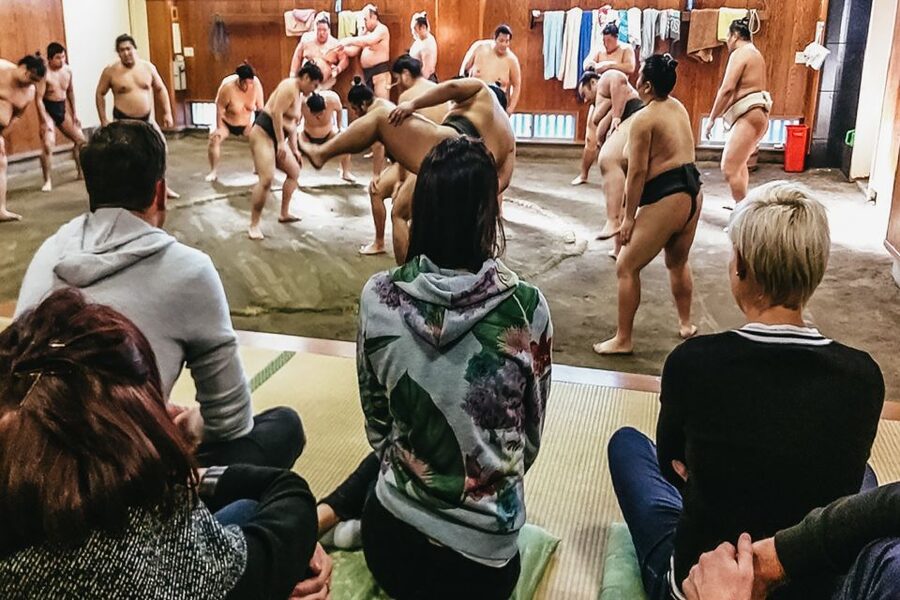
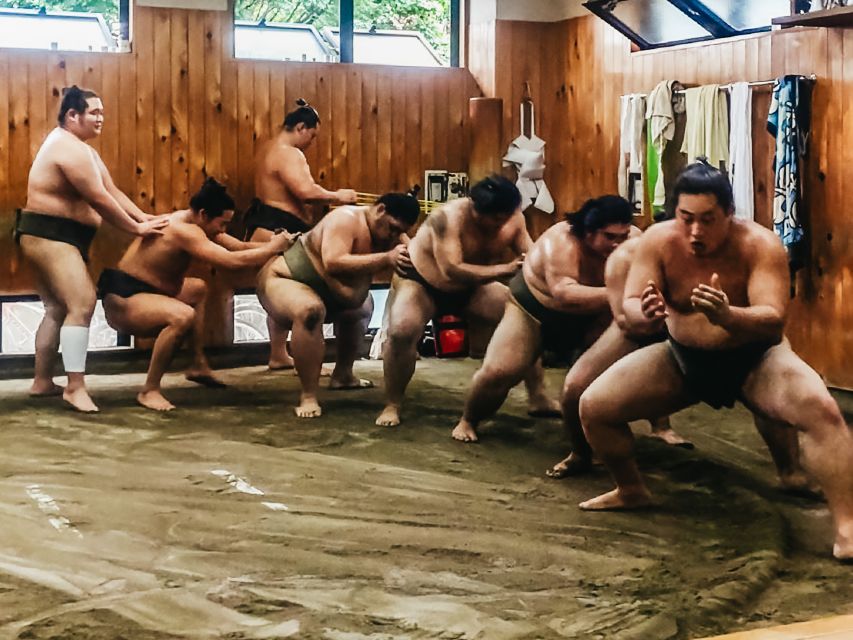
The appeal of this morning visit is its setting. Instead of watching tiny figures from high seats at a tournament, you sit near the training ring and watch wrestlers work through their routine. You may see warm-ups, strength drills, footwork, pushing exercises, and sparring. The repeated movements can look simple at first, but the force behind them is obvious when two wrestlers crash together.
This is one of the clearest ways to understand that sumo is more than a quick shove out of a ring. The wrestlers need balance, timing, leg strength, control, and explosive power. A training bout may last only seconds, yet the preparation around it can be slow and demanding.
The stable is a working place, not a theater. That distinction matters. The wrestlers are not there to explain their sport or perform a set routine for you. Some sessions feel intense from the first minute. Others may seem more relaxed, with drills and warm-ups rather than full bouts. The schedule can change depending on the wrestlers’ condition.
You should also expect a quiet, formal atmosphere. Talking loudly, eating, drinking, and unnecessary movement are not allowed. Keep your phone on silent, do not use flash, and do not record video unless permission is given. The rules may feel strict, but they protect the wrestlers’ concentration and the stable’s daily rhythm.
More Sumo Experiences in Tokyo
- Tokyo: Sumo Show and Dining Experience
★ 4.8 · 2,742 reviews - the SUMO show
★ 5.0 · 1,960 reviews - Tokyo Shinjuku Sumo Show & Experience with Photo
★ 5.0 · 1,750 reviews
The meeting point is not the map pin
The most important practical detail comes before the sumo itself. The location shown on Google Maps may not be the correct meeting place, and the automatic voucher or account page may show only a sample location. Your actual meeting point and start time are normally confirmed by email about two or three days before the visit.
Check both the confirmation email and your voucher. The stable named on the voucher is the one you should use for planning. Specific location requests cannot be accommodated, but all participating stables are in Tokyo.
Do not arrive early and ring the doorbell or enter the building. Check-in begins at the stated meeting time, and entry is allowed only with the guide or host. If you have trouble finding the place, use the phone number in your confirmation email. Quick assistance has been available in the morning when visitors have been delayed or confused by the address.
This late confirmation can be inconvenient if you like to plan every train connection well ahead. Once the email arrives, though, put the address directly into your map app and allow extra time. Missing the beginning is a real loss, since the opening warm-up and early drills may be among the most interesting parts.
What the one-hour visit really includes
The advertised duration is one hour, but that number needs context. A normal practice session is described as about 60 minutes. In practice, sessions have sometimes lasted 90 minutes or two hours, and one reported visit continued for roughly three hours.
That longer format can be a gift if you are fascinated by technique. You have time to see the rhythm of practice change, from stretching and footwork to more forceful pushing and sparring. You may notice that the wrestlers take turns, rest, watch one another, and repeat the same movements many times.
It can also test your patience and your knees. You are expected to sit quietly and remain in place. Some people find the fixed posture uncomfortable, especially without a cushion. Seating is generally on the floor, and you may not be able to move around freely or take a toilet break during the session.
Ask ahead about a chair if you have knee problems or cannot sit on the floor. Do not count on a chair being available at the door. A request needs to be arranged in advance.
The session may end sooner than expected during a Tokyo Grand Sumo Tournament. Tournaments take place in January, May, and September, and practice may be shortened to about 30 minutes during those periods. The price does not change, and no refund is offered for the shorter training. If your main aim is to watch full practice, check the sumo calendar before booking.
A close view of warm-ups, drills, and sparring
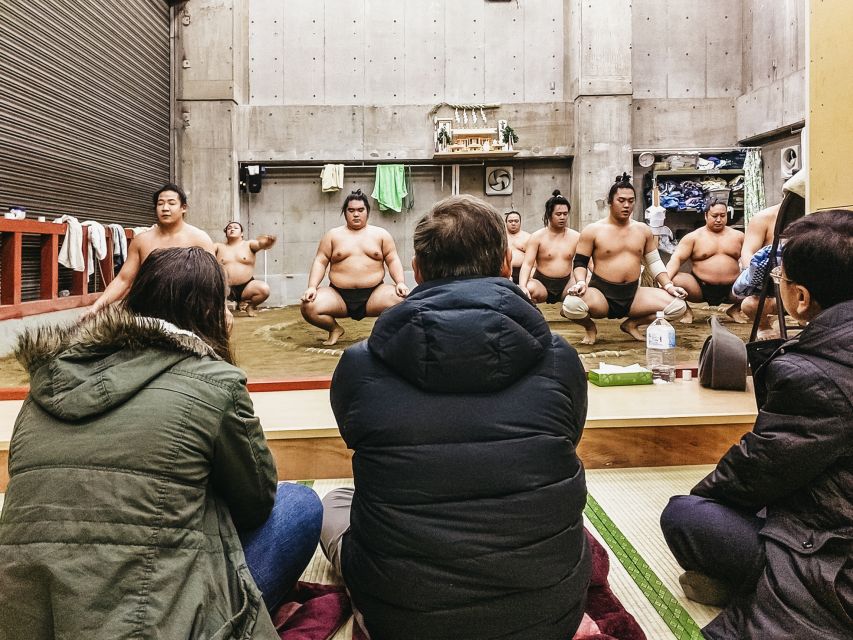
The first part may include familiar sumo movements such as stretching, stamping, and repeated body exercises. Even if you know little about sumo, the physical demands are easy to read. The wrestlers move with more speed and control than their size suggests.
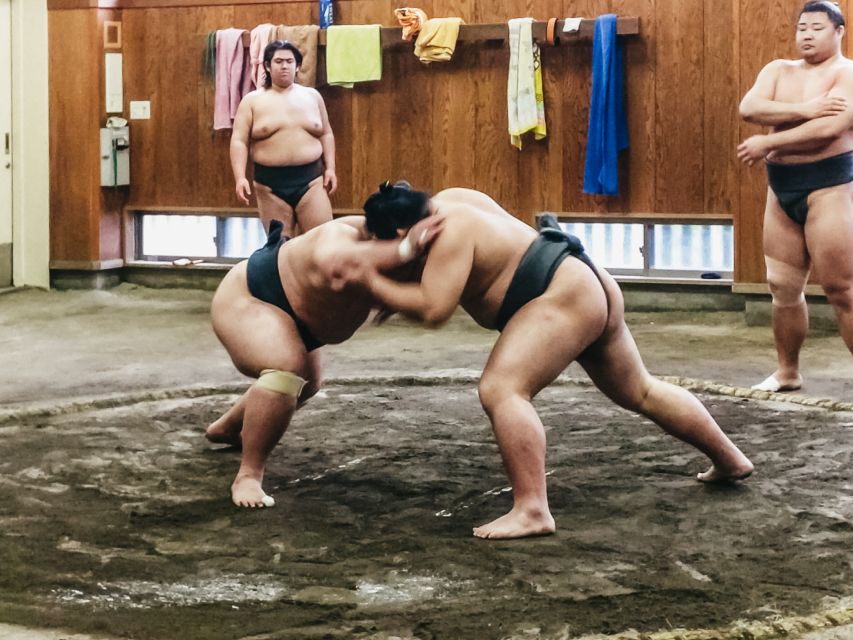
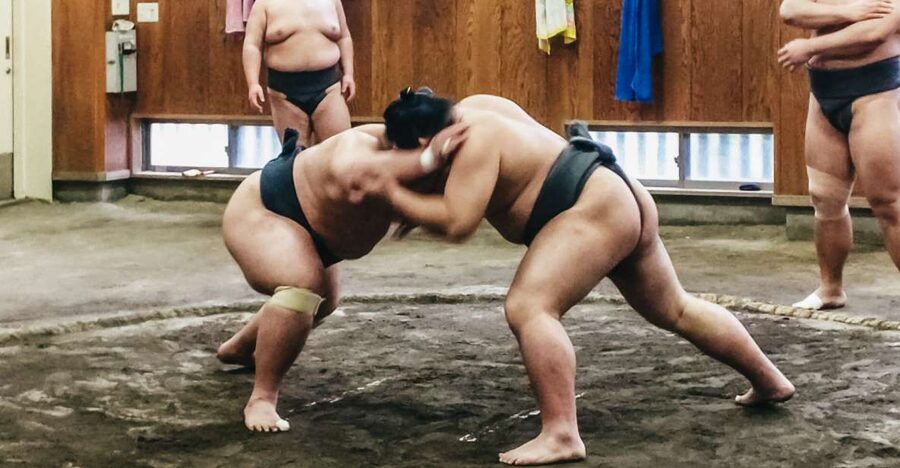
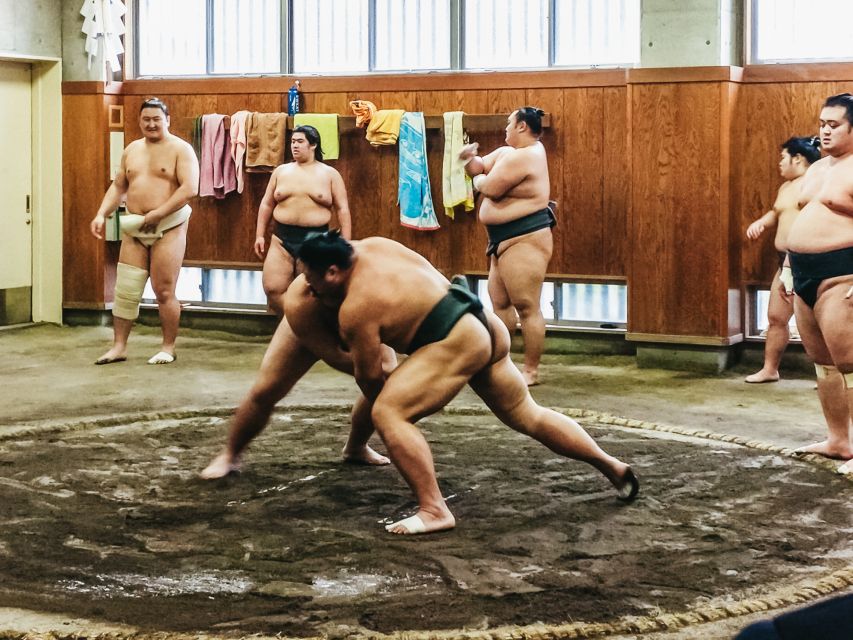
The most gripping moments are usually the contact drills. You hear the impact when bodies meet, see one wrestler drive another backward, and notice how quickly balance can shift. A bout or practice push may be short, but the effort is concentrated.
Do not assume you will see a formal contest. This is training, and some sessions include no full bouts. One practice watched by a visitor involved warm-ups and pushing exercises rather than a series of matches. Another session featured wrestlers sparring with obvious intensity. The difference is part of the deal.
That uncertainty is also what gives the visit its value. You are watching a real practice, not a package assembled to guarantee a particular trick or match. If you need a polished explanation of each movement, this may feel thin. If you want to see the daily work behind the sport, it can be memorable.
Same city, a different fixture:
- Tokyo: Sumo Show and Experience in Shinjuku
★ 4.8 · 1,001 reviews - Tokyo Grand Sumo Tournament Viewing Tour with Tickets
★ 5.0 · 692 reviews - Tokyo Sumo Wrestling Tournament Experience
★ 5.0 · 660 reviews - Tokyo:Luxury Sumo Show Experience & Japanese cuisine & Drink
★ 4.7 · 577 reviews
The guide may be a host, not a teacher
The activity is sold with an English-speaking host or greeter, but the role can be limited. In some cases, the host checks names, explains the basic behavior rules, and helps visitors enter. You may receive little or no spoken background about sumo history, training, rituals, nutrition, or the path to becoming a wrestler.
English ability can also vary. Miscommunication has caused frustration for some people, while others received clear help with meeting instructions. The support is most useful for getting you inside and handling practical problems, not for giving a full lesson during practice.
I recommend reading a short introduction to sumo before you go. Learn the names of a few basic movements and watch for the moments when the wrestlers face one another, stamp, crouch, or push. A little preparation will make the quiet session easier to follow.
A printed explanation in English would improve the experience. So would a two-minute orientation before the wrestlers begin. Since that is not guaranteed, treat this as an observation visit rather than a guided lecture.
Seating, sightlines, and stable manners
Seating is generally free, so arriving early matters. If you are placed near the back, people in front may block part of the ring. The small-group setting helps, but it does not guarantee a front-row view.
You may sit on one or both sides of the training ring. Keep your feet pointed away from the practice area, avoid leaning on walls, and stay as still as possible. These details are not the time to improvise. The stable is a respectful, disciplined environment, and visitors are expected to fit into it.
Leave hats and sunglasses behind. Food, drinks, luggage, and large bags are not allowed inside, and smoking indoors is forbidden. Bring a face mask or protective covering as requested by the operator.
Photography is allowed within the stated limits, but flash is forbidden. Video recording requires prior permission and may not be allowed. The group photo at the end is included, provided you stay until the photo opportunity. If you leave early, you will not receive it.
The photo with the wrestlers
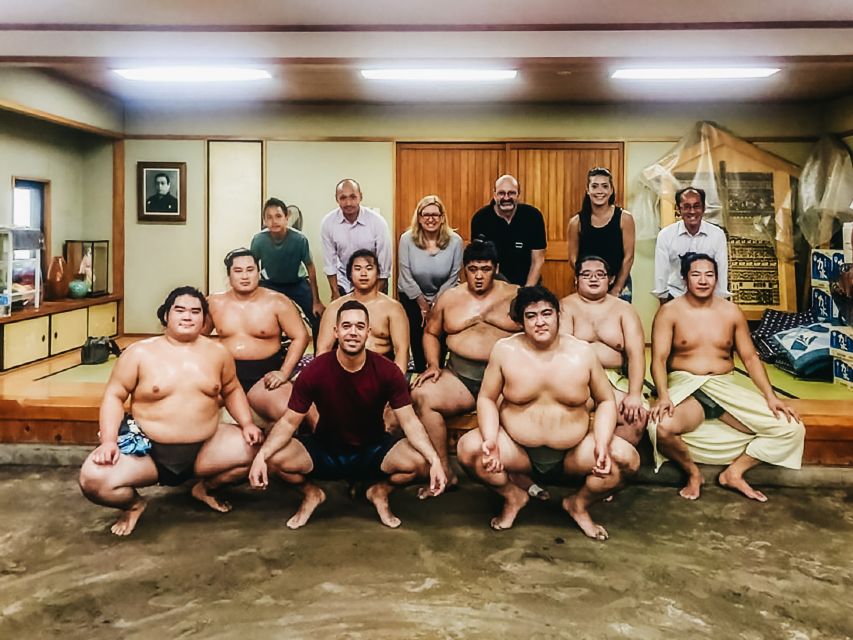
The final group picture is a pleasant finish, especially after sitting quietly through the session. It gives you a direct memory of the stable and makes the visit feel more personal than simply watching from the edge of a room.
The photo is not a private meet and greet. You should not expect a long conversation, individual portraits, or a chance to ask several questions. The format is a group picture with the wrestlers after training.
Still, the moment has value. You have just watched the wrestlers work at close range, and the contrast between their intense practice and the brief photo opportunity can be striking. Families may find this especially rewarding, though young children must be able to remain quiet and still during the training.
Is $77 a fair price?
At $77 per person, this is not the cheapest cultural activity in Tokyo. You are paying for access to a working sumo stable, advance coordination, a host or greeter, and the chance to watch professional wrestlers from close range. There is no meal, lecture, hotel transfer, or tournament ticket included.
The value depends on what you want. If you simply want to see sumo compete, put that money toward a tournament ticket when one is available. A tournament gives you many bouts and the full public spectacle.
If you want proximity and an authentic training environment, this visit offers something a ticket cannot. You see the wrestlers before competition, close enough to notice their drills, pauses, body control, and effort. It is also usually less expensive than a full tournament outing, though the training may be shorter during tournament months.
The optional hotel transfer is separate. It is available only from hotels within Tokyo’s 23 wards, for up to four passengers. The driver speaks Japanese, not English, and hotels without a front desk cannot be used for pickup. You need to provide the hotel name, check-in date, booking name, and a Japanese mobile number after reserving. If you are more than 10 minutes late for pickup, the transfer is treated as a no-show.
For most people, public transport and careful map planning will be simpler and cheaper. The transfer makes more sense if you are traveling as a small group and want help getting out early in the morning.
Who will enjoy this most?
I would choose this for anyone curious about the physical side of Japanese culture, especially if you prefer a working tradition to a staged show. It suits adults who can sit quietly and families with older children who can handle the rules.
It is also a good choice for sports fans. You may leave with a new respect for balance, leg strength, timing, and repetition. The wrestlers’ size is impressive, but their speed and technique are often the bigger surprise.
I would hesitate if you have difficulty sitting on the floor, need regular movement, or expect continuous action. I would also reconsider if your main goal is instruction. The host may offer little background, and there is no promise of a bout, a certain wrestler, or a set sequence of drills.
Book early enough to leave room in your schedule, but do not plan another time-sensitive activity immediately afterward. The session may last longer than the stated hour, and the final photo can add a little time.
Should you book the Tokyo sumo morning visit?
Book it if you want to see professional wrestlers training inside a real stable, and you are comfortable with silence, floor seating, and an uncertain session length. The close view, powerful contact drills, and group photo make it one of Tokyo’s more unusual cultural activities.
Skip it if you want a polished tour with constant commentary, guaranteed matches, or comfortable chairs. For the best experience, read the meeting email carefully, arrive early, check the tournament dates, request a seat in advance if needed, and treat the visit as respectful observation rather than entertainment on demand.
FAQ
Where is the sumo stable located?
The exact stable and meeting place are decided shortly before the visit. You normally receive the location and directions by email about two to three days in advance. The Google Maps location and automatic voucher may not show the actual meeting point.
How long does the sumo training last?
Normal sessions usually last about 60 minutes, but some can run 90 minutes or two hours. During Tokyo Grand Sumo Tournaments in January, May, and September, training may last only about 30 minutes.
Can I choose the sumo stable?
No. Specific stable or location requests cannot be accommodated. All participating stables are within Tokyo.
Is hotel pickup included?
No. A one-way hotel transfer is optional and costs extra. Pickup is limited to hotels within Tokyo’s 23 wards, for up to four passengers. The Japanese-speaking driver does not speak English.
Can I take photographs or videos?
Flash photography is forbidden. Video recording is allowed only with prior permission. A group photo with the wrestlers is included at the end of the visit if you stay until that point.
What should I wear or bring?
Bring a face mask or protective covering. Do not bring food, drinks, luggage, or large bags into the stable. Hats and sunglasses are not allowed, and phones must be kept on silent.
Can I leave before training ends?
Yes, you may leave early, but you will not receive the group photo. Since the training may last longer than an hour, plan for the possibility of staying seated for 90 minutes or more.
Just added for fans in Tokyo
- Tokyo: Grand Sumo Morning Training Tour★ 4.9 · 12 reviews
- Sumo Training Watching Experience in Tokyo★ 4.5 · 8 reviews
- Kickboxing & Body Training with EX-Pro Fighter★ 5.0 · 4 reviews
- Tokyo: Visit Sumo Morning Practice with English Guide★ 4.5 · 22 reviews
- Tokyo Sumo Experience with Live Show & Audience Challenge★ 5.0 · 38 reviews
- Tokyo Shinjuku Sumo Show and Experience with Drinks and Photo★ 4.0 · 21 reviews
- Tokyo Sumo History Tour with Chanko Nabe Lunch★ 5.0 · 3 reviews
- 【SUMO FESTIVAL】Tokyo Ginza: Sumo Show & Photo Experience★ 4.5 · 41 reviews
Sumo Experiences in Tokyo, compared.
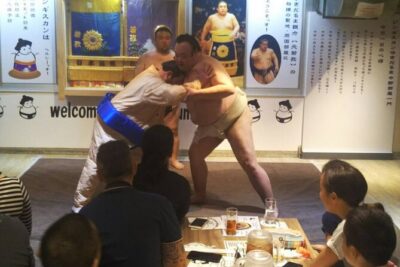
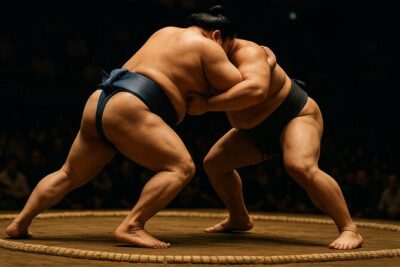
Tokyo Shinjuku Sumo Show & Experience with Photo
Read our review →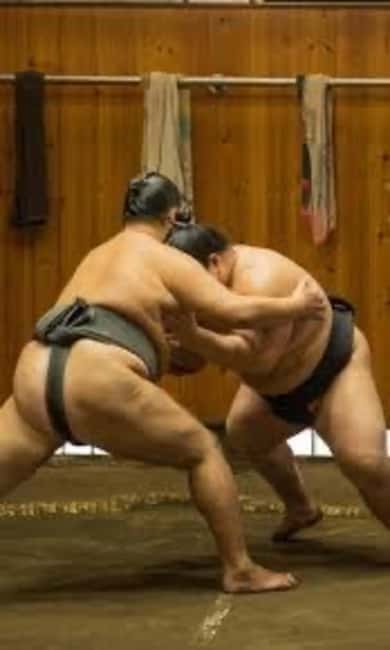
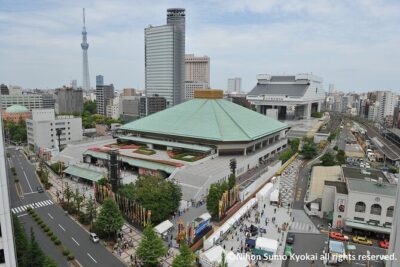
Tokyo Grand Sumo Tournament Viewing Tour with Tickets
Read our review →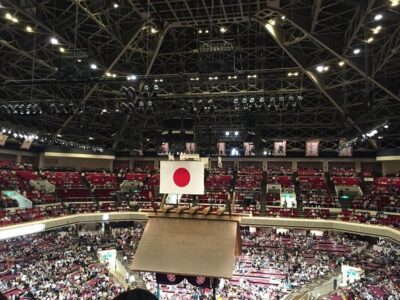

Luxury Sumo Show Experience & Japanese cuisine & Drink
Read our review →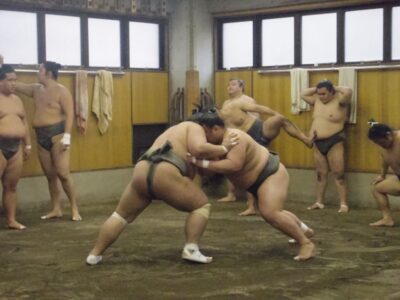
Browse the lists this tour appears in