
Review · SUMO EXPERIENCES IN TOKYO
Tokyo Sumo Practice Watching & Visit Town from Samurai era
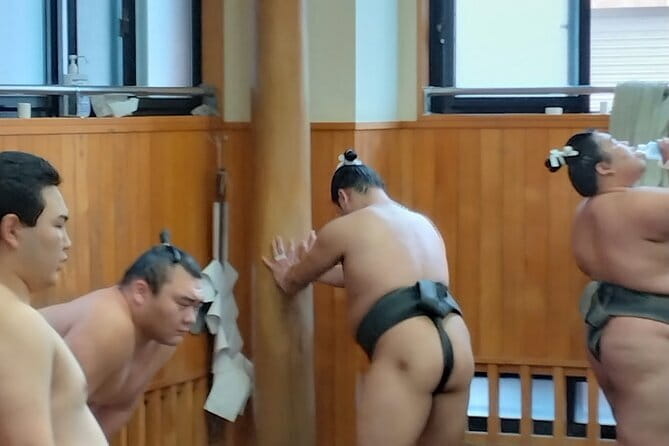
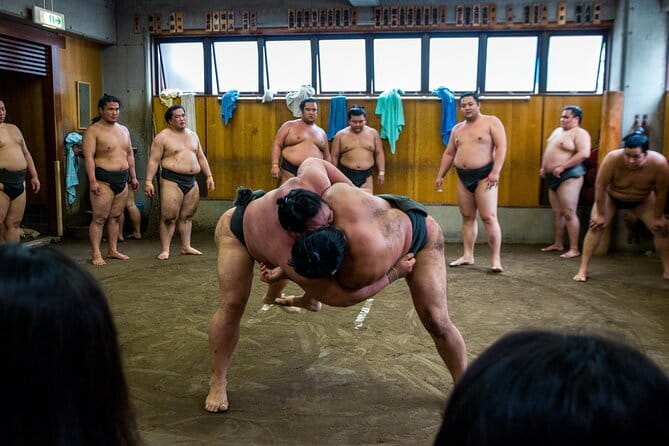
Real sumo practice is the heart of this morning tour. You sit close to the ring inside Shikoroyama-beya Sumo Stable and watch wrestlers warm up and train, rather than seeing only the polished spectacle of a tournament. Guide Ken explains the customs and history as you watch, and there is also a chance for a photoshoot with the wrestlers.
I especially like the smart combination of sumo and old Tokyo. Kiyosumi Teien gives you quiet paths, ponds, and carefully arranged garden scenery, while Fukagawa Edo Museum recreates an entire Edo-period neighborhood with houses, tools, sound, and changing light. The main drawback is that the sumo portion depends on what is happening during practice, and the follow-up discussion may feel brief if you want a detailed technical lesson about the sport.
Key points
- Ringside practice at a real sumo stable: Enter Shikoroyama-beya with special permission and watch wrestlers train from close range.
- Ken provides the cultural link: He guides the group from the station through sumo, garden, and museum, with fluent English noted in the feedback.
- A rare look beyond tournament day: You see warmups and training routines, not just a formal match.
- Three very different Tokyo experiences: Sumo, a traditional strolling garden, and a life-size Edo town reconstruction fill one morning.
- Small-group format: The tour accepts no more than 15 people, making questions and group movement easier.
- A practical 8:30 am start: You finish back at the meeting point after about three and a half hours, leaving much of the day free.
Watching Sumo Before the City Wakes Up
This tour begins at 8:30 am at Kiyosumi-shirakawa Station, at ground level near the B1 exit. That early start matters. Sumo practice is built into the morning, and the tour gives you access to a working stable rather than a performance arranged solely for sightseeing.
From the station, the guide walks with the group to Shikoroyama-beya Sumo Stable. The walk itself is not the main event, but it keeps the morning simple. You do not need to arrange a taxi or figure out a separate transfer, and the guide remains with you from the meeting point through the final stop.
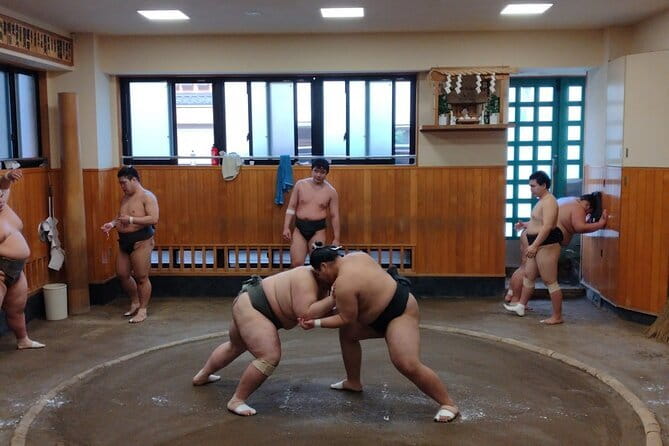
The stable visit lasts about 90 minutes. You watch real wrestlers warm up and work through their training routines from ringside. That closeness is the experience’s biggest strength. A tournament gives you noise, pageantry, and competition. Practice shows the repeated physical work behind the sport.
Sumo also has layers that are easy to miss if you only attend a match. The customs, stable system, training discipline, and respect around the ring can be hard to understand from the seats of a large arena. Ken’s role is to explain what you are seeing while keeping the group aware that this is a working training space, not a staged show.
You should expect to observe carefully and follow the guide’s instructions. The supplied information does not promise a full conversation with the wrestlers or a guaranteed posed photograph, but it does include a chance for a photoshoot. Treat that as a welcome possibility rather than the sole reason to book.
More Sumo Experiences in Tokyo
- Tokyo: Sumo Show and Dining Experience
★ 4.8 · 2,742 reviews - the SUMO show
★ 5.0 · 1,960 reviews - Tokyo Shinjuku Sumo Show & Experience with Photo
★ 5.0 · 1,750 reviews
What the Sumo Visit Can and Cannot Promise
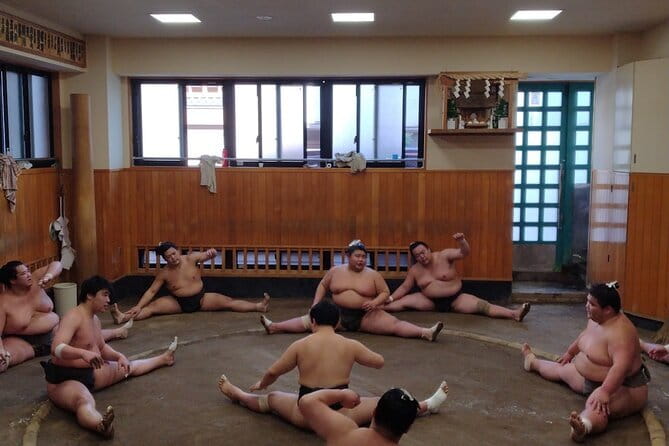
The stable visit has special permission behind it, which gives the morning a sense of access that ordinary sightseeing cannot provide. You are entering a place where wrestlers train, and that makes the setting more meaningful than a museum display about sumo.
The experience also has limits. Practice is not a tournament bout. You may see repeated drills, warmups, and routines instead of dramatic matches. If your goal is to watch a championship contest, you will need a separate tournament ticket. This tour is better for learning how sumo functions as a tradition and daily discipline.
The available feedback gives Ken unusually strong marks for punctuality, patience, organization, and English. That matters here because sumo has many details that can pass unnoticed. One person wanted more information about sumo, Edo-era life, and recent competitions, and felt a handout would have helped. That is a fair caution: Ken’s explanations are a useful guide to the morning, but this is not a full classroom course or a specialist lecture.
I would book this for the chance to see sumo at close range, not because every question about rankings, rules, or recent tournaments will be answered. If you already follow the sport closely, you may want more technical detail. If you are new to sumo, the visit should give you a stronger reason to seek out a tournament later.
Kiyosumi Teien, a Quiet Change of Pace
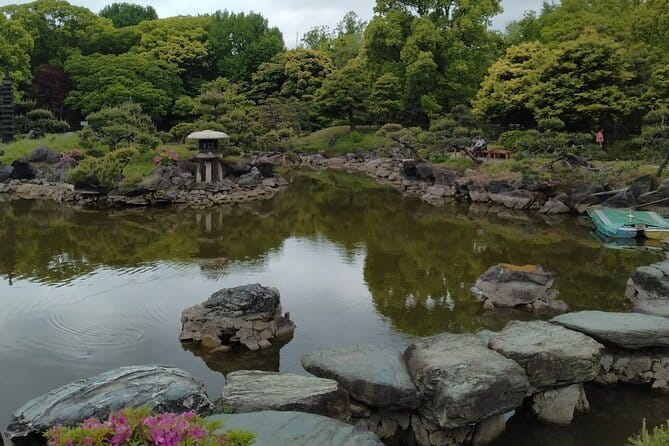
After the stable, the tour moves to Kiyosumi Teien for about 50 minutes. The change in mood is part of the design. Sumo practice is physical and intense. The garden is slow, quiet, and arranged for careful looking.
Kiyosumi Teien is described as a walking forest garden, with ponds, koi, and artistic scenery. The time here lets you see a different side of Tokyo without spending half a day crossing the city. You can expect paths, water, planted areas, and the calm atmosphere that makes traditional Japanese gardens feel separate from the city around them.
The garden stop is valuable because it gives context to the rest of the morning. You are not simply collecting unrelated attractions. Sumo shows a living tradition through bodies and movement. The garden shows Japanese taste through space, balance, and controlled views. The museum then turns to ordinary homes and streets.
Fifty minutes is enough for a guided visit, but it is not a leisurely garden morning. You will not have unlimited time to sit by the pond or explore every corner at your own pace. If gardens are your main interest, you may wish for longer. For a three-and-a-half-hour tour that also includes sumo, the timing is sensible.
The garden also creates a useful break after the stable. You can ask Ken questions, compare what you have just seen with older Japanese customs, and continue on foot without rushing straight into another indoor attraction.
Fukagawa Edo Museum and a Street from Old Tokyo
The final major stop is Fukagawa Edo Museum, with about an hour inside. Its central feature is a life-size reproduction of a Tokyo neighborhood from the end of the Edo period. This is not just a room with labeled objects. You walk through reconstructed streets and houses, with everyday tools placed inside.
Sound and lighting recreate the changing feel of the day. That detail gives the museum a more active quality than a standard display of artifacts. You can see how ordinary spaces were arranged and get a sense of the daily world behind the grand names of Japanese history.
I like this stop because it focuses on daily life. Palaces and famous temples tell only part of the story. A recreated neighborhood, complete with household objects, helps you think about how people lived, worked, and organized their homes.
The museum also gives Ken another setting for explanation. You can connect the Edo-period town to the modern streets outside, and the garden to the broader traditions of Japanese design. The result is a compact introduction to three parts of Tokyo: sumo as a living cultural practice, the garden as an artistic tradition, and Edo town life as a physical reconstruction.
One hour should be enough to understand the museum’s main idea. It may feel short if you like to inspect every object or read every explanation. The tour is designed to give you a guided introduction, not to replace a longer independent museum visit.
Same city, a different fixture:
- Tokyo: Sumo Show and Experience in Shinjuku
★ 4.8 · 1,001 reviews - Tokyo Grand Sumo Tournament Viewing Tour with Tickets
★ 5.0 · 692 reviews - Tokyo Sumo Wrestling Tournament Experience
★ 5.0 · 660 reviews - Tokyo:Luxury Sumo Show Experience & Japanese cuisine & Drink
★ 4.7 · 577 reviews
How Ken Shapes the Morning

The guide makes a real difference here. Ken is the named guide associated with the experience, and the available feedback describes him as fluent in English, punctual, polite, patient, and well organized. He leads from the station, accompanies you to the stable, and continues through the garden and museum.
Several parts of the experience depend on good guiding. At the stable, you need help understanding what is happening without interrupting the practice. At the garden, the value comes partly from noticing details you might otherwise pass. At the museum, the recreated streets need some explanation to connect them to Edo-period Tokyo.
Ken also appears to enjoy conversation, not just delivering a fixed speech. That can be useful if you want to ask about Japanese culture and history as you walk. At the same time, the amount of detail may not satisfy someone hoping for a long formal lecture on sumo rules or modern competitions.
The group size is capped at 15 people. That is not a private tour, but it is small enough to keep the meeting point clear and make questions possible. A smaller group also helps during the walk between stops and reduces the chance that the guide’s explanations disappear into a large crowd.
Price, Time, and What You Receive
The price is $123.79 per person. That is not a bargain-priced neighborhood walk, but the cost includes admission to the sumo stable, Kiyosumi Teien, and Fukagawa Edo Museum, along with the guide and all listed fees and taxes.
The value rests on the stable access. The garden and museum are useful additions, but the sumo practice is the part that makes this tour difficult to reproduce on your own. Special permission is required to enter the stable, and the tour handles the meeting, walking route, and cultural explanation in one package.
The experience lasts about three hours and 30 minutes. It starts at 8:30 am and ends back at the meeting point. You do not receive private transportation, so you must make your own way to and from Kiyosumi-shirakawa Station, but the walking route between the included stops is handled by the guide.
The timing works well for a first morning in this part of Tokyo. You get a substantial cultural experience and still have much of the afternoon available. If your accommodation is far across the city, allow enough time to reach the station before the 8:30 start.
The tour is booked, on average, 17 days ahead. That suggests you should reserve early if your dates are fixed, especially since the group is limited to 15 people and the stable visit requires permission. Confirmation is sent within 48 hours, subject to availability.
Who Should Book This Sumo and Edo Tour
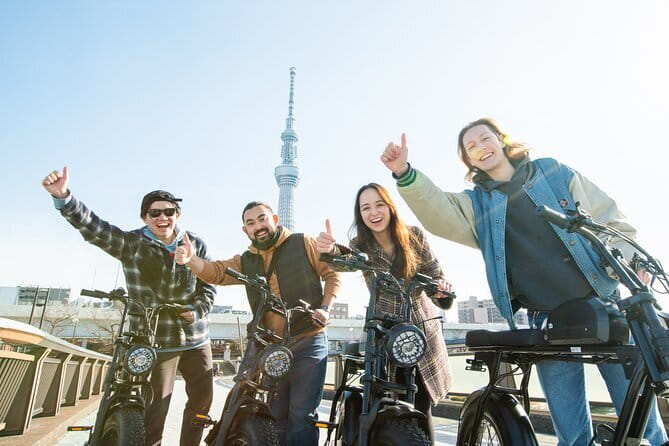
I would choose this experience if you want more than a standard sightseeing route. It suits first-time visitors who want a clear introduction to sumo and a look at a quieter part of Tokyo.
It is also a good fit if you are curious about Japanese culture but do not want to spend an entire day in museums. The three stops keep changing the subject and mood. You watch physical training, walk through a garden, and inspect a reconstructed town.
Families can take part because there are no stated age, height, or weight restrictions for the included activities. The available feedback includes families enjoying the experience, though children should be ready for an early start, quiet observation at the stable, and a fair amount of walking.
I would be more cautious if you want complete freedom over the morning. The group follows a set route and schedule, and the garden visit lasts about 50 minutes. You should also think twice if your only goal is a competitive sumo match. This is practice watching, not tournament attendance.
The 4.9 rating from eight published reviews points to a very strong response so far, but the sample is small. I would place more weight on the repeated praise for Ken, the close view of training, and the blend of attractions than on the number alone.
Practical Details Before You Go
Meet at Kiyosumi-shirakawa Station at the ground level of Exit B1, at 1-chōme-6-13 Shirakawa, Koto City, Tokyo. The activity ends at the same meeting point.
The experience is offered with a mobile ticket. You need to arrange your own transportation to the station because private transportation is not included. The group stays together on foot after meeting.
Wear something suitable for a morning of walking and standing or sitting during observation. The supplied details do not specify a dress code, seating arrangement, or exact stable rules, so follow Ken’s instructions once you arrive.
Free cancellation is available if you cancel at least 24 hours before the local start time. Cancellations or changes made less than 24 hours before the start are not refunded or accepted.
Should You Book It?
Book this tour if the idea of seeing real sumo practice from ringside appeals to you and you want the morning placed in a wider cultural setting. The garden and Edo museum keep the experience from being a single-subject visit, while Ken’s guidance helps connect the three parts.
Skip it if you need a tournament match, a private guide, or a very technical study of sumo. The strongest value comes from access, variety, and a well-managed introduction. At $123.79, that is a fair trade for a visitor who wants an unusual morning and a clearer understanding of what sumo means beyond the arena.
FAQ
Where does the tour start?
The tour starts at Kiyosumi-shirakawa Station in Tokyo, at ground level near Exit B1, at 1-chōme-6-13 Shirakawa, Koto City.
What time does the tour begin?
The start time is 8:30 am.
How long does the experience last?
The tour lasts approximately three hours and 30 minutes.
Does the tour include private transportation?
No. Private transportation is not included. The guide meets you at the station and walks with the group between the tour stops.
What attractions are included?
The experience includes Shikoroyama-beya Sumo Stable, Kiyosumi Teien, and Fukagawa Edo Museum. Admission fees are included.
Can I cancel for a full refund?
Yes, if you cancel at least 24 hours before the local start time. Cancellations or changes made less than 24 hours before the start are not refunded or accepted.
Just added for fans in Tokyo
- Tokyo: Grand Sumo Morning Training Tour★ 4.9 · 12 reviews
- Sumo Training Watching Experience in Tokyo★ 4.5 · 8 reviews
- Kickboxing & Body Training with EX-Pro Fighter★ 5.0 · 4 reviews
- Tokyo: Visit Sumo Morning Practice with English Guide★ 4.5 · 22 reviews
- Tokyo Sumo Experience with Live Show & Audience Challenge★ 5.0 · 38 reviews
- Tokyo Shinjuku Sumo Show and Experience with Drinks and Photo★ 4.0 · 21 reviews
- Tokyo Sumo History Tour with Chanko Nabe Lunch★ 5.0 · 3 reviews
- 【SUMO FESTIVAL】Tokyo Ginza: Sumo Show & Photo Experience★ 4.5 · 41 reviews
Sumo Experiences in Tokyo, compared.
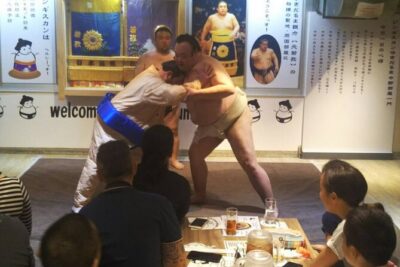
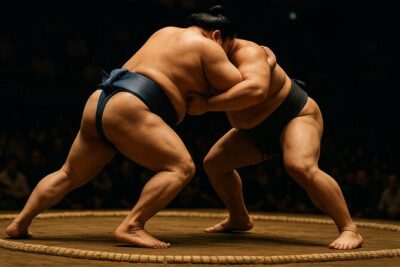
Tokyo Shinjuku Sumo Show & Experience with Photo
Read our review →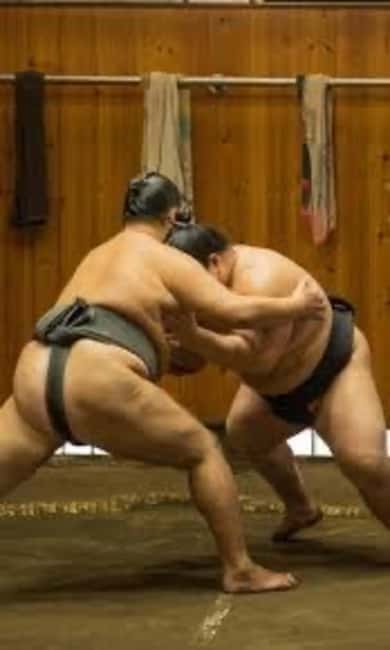
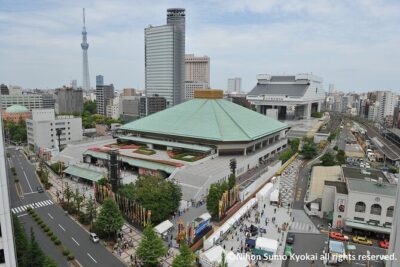
Tokyo Grand Sumo Tournament Viewing Tour with Tickets
Read our review →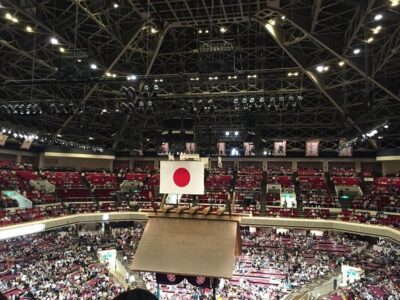

Luxury Sumo Show Experience & Japanese cuisine & Drink
Read our review →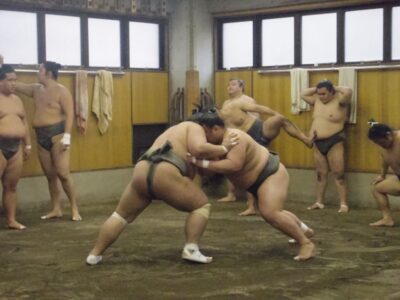
Browse the lists this tour appears in