
Review · SUMO EXPERIENCES IN TOKYO
Tokyo Walking Tour : Sumo, Sushi, Tea, Temples and Tokyo Tower
Tokyo’s character comes into focus through its contrasts on this eight-hour walking tour: silent sumo practice, sizzling food stalls, a calm garden tea house, Buddhist ritual, and the retro shape of Tokyo Tower. You move mostly on foot and by train, not in a private vehicle, so the day feels connected to ordinary city life.
I like the mix of hands-on moments, especially the tea and sutra-copying sessions, and the way the route links food, religion, sport, and architecture. I also like the small group limit of 15, which gives a guide such as Jade room to add personal stories and Japanese history. The main drawback is clear: sumo practice can change or be canceled, and the day requires several hours outdoors on foot.
Key points to know before booking
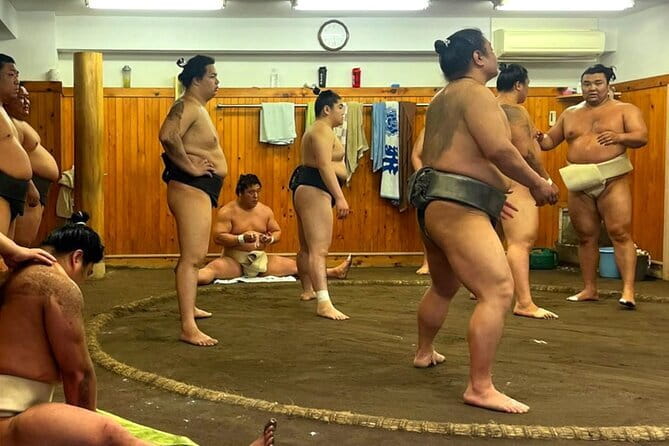
- Sumo training comes first: Watch real practice at Arashio Beya, but the wrestlers cannot be disturbed and training is not guaranteed.
- Tsukiji food is sampled, not included: You receive a guided introduction and time to shop, but pay for food and drinks yourself.
- Tea and sutra copying add quiet breaks: Hama Rikyu Gardens includes a tea house visit, while Zojoji Temple includes a sutra-copying activity.
- Tokyo Tower finishes the day: The ticket provides access to one of Tokyo’s best-known observation decks.
- Public transport and walking shape the tour: The only listed train fare is from Ningyocho Station to Tsukiji Station. You arrange transport before and after.
- The schedule suits active sightseers: The tour begins at 8:15 a.m., lasts about 8 hours 15 minutes, and ends near Akabanebashi Station.
Why this Tokyo route works so well
Many Tokyo tours pile up famous sights without giving you much sense of how the city fits together. This route takes a more useful approach. It begins with an unusual local custom, moves into food and shopping, then slows down in a garden and temple before ending with a broad city view.
That order matters. The morning starts early, when sumo training is possible, and the later stops give you room to pause. You are not simply looking at buildings from a bus window. You watch a sporting tradition, choose food at a market, sit for tea, take part in a Buddhist exercise, and finish above the city.
The route is also a good match for you if you want a broad first look at Tokyo but do not want a standard sightseeing loop. It crosses several parts of the city and uses public transport, so you should expect station transfers, pavements, outdoor walking, and a fair amount of standing.
More Sumo Experiences in Tokyo
- Tokyo: Sumo Show and Dining Experience
★ 4.8 · 2,742 reviews - the SUMO show
★ 5.0 · 1,960 reviews - Tokyo Shinjuku Sumo Show & Experience with Photo
★ 5.0 · 1,750 reviews
Arashio Beya: a rare look at sumo practice
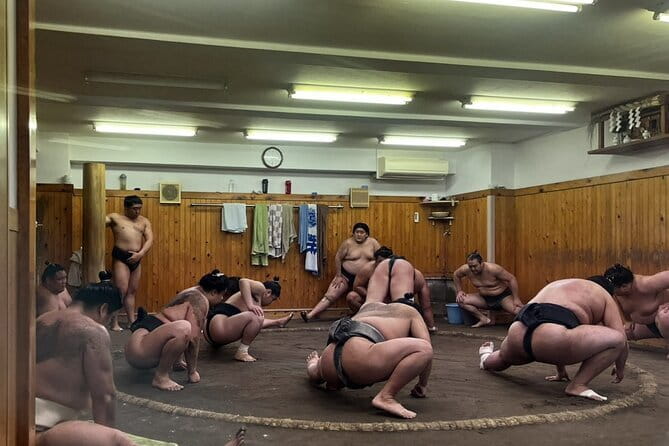
The first stop is Arashio Beya, a traditional sumo training room. The scheduled visit lasts about 1 hour 10 minutes, and admission is included.
This is the most distinctive part of the day. A sumo beya is where wrestlers train, and the appeal is seeing practice rather than a staged demonstration. You may watch the disciplined, repetitive work that takes place before a tournament, but you are there as a quiet observer. The wrestlers cannot be interrupted.
That rule is important. This is not a photo opportunity built around interaction. Your guide will help you understand what you are seeing, but you must respect the training space and the wrestlers’ concentration. If you want a polished performance or a chance to meet the athletes, this stop may feel restrained. If you value a glimpse of an active Japanese tradition, it can be the day’s strongest moment.
There is also a serious scheduling caution. The beya schedule can change, and there are times when the wrestlers will not be training. Training closes during certain weeks when the Grand Sumo Tournaments take place in January, May, and September. The tour information does not promise a substitute experience, so you should book this with the understanding that sumo viewing is possible, not guaranteed.
Tsukiji Outer Market: food with room to choose
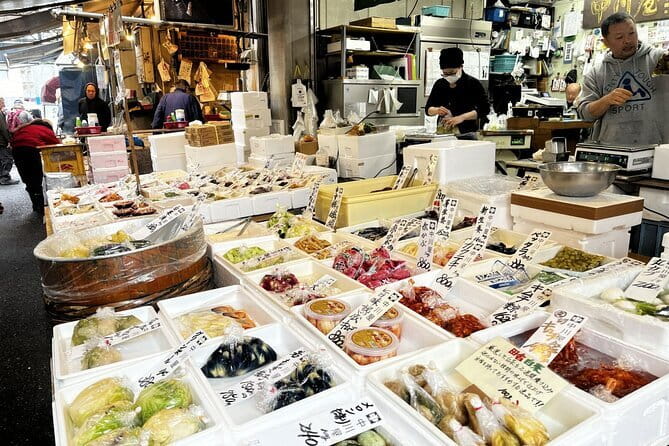
From sumo, the tour continues to Tsukiji Outer Market for about 1 hour 30 minutes. The guide leads you through the market and helps you sample the food on offer. You also receive free time to take photographs, shop, and explore at your own pace.
This stop gives the morning a very different feel. Instead of watching a formal tradition, you choose what interests you from the market stalls. You might find seafood, snacks, and other Japanese foods, but the exact selection and availability can change. The useful part of having a guide is the orientation: you get help making sense of the market before setting off on your own.
Food and drinks are not included in the tour price. Keep some yen or a suitable payment method ready for the items you want to try, since the sampling is not an all-inclusive meal. This arrangement is fair for a market visit because it lets you control both what you eat and how much you spend.
The time limit is long enough for a guided walk and personal browsing, but it is not an excuse to settle in for a full market lunch. If you are especially interested in food photography or shopping, you may wish the tour offered more free time. Still, the combination of guided context and personal choice is more useful than being hurried from stall to stall.
Hama Rikyu Gardens: tea in a city setting
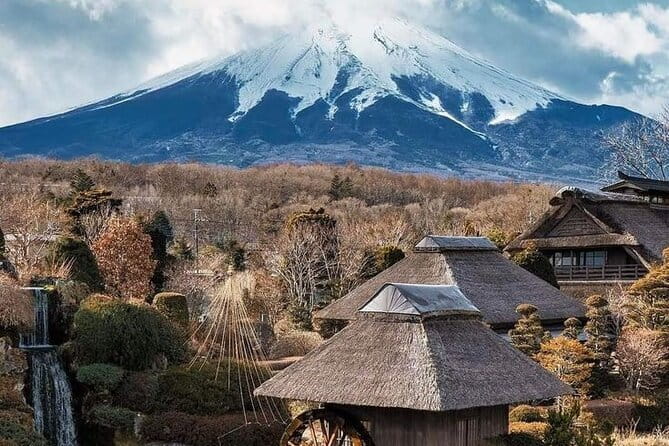
Hama Rikyu Gardens is the day’s quiet change of pace. The visit lasts about 1 hour 20 minutes and includes admission to the garden and a traditional tea and sweet experience in a tea house.
The guide first introduces the garden and its history, then gives you free time before the group meets again for tea. That division works well. You get some structure, but you are not tied to the guide every minute. The garden provides space to slow down after the market and absorb a more formal side of Japanese culture.
The tea experience is included, along with the garden admission. This gives the tour a welcome balance: at Tsukiji, you pay for what you choose; at Hama Rikyu, one cultural activity is already covered. The tea and sweet are likely to be a brief experience rather than a full meal, so do not count on it to replace lunch.
I particularly like this stop for anyone who wants more than photo stops. Tea is not just a drink here. The setting and the deliberate pace create a short pause in a busy day. You do not need to be an expert in tea customs to appreciate it, but you should be willing to follow the guide’s instructions and let the moment unfold without rushing.
Same city, a different fixture:
- Tokyo: Sumo Show and Experience in Shinjuku
★ 4.8 · 1,001 reviews - Tokyo Grand Sumo Tournament Viewing Tour with Tickets
★ 5.0 · 692 reviews - Tokyo Sumo Wrestling Tournament Experience
★ 5.0 · 660 reviews - Tokyo:Luxury Sumo Show Experience & Japanese cuisine & Drink
★ 4.7 · 577 reviews
Zojoji Temple: a peaceful hour with a task
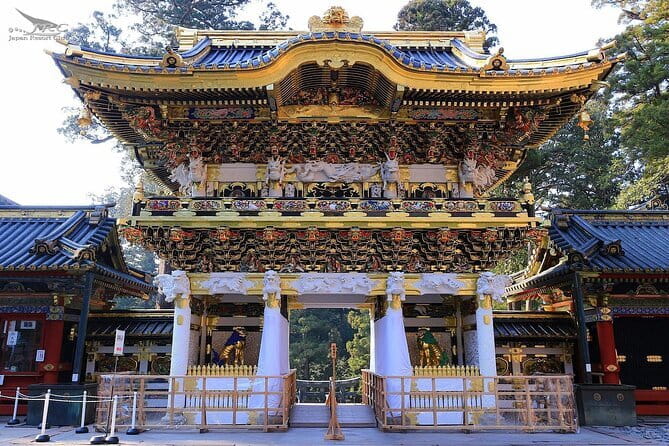
The next stop is Zojoji Temple, a major Buddhist temple complex and park. The visit lasts about one hour and includes a guided introduction to the temple and its history, plus a sutra-copying experience.
Sutra copying gives the temple visit a practical focus. Rather than only walking around and taking photographs, you sit with a Buddhist text and copy it. The activity can offer a calm break after the movement of the morning, regardless of your religious background. You do not need to approach it as a conversion experience. Think of it as a quiet act of concentration within a working temple setting.
The experience fee is included. That matters because hands-on cultural activities often carry extra charges, and here you do not have to decide on the spot whether to pay more. The tour description presents the activity as suitable whether you are spiritual or not, which makes it a reasonable choice for a wide range of interests.
The main limitation is time. One hour must cover the temple, its background, and the copying activity. If you want a long independent visit or extensive photography, the schedule may feel tight. The benefit is that the stop has a clear purpose and does not become an unfocused walk through a large complex.
Tokyo Tower: a strong finish above Minato

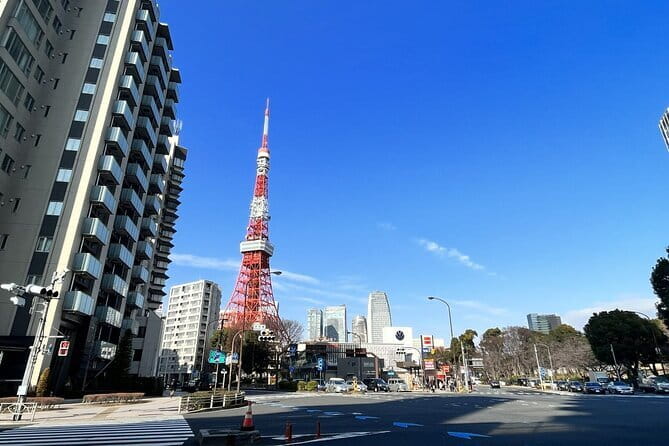
The final stop is Tokyo Tower, where you spend about 1 hour 15 minutes. The ticket is included, and the tour ends near Akabanebashi Station.
Tokyo Tower supplies the visual payoff at the end of a day spent at street level. After watching sumo, eating at Tsukiji, sitting for tea, and visiting Zojoji, you get a higher view of Tokyo and time to enjoy the tower’s retro architecture. The setting also makes sense geographically, since Zojoji and Tokyo Tower are closely associated in the public image of this part of the city.
The tower visit is not just a quick photograph from outside. The included ticket gives you access to the observation deck, where you can take in the city from above. The exact views can depend on weather and visibility, but the tour gives you a fitting final perspective on the dense urban setting you have crossed all day.
Ending near Akabanebashi Station is practical. Your guide can help with questions about getting back to your hotel or continuing to another destination. You will still need to arrange your own onward transport, but finishing beside a station is easier than ending at an isolated attraction.
What the $166.85 price covers

At $166.85 per person, this is not a cheap orientation walk. Its value depends on how much you want the included access and the structure of a full day with a guide.
The price includes:
- The listed train fare from Ningyocho Station to Tsukiji Station
- Admission to Hama Rikyu Gardens
- The Hama Rikyu tea house experience
- The sutra-copying fee at Zojoji Temple
- The Tokyo Tower ticket
- An English-speaking local guide
Food and drinks are extra, as are trains and transport before and after the tour. You should budget for market purchases and your own route to the Hamacho meeting point and from Akabanebashi at the end.
The cost makes more sense if you would otherwise pay separately for Tokyo Tower, Hama Rikyu admission, a tea experience, and a guided market visit. The sumo viewing is the special draw, though its uncertainty means you should not treat it as a guaranteed paid performance.
A small group of no more than 15 also adds value. You are less likely to feel lost than on a large coach excursion, and there is a better chance to ask questions. The tour does not use a private vehicle, so you are paying for guiding and access rather than comfort between attractions.
Walking, timing, and practical preparation
The day begins at 8:15 a.m. at Hamacho Station, near 2-chōme-59-3 Nihonbashihamachō in Chuo City. Arrive ready to start on time, since the first appointment is the sumo training visit and the route follows a set sequence.
The tour lasts about 8 hours 15 minutes. The listed stops account for roughly six hours and 15 minutes, leaving time for movement, public transport, meeting points, and transitions. That is a full day, not a casual stroll.
You should expect:
- Several hours of walking outdoors
- Public transport rather than a private vehicle
- Time on your feet at the market, temple, and tower
- A morning start
- Food and drinks purchased separately
- An end point near Akabanebashi Station
Comfortable footwear matters more than dressing for a photo. A small bag is also easier to manage in stations and market areas. Since the tour includes tea and sutra copying, you should be prepared to shift between active walking and quieter, more formal activities.
Most people can take part, and the route is near public transportation. The available information does not provide a detailed accessibility assessment, so you should ask the provider about your specific mobility needs before booking.
The meeting and ending points are not the same. The tour starts at Hamacho Station and finishes at nearby Akabanebashi Station, so check your hotel’s location before deciding how early to leave and how you will return.
Who will get the most from this day
I would choose this tour if you want a single day that covers several sides of Tokyo without spending all day inside museums. It suits first-time visitors who want help with public transport, food choices, temple etiquette, and cultural context.
It is also a good fit if you prefer activities over passive sightseeing. You watch sumo training, sample market food, take tea, copy a sutra, and visit an observation deck. Each stop asks you to do something different.
You may want another kind of tour if you dislike early starts, long walks, or fixed schedules. It is also not ideal if your main goal is a guaranteed sumo encounter. The training schedule can change, and tournament periods in January, May, and September can close the practice visit.
Families and mixed-interest groups may appreciate the variety, but the day’s length could be tiring for anyone who needs frequent rest. Since the group can reach 15 people, you should expect a shared experience rather than a fully personal itinerary.
The role of the guide
A good guide matters here because the route crosses customs that can be easy to misread. Sumo training requires quiet observation. The tea house has its own pace. The temple visit includes a respectful activity. The market can feel easier when someone explains how to approach it.
Jade is one guide associated with this experience, and the available feedback specifically praises the way Jade mixed personal stories with Japanese history while showing the city. That is the kind of guiding this itinerary needs. Facts alone would not explain why these stops belong together. Personal context can turn a sequence of appointments into a readable day.
Guide assignments can change, so do not assume Jade will lead every departure. Still, the feedback gives you a useful sense of the desired style: history connected to personal anecdotes, rather than a string of dates and names.
Should you book this Tokyo walking tour?
Book it if you want variety, local context, and hands-on cultural stops in one carefully timed day. The included tea, sutra copying, Tokyo Tower ticket, and English-speaking guide help justify the price, while the small group size keeps the experience more personal than a large city tour.
Think twice if you need a relaxed pace, want a private vehicle, or would be disappointed by missing the sumo training. The sumo visit is a major attraction but not a firm guarantee.
For an active visitor who wants to see Tokyo through food, sport, religion, gardens, and city views, this is a well-balanced choice. Just arrive early, wear good shoes, carry money for Tsukiji, and treat the sumo session as a fortunate possibility rather than the only reason to go.
FAQ
How long does the Tokyo walking tour last?
The tour lasts approximately 8 hours 15 minutes.
What time and where does the tour begin?
It starts at 8:15 a.m. at Hamacho Station, near 2-chōme-59-3 Nihonbashihamachō in Chuo City, Tokyo.
Where does the tour finish?
The tour ends near Akabanebashi Station in Minato City. The guide can help with questions about transport to your next destination.
Is transportation included?
The listed train fare from Ningyocho Station to Tsukiji Station is included. Transport before the tour and after it ends is not included.
Is the sumo training visit guaranteed?
No. The Arashio Beya schedule can change, and the wrestlers may not be training. Training also closes during certain weeks when Grand Sumo Tournaments take place in January, May, and September.
Is food included at Tsukiji Outer Market?
No. The guide leads you through the market, but you pay separately for food and drinks.
What admissions and activities are included?
The tour includes Hama Rikyu Gardens admission, the Hama Rikyu tea house experience, the sutra-copying fee at Zojoji Temple, and a Tokyo Tower ticket.
How large is the group?
The maximum group size is 15 people.
Can I cancel for a full refund?
Yes. You can cancel at least 24 hours before the experience start time for a full refund. Cancellations or changes made less than 24 hours before the start time are not refunded or accepted.
Just added for fans in Tokyo
- Tokyo: Grand Sumo Morning Training Tour★ 4.9 · 12 reviews
- Sumo Training Watching Experience in Tokyo★ 4.5 · 8 reviews
- Kickboxing & Body Training with EX-Pro Fighter★ 5.0 · 4 reviews
- Tokyo: Visit Sumo Morning Practice with English Guide★ 4.5 · 22 reviews
- Tokyo Sumo Experience with Live Show & Audience Challenge★ 5.0 · 38 reviews
- Tokyo Sumo History Tour with Chanko Nabe Lunch★ 5.0 · 3 reviews
- 【SUMO FESTIVAL】Tokyo Ginza: Sumo Show & Photo Experience★ 4.5 · 41 reviews
- Tokyo Shinjuku Sumo Show and Experience with Drinks and Photo★ 4.0 · 21 reviews
Sumo Experiences in Tokyo, compared.
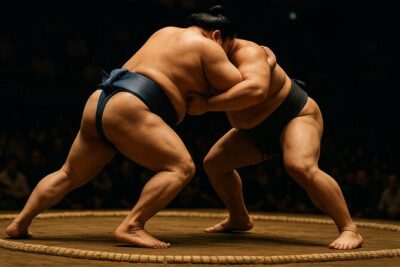
Tokyo Shinjuku Sumo Show & Experience with Photo
Read our review →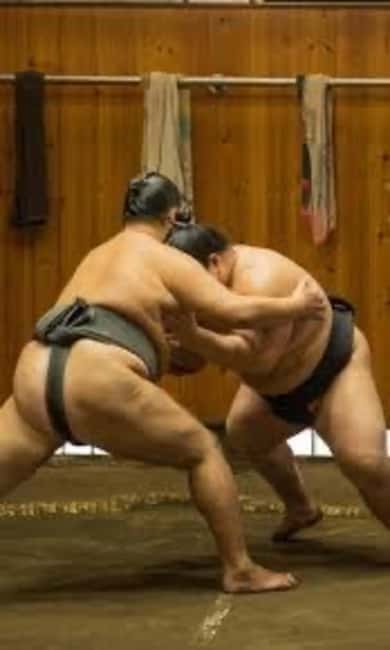
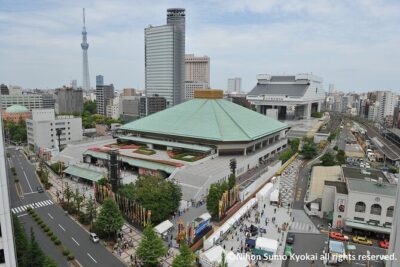
Tokyo Grand Sumo Tournament Viewing Tour with Tickets
Read our review →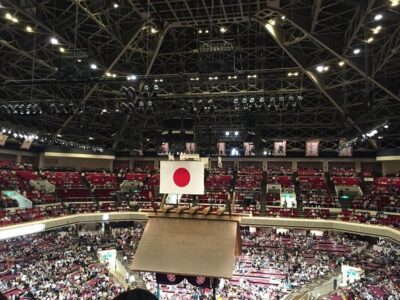

Luxury Sumo Show Experience & Japanese cuisine & Drink
Read our review →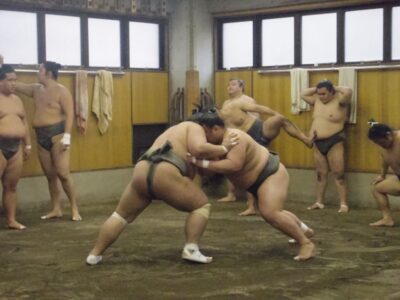
Browse the lists this tour appears in