
Review · SUMO EXPERIENCES IN TOKYO
Unique Afternoon Live Sumo training tour in Tokyo
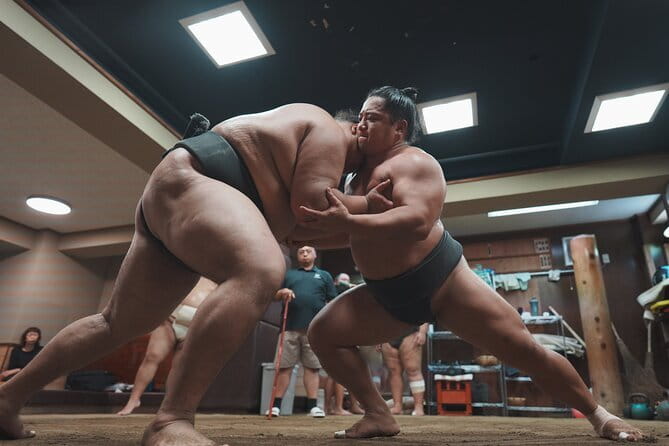
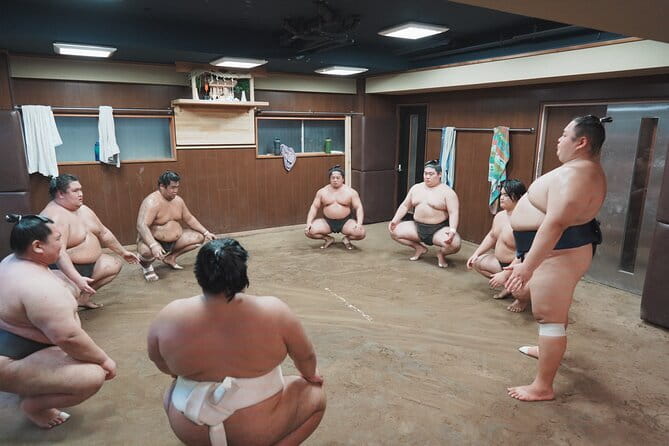
Real sumo training is not a staged show. At Nakamura-beya Sumo Stable, you sit close to the practice ring and watch wrestlers prepare, stomp, push, and clash with serious purpose. The first 20 to 30 minutes can feel quiet, but once the live wrestling begins, the room changes fast.
I like the small maximum group of 10, which keeps the visit more personal than a large arena event. I also like the useful extras: a photo with the wrestlers, free Wi-Fi, and phone charging. The main caution is simple: the warm-up takes time, and some seats are on the floor.
Key points before you book
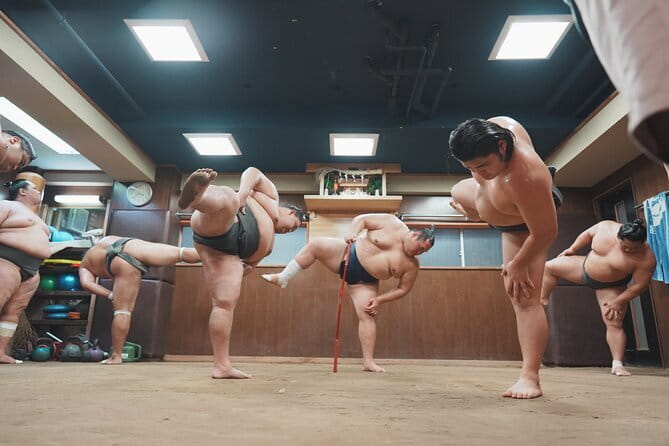
- Real afternoon keiko: Watch professional wrestlers train at Nakamura-beya rather than attend a theatrical performance.
- A slow start, then serious power: Expect about 20 to 30 minutes of warm-ups before the harder wrestling begins.
- Only 10 people maximum: The small group suits anyone who wants a closer look at the training.
- Flexible language help: The guide speaks English, Japanese, and Korean. An audio guide is offered in 10 languages, while the tour details also note 11 choices.
- Useful visitor comforts: Free Wi-Fi and phone charging are available during the visit.
- A $137.71 cultural experience: The price is high for 90 minutes, but it includes access to a real stable, explanation, a photo, and a rare look at daily sumo practice.
Why live keiko feels different from a sumo match
A professional sumo match is polished and public. Training is more revealing. You see the work that comes before competition: repeated movements, heavy foot stomps, body contact, and the focus needed to repeat the same demanding routines again and again.
That difference is the main reason to choose this visit. You are not simply watching two wrestlers compete for a result. You are watching athletes prepare their bodies and minds. The explanations help you understand why the warm-up matters, instead of wondering when the main event will start.
The opening part may test your patience. Plan on the first 20 to 30 minutes feeling relatively uneventful as the wrestlers warm up. This is useful preparation, but it is not fast entertainment. Once the more intense clashes begin, the mood changes, and the strength of the wrestlers becomes much easier to appreciate.
I would treat the quiet beginning as part of the lesson. Sumo is built on control and repetition, not constant action. If you need a show that starts at full speed, this may not be your best Tokyo activity. If you want to see the discipline behind the sport, the gradual build works well.
More Sumo Experiences in Tokyo
- Tokyo: Sumo Show and Dining Experience
★ 4.8 · 2,742 reviews - the SUMO show
★ 5.0 · 1,960 reviews - Tokyo Shinjuku Sumo Show & Experience with Photo
★ 5.0 · 1,750 reviews
Inside Nakamura-beya in Ryogoku
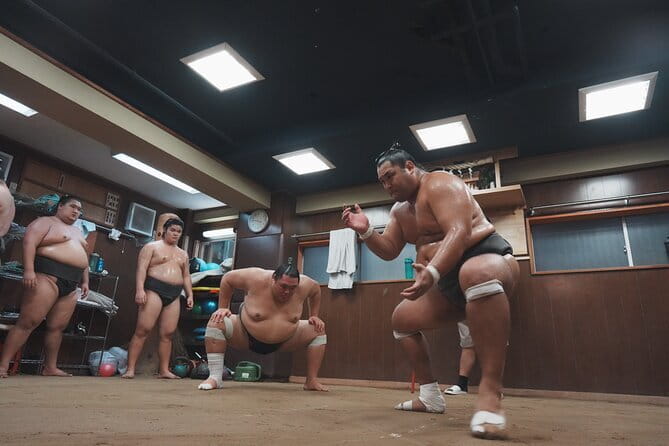
The visit takes place at Nakamura-beya Sumo Stable, at 1-chome-18-7 Ryogoku, Sumida City, Tokyo 130-0026. Ryogoku is closely tied to sumo, so this setting gives the activity a useful sense of place before you even watch the training.
Your entire visit lasts about 1 hour and 30 minutes. You stay at the stable rather than moving between several sights, which makes the schedule easy to manage. It also means the value depends heavily on how much you want to focus on one tradition for a concentrated period.
The key event is keiko, the term used for sumo practice. You watch the wrestlers warm up, perform powerful movements, and prepare for the harder bouts. The description specifically highlights the famous stomps and clashes, so you can expect the physical force to be close and noticeable rather than distant action in a large stadium.
The group size matters here. With a maximum of 10 people, you are not being placed in a crowd of dozens. A smaller group can make it easier to see the practice and follow the guide’s explanation. It also helps preserve the quiet mood of a working training space.
The first 30 minutes require patience
The warm-up is the part I would explain most clearly before you pay. For roughly 20 to 30 minutes, the activity may seem uneventful. The wrestlers are preparing, not performing a rapid series of matches for an audience.
That slower start is not wasted time. It shows that sumo training includes much more than the final clash. You see the physical preparation and repeated routines that make the later bouts possible. The experience asks you to watch carefully rather than wait for a tour guide to fill every second with entertainment.
After the warm-up, the wrestling becomes more intense. The supplied details describe three wrestling clashes, and this is where the experience earns its strongest reaction. The contrast is important: quiet preparation first, then sudden force, contact, and speed.
For families, this rhythm can work well if children know what to expect. The activity has drawn strong praise for being enjoyable for both adults and children, including teenagers. I would still explain the slow opening to younger children so they do not expect a nonstop match.
What the guide and audio support add
The guide can speak English, Japanese, and Korean. That gives you live help in three languages, while an audio guide is listed for 10 languages. The overview also mentions 11 language choices, so I would confirm the current language menu when booking if this matters to you.
The language support is valuable because sumo has its own customs, movements, and vocabulary. Without explanation, you might see stomping and pushing but miss the purpose behind the routine. The included sumo keiko explanation pamphlet gives you something to follow during the visit and keep afterward.
This is not presented as a lecture-heavy activity. The main attraction remains the training in front of you. The guide’s role is to help you understand what you are seeing and answer the basic question of why the wrestlers spend so long preparing before the strongest action begins.
The availability of an audio guide also makes the experience more practical for mixed-language groups. You may not all need the same level of spoken explanation. Just remember that the guide’s live language choices and the audio guide’s advertised languages are separate details.
Same city, a different fixture:
- Tokyo: Sumo Show and Experience in Shinjuku
★ 4.8 · 1,001 reviews - Tokyo Grand Sumo Tournament Viewing Tour with Tickets
★ 5.0 · 692 reviews - Tokyo Sumo Wrestling Tournament Experience
★ 5.0 · 660 reviews - Tokyo:Luxury Sumo Show Experience & Japanese cuisine & Drink
★ 4.7 · 577 reviews
Seats, floor space, Wi-Fi, and the photo
There are chair-style seats for 8 to 10 people. Everyone else may sit on the floor. This is one of the few practical drawbacks that can affect how comfortable the visit feels, especially if you have trouble sitting on the floor for 90 minutes.
The seating information does not promise a chair for every person. If floor sitting is difficult for you, ask about the arrangement before booking rather than assuming a chair will be available. The small group helps, but it does not remove the seating limitation.
Free Wi-Fi and phone charging points are included. These are modest touches, but they are useful during a packed Tokyo trip. You can keep your phone powered for the rest of the day, and Wi-Fi can help you stay connected without using as much mobile data.
A photo with the sumo wrestlers is also included. It gives you a concrete keepsake from a visit that might otherwise live mostly in your memory. The photo is not the reason to book, but it adds value, particularly for families and first-time visitors who want a lasting record of the occasion.
Is $137.71 fair for 90 minutes?
At $137.71 per person, this is not a bargain-priced Tokyo stop. You are paying a premium for access to a small working stable and for the chance to see professional training at close range. The visit lasts about 90 minutes, so the cost per hour is high if you judge it only by duration.
The better question is what kind of access the price buys. You receive admission, a guide, an explanation pamphlet, language support, the photo, Wi-Fi, and charging service. More important, you are seeing a form of sumo practice that is not packaged as a public stage show.
I see the strongest value for someone who has already visited Tokyo’s major sights and wants a more focused look at local culture. It also works for a first visit if sumo is high on your list. For a casual tourist who is only mildly curious about the sport, the price may feel difficult to justify.
The small group improves the value. A 10-person limit is different from watching an event from far away in a large venue. Still, you should not expect a full tournament or a long series of matches. This is a short training visit, and its appeal comes from the setting and access.
Who will enjoy this most
I would recommend this for people who want a cultural activity with a clear local focus. Sumo fans are the obvious match, but you do not need to know the sport well. The guide, audio support, and pamphlet help you follow the basics.
Families can also make good use of the visit. The activity suits adults and children, and teenagers may especially enjoy the physical strength once the clashes begin. Tell children in advance that the first part is a warm-up, not an immediate contest.
This is also a good choice for frequent Tokyo visitors. If you have already seen the major temples, shopping districts, and popular observation points, a sumo stable offers a different kind of afternoon. You get close to an institution that many short Tokyo itineraries skip.
I would be more cautious if you dislike floor seating, need constant action, or are looking for a full tournament atmosphere. The tour is focused, quiet at first, and tied to the training schedule. That is its strength for some people and its limitation for others.
Timing and meeting-point details

The activity is usually held in the afternoon, but training sometimes takes place in the morning. Check the exact time carefully before you plan the rest of your day. This change matters because it can affect breakfast plans, museum visits, and transport connections.
There is no pick-up or drop-off. You make your own way to Nakamura-beya Sumo Stable, and the activity ends back at the same meeting point. The stable is near public transportation, which makes the visit easier to fit into a Tokyo day, but you should still allow enough time to arrive at the specified address.
Confirmation is provided when you book. The mobile ticket is convenient, since you do not need a paper voucher. Keep the ticket accessible on your phone, especially because the activity uses a fixed meeting point and a short time window.
Free cancellation is available if you cancel at least 24 hours before the start time. Cancellations or changes made inside that 24-hour period are not accepted for a refund, with cut-off times based on Tokyo local time.
What the experience teaches you about sumo
The most valuable lesson is that sumo is not just the final push. The stomps, warm-ups, and repeated practice show how much discipline sits behind a short bout. You see the wrestlers as athletes working through a demanding routine, not simply as performers appearing for an audience.
That is why the activity feels more meaningful than a quick photo opportunity. The photo comes at the end, but the main memory is the contrast between stillness and force. One minute the stable is quiet and focused. The next, the wrestlers collide with enough power to make the practice feel immediate.
You also gain a better sense of the stable as a working place. The training is not arranged as a theatrical production, and that means the pace may not always match your expectations. In return, you get a closer look at a tradition in its daily form.
Should you book the Nakamura-beya visit?
Book it if you want real training rather than a staged sumo show, and if you can accept a quiet first half, possible floor seating, and a 90-minute visit at a premium price. The small group, language support, photo, and direct view of keiko make it a strong choice for sumo fans, families, and repeat visitors to Tokyo.
Skip it if you need continuous action or want to watch a formal tournament. The first 20 to 30 minutes may test your patience, and chair seating is limited. For the right audience, though, this is a rare chance to see the discipline and force of professional sumo at close range.
FAQ
Where does the sumo training tour take place?
The activity takes place at Nakamura-beya Sumo Stable, at 1-chome-18-7 Ryogoku, Sumida City, Tokyo 130-0026, Japan.
How long does the activity last?
The visit lasts approximately 1 hour and 30 minutes.
Is the training usually held in the afternoon?
Yes. Training is generally held in the afternoon, but it may sometimes take place in the morning. Check the scheduled time before you go.
How many people can join the group?
The activity has a maximum of 10 participants.
Are chairs available?
There are chair-style seats for 8 to 10 people. Other participants may sit on the floor.
What languages are available?
The guide can speak English, Japanese, and Korean. An audio guide is listed in 10 languages, while the tour information also notes 11 language choices.
Is a photo with the sumo wrestlers included?
Yes. A photo with the sumo wrestlers is included.
Is transportation provided?
No. Pick-up and drop-off are not included. The activity starts and ends at Nakamura-beya Sumo Stable, which is near public transportation.
Just added for fans in Tokyo
- Tokyo: Grand Sumo Morning Training Tour★ 4.9 · 12 reviews
- Sumo Training Watching Experience in Tokyo★ 4.5 · 8 reviews
- Kickboxing & Body Training with EX-Pro Fighter★ 5.0 · 4 reviews
- Tokyo: Visit Sumo Morning Practice with English Guide★ 4.5 · 22 reviews
- Tokyo Sumo Experience with Live Show & Audience Challenge★ 5.0 · 38 reviews
- Tokyo Shinjuku Sumo Show and Experience with Drinks and Photo★ 4.0 · 21 reviews
- Tokyo Sumo History Tour with Chanko Nabe Lunch★ 5.0 · 3 reviews
- 【SUMO FESTIVAL】Tokyo Ginza: Sumo Show & Photo Experience★ 4.5 · 41 reviews
Sumo Experiences in Tokyo, compared.
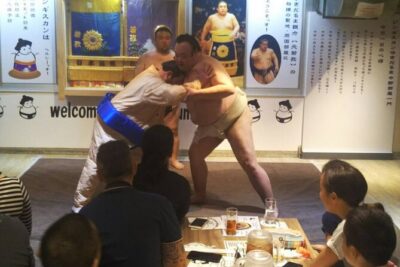
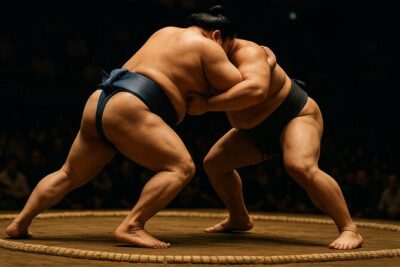
Tokyo Shinjuku Sumo Show & Experience with Photo
Read our review →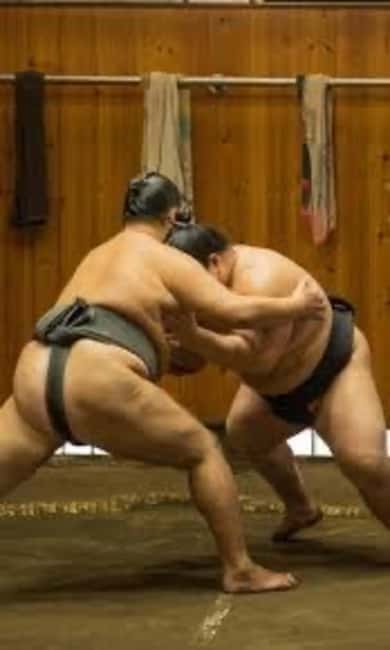
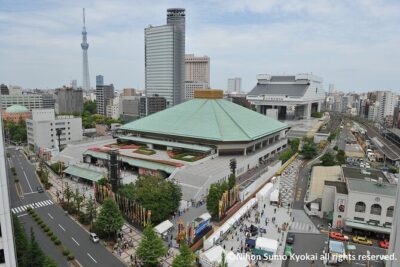
Tokyo Grand Sumo Tournament Viewing Tour with Tickets
Read our review →

Luxury Sumo Show Experience & Japanese cuisine & Drink
Read our review →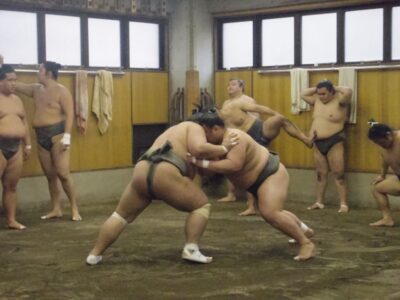
Browse the lists this tour appears in