
Review · SUMO EXPERIENCES IN TOKYO
The SUMO Show & Experience with Hot pot lunch
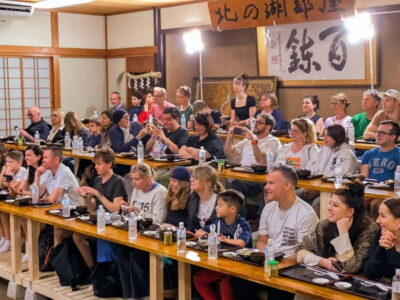
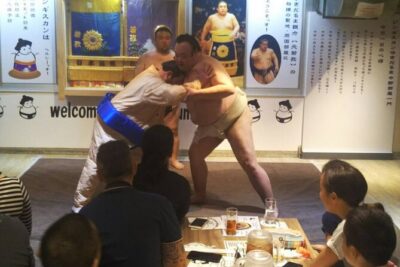
The best part of this two-hour experience is that you do not just watch sumo from a distance. You learn the rituals, step onto the clay dohyo, and feel what happens when a padded amateur tries to move a 160-kilogram wrestler. The match is playful, but the strength is very real.
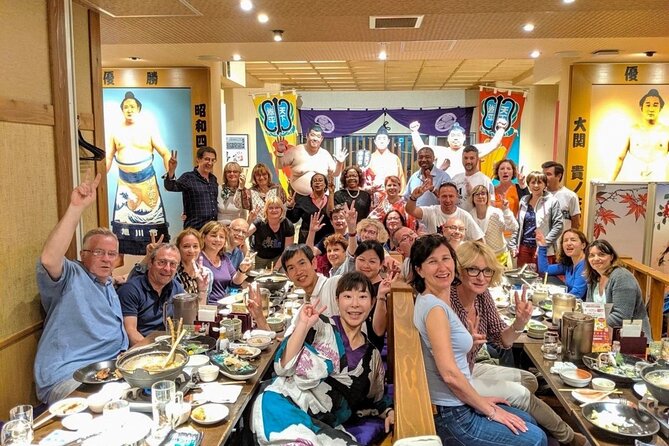
I like the hands-on format, especially for families with children and teenagers. I also like the chanko hotpot lunch, which gives you a taste of the food associated with sumo life rather than adding a generic meal at the end.
The main thing to consider is the price: $97.55 per person is not cheap for a two-hour activity. It makes better value if you plan to join the demonstrations, challenge a wrestler, and use the meal and photo time, rather than simply watch from your seat.
Key points to know
- Real clay dohyo in Ryogoku: The event takes place at a sumo-themed restaurant in Tokyo’s sumo district, with a genuine ring for demonstrations and audience participation.
- Former wrestlers teach the basics: A bilingual MC introduces shiko leg stomps, teppen push drills, and suriashi sliding footwork.
- A padded-suit challenge: One volunteer can try to push a 160-kilogram wrestler, creating the funniest and most physical part of the show.
- Family-friendly participation: Children, teenagers, older adults, and parents who prefer to watch can all take part at their own comfort level.
- Hotpot with dietary planning: The included mini chanko nabe can be adapted for vegetarian, vegan, halal, and allergy needs if you give notice at least 48 hours ahead.
Why this Ryogoku sumo experience feels different
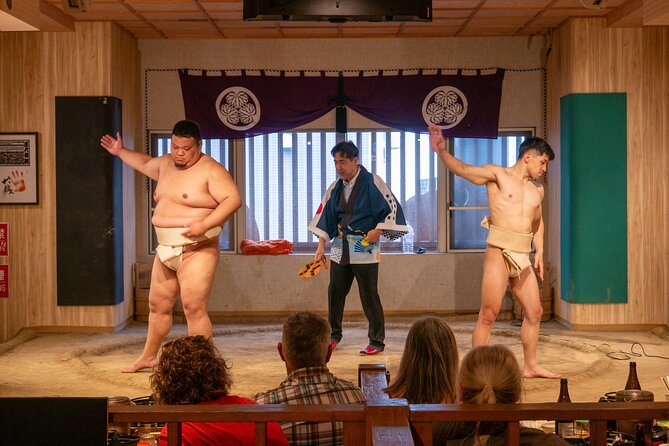
Many sumo activities in Tokyo ask you to sit quietly and observe. This one is built around participation. You see the wrestlers demonstrate traditional movements, then you have a chance to copy the footwork, enter the ring, and test your strength against someone far larger than you.
That change in scale is the point. On television, sumo can look like a brief collision. Here, the demonstrations help you notice the preparation behind each bout: the stamping, the controlled movement, the pushing drills, and the ceremonial use of salt. The bilingual MC explains what you are seeing, so you are not left guessing at the meaning of each gesture.
I would not treat this as a full lesson in sumo culture. Two hours is enough for an entertaining introduction, not a detailed study of the sport. Still, the format gives you more context than a quick photo stop and much more physical contact with the sport than watching a short performance.
More Sumo Experiences in Tokyo
- Tokyo: Sumo Show and Dining Experience
★ 4.8 · 2,742 reviews - the SUMO show
★ 5.0 · 1,960 reviews - Tokyo Shinjuku Sumo Show & Experience with Photo
★ 5.0 · 1,750 reviews
Starting at the Hana no Mai Edo Tokyo Museum
The meeting point is Hana no Mai Edo Tokyo Museum, at 1-chome-1-15 Kamezawa in Sumida City. The start time is 10:00 a.m., and the activity returns to the same location after lunch.
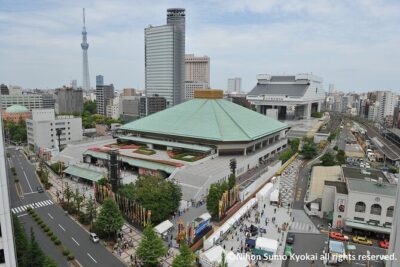
The location matters because Ryogoku is the heart of sumo in Tokyo. You are not being taken to a distant entertainment venue and told that it represents sumo. The event is placed in the district most closely linked with the sport, which gives the morning a useful sense of place.
The venue is near public transportation, though the supplied information does not give a specific station or walking time. I would allow enough time to find the exact entrance, especially if you are managing children or arriving from another part of Tokyo.
The group can reach a maximum of 40 people. That is large enough for a lively room, but you should not expect a private lesson or one-on-one coaching for everyone. The volunteer portions depend on participation and timing, so children who want to enter the ring may need a little encouragement.
Learning shiko, teppen, and suriashi
The session begins with an explanation from a bilingual MC. You then watch two former wrestlers demonstrate three basic parts of sumo training:
- Shiko: the famous leg stomp, where a wrestler lifts and plants one leg with control.
- Teppen: a push drill that shows how sumo wrestlers use force through the body.
- Suriashi: sliding footwork that keeps the feet low and connected to the ground.
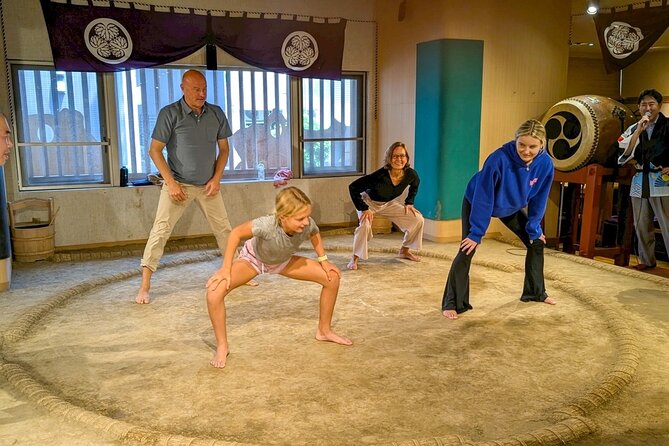
These movements are simple to describe and harder to perform well. That is useful for you because the activity turns abstract tradition into something physical. When you try the footwork yourself, you get a small sense of the balance and control that sumo requires.
The demonstrations also explain the role of salt tossing and shiko as rituals connected with purification and keeping evil spirits away. The ceremony is not treated as decoration. It helps you see that sumo is both a competitive sport and a formal practice with its own rules and symbols.
Parents can join the activities or watch from the side. That flexibility is important. A child may be eager to try the footwork while a grandparent prefers a clear view for photos. The activity does not force everyone into the ring.
Stepping onto the clay dohyo
The clay dohyo is the physical center of the experience. You can step onto it to practice traditional movement, take part in the demonstrations, or simply pose for a photo. Standing in the ring gives the activity a stronger sense of occasion than practicing on an ordinary restaurant floor.
The ring is also where the size difference becomes clear. Sumo wrestlers are not merely tall or broad. Their mass changes how the sport looks at close range. A push that seems easy on screen takes a different meaning when you see the wrestler absorb it without giving ground.
The final challenge uses a padded suit. A volunteer puts it on and tries to push a 160-kilogram wrestler. The protective costume makes this safe and comic, but it does not make the wrestler easier to move. I would expect this part to draw the strongest reaction from children and teenagers, though an adult volunteer can also enjoy the challenge.
You do not have to volunteer. If you prefer not to wrestle, you can watch, take pictures, and enjoy the spectacle. The information provided says most people can participate, but it does not promise that every person will have an individual bout. That is worth remembering if you are booking mainly for a one-on-one wrestling match.
Same city, a different fixture:
- Tokyo: Sumo Show and Experience in Shinjuku
★ 4.8 · 1,001 reviews - Tokyo Grand Sumo Tournament Viewing Tour with Tickets
★ 5.0 · 692 reviews - Tokyo Sumo Wrestling Tournament Experience
★ 5.0 · 660 reviews - Tokyo:Luxury Sumo Show Experience & Japanese cuisine & Drink
★ 4.7 · 577 reviews
Watching the professional bout
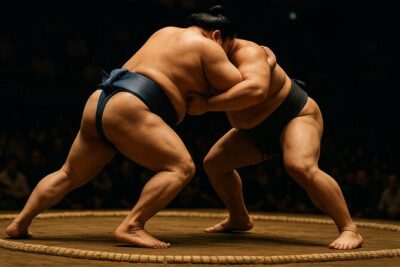
After the teaching section, you watch a live match between professional wrestlers. This gives the session a needed contrast. First you see the sport explained slowly, then you see trained competitors use the same ideas at full speed.
The collision sounds are part of the experience. The sharp impact of bodies meeting helps explain the force involved in sumo better than words can. You also get a chance to connect the match with the earlier lessons: low footwork, forward pressure, balance, and explosive movement.
The match is not a substitute for attending a full professional tournament. It is a compact demonstration within a larger workshop, and the total activity lasts about two hours including lunch. If your main goal is to watch several official bouts in a formal arena, you should choose a tournament ticket instead.
If your goal is to understand the sport quickly and get close to the action, this format has an advantage. You see the wrestlers at close range, then use the ring yourself before sitting down to eat.
Photo time with the wrestlers
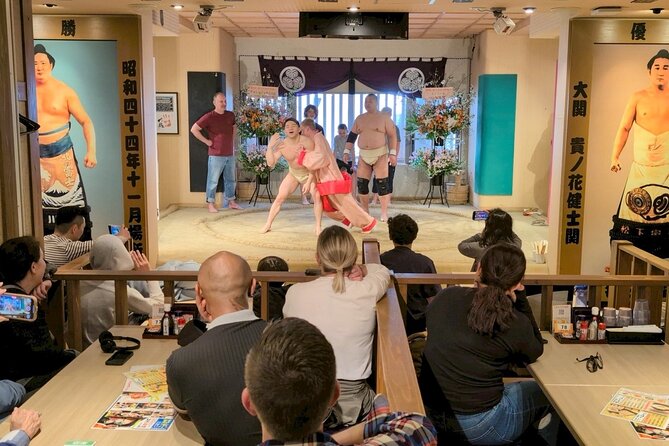
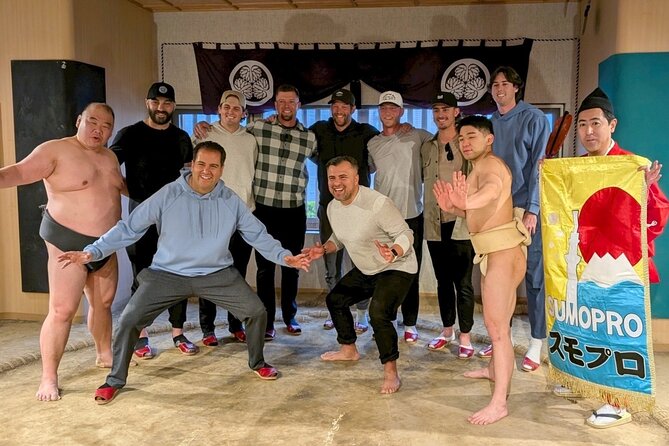
The photo session comes before lunch. You can stand beside the wrestlers and capture the size difference in a way that a distant performance cannot provide.
This is more than a standard group picture. The photo helps preserve the parts of the activity that are hard to explain later: the scale of the wrestlers, the clay ring, and the fact that you were allowed into the setting rather than kept behind a barrier.
Families should plan around this moment. If you are bringing children, have your camera ready and decide who will take the picture. The available details do not state how many photos are included or how long each person gets, so I would think of it as a scheduled photo opportunity rather than a private portrait session.
Chanko nabe gives the morning a proper finish
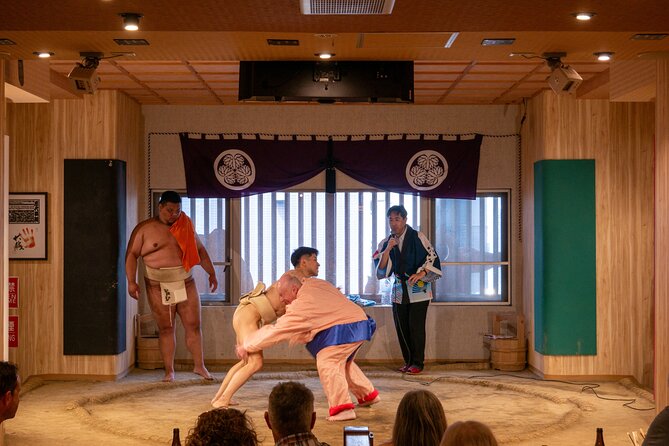
The included meal is a mini chanko nabe hotpot. Chanko is closely associated with sumo stable life, where wrestlers eat hearty meals designed to support intense training and large bodies. Here, the portion is described as mini, so you should expect a tasting-sized or moderate lunch rather than an enormous feast.
The hotpot includes protein and fresh ingredients. One meal example includes chicken, and sashimi has also been served with the lunch, though the exact menu can vary. Alcohol and extra menu items are not included, so you pay separately if you want them.
The meal adds real value to the experience because it connects the show with everyday sumo culture. You are not only looking at wrestlers and copying their movements. You also get a food associated with the way sumo bodies are built and maintained.
Dietary planning is one of the strongest practical features. Vegetarian, vegan, halal, and allergy-friendly options are available, but you must provide the request at least 48 hours before the activity. A gluten-free meal can be handled by changing ingredients, based on the available meal arrangements. Do not wait until arrival, since the kitchen needs advance notice.
Children under five do not receive a meal when booked at the child rate. If you want a meal for a child under five, book that child at the adult rate. This detail can affect the total cost for families, so check it before confirming.
Is $97.55 a fair price?
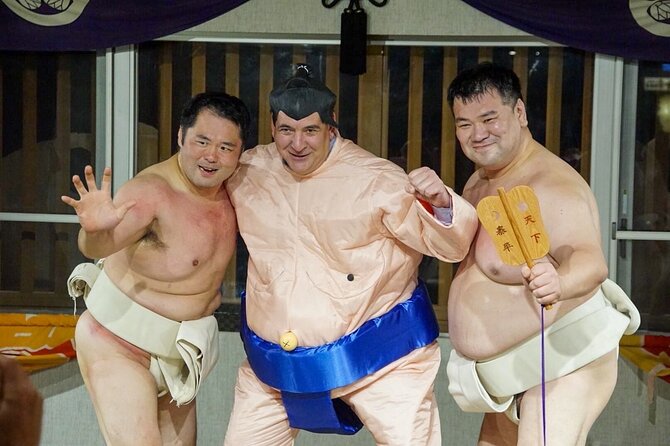
At $97.55 per person, this sits in the mid-to-high range for a two-hour Tokyo activity. The price covers the sumo show, participation in the costume challenge, the ring experience, photos with wrestlers, and the chanko lunch.
I see the value most clearly for a family. The activity gives children something physical to do, adults a cultural explanation, and everyone a shared meal. It also avoids the common problem of a child losing interest during a long lecture or museum visit.
For a solo visitor or couple, the calculation is less automatic. If you only want to see a short sumo performance, the price may feel high. If you are curious about the rituals, want to step into the dohyo, and value a guided English-language experience with food, the cost is easier to justify.
The maximum group size of 40 also affects expectations. You are paying for a structured public activity, not a small private meeting with the wrestlers. The chance to participate is there, but the time in the ring will be shared.
Who should book this experience?
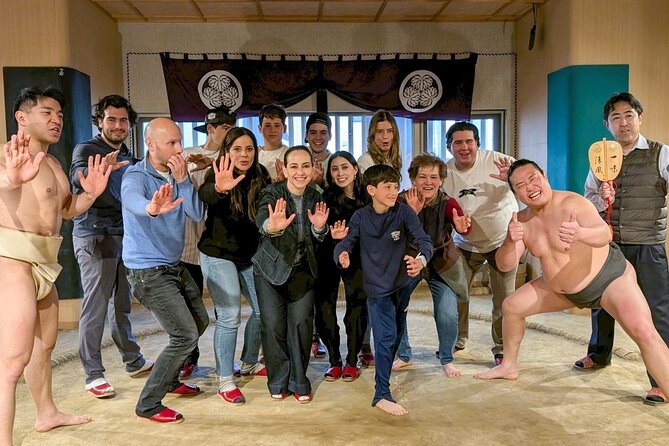
I would recommend it most strongly to families with school-age children and teenagers. The padded-suit challenge is easy to understand, the demonstrations are short enough to hold attention, and children can join without needing prior knowledge of sumo.
It also fits mixed-age groups. One person can participate while another watches, and the food options make it easier to include someone with vegetarian, vegan, halal, or allergy requirements. The available information also points to the activity being suitable for very young children and older adults, provided they choose how actively to take part.
English-speaking visitors should find the format practical because the MC presents the experience bilingually. You do not need to know sumo vocabulary before arriving. The explanations of shiko, teppen, suriashi, salt, and the dohyo give you enough background to follow the action.
I would be less likely to choose it if you want a serious athletic workshop, a full tournament, or a long cultural lecture. The tone is social and playful. That is a strength for many people, but it may not satisfy someone looking for rigorous training or an extended history of sumo.
Timing, booking, and cancellation details
The activity begins at 10:00 a.m. and lasts about two hours, ending back at the meeting point. Confirmation is provided when you book, and the mobile ticket makes it easy to keep the reservation on your phone.
Most people can participate, but ring activities are optional. The experience requires good weather, and it also requires a minimum number of participants. If poor weather or low enrollment causes a cancellation, you are offered another date or experience, or a full refund.
You can cancel for a full refund up to 24 hours before the start time. Cancellations or changes made less than 24 hours ahead are not refunded or accepted, so check your Tokyo plans before booking.
Should you book the Ryogoku sumo show?
Book it if you want an active, family-friendly introduction to sumo with a meal attached. The strongest reasons are the real clay ring, the clear bilingual explanations, the chance to try sumo movements, and the padded challenge against a 160-kilogram wrestler.
The $97.55 price is easiest to defend when several people in your group will participate and you need a meal that can handle dietary requests. I would skip it only if your priority is watching a full tournament or keeping your Tokyo activities very low-cost.
For most families and first-time visitors curious about sumo, this is a lively way to understand the sport without needing a full day at an arena. Plan dietary requests early, arrive ready to take part, and treat the lunch as part of the cultural experience rather than a bonus meal.
FAQ
Where does the sumo experience begin?
It begins at Hana no Mai Edo Tokyo Museum, 1-chome-1-15 Kamezawa, Sumida City, Tokyo 130-0014, Japan. The activity ends at the same meeting point.
What time does the activity start?
The scheduled start time is 10:00 a.m. The full experience lasts about two hours.
Is lunch included?
Yes. A mini chanko nabe hotpot lunch is included. Alcoholic drinks and additional menu items cost extra.
Can dietary requirements be accommodated?
Vegetarian, vegan, halal, and allergy-friendly options are available. You should provide dietary requests at least 48 hours before the activity. Gluten-free meals can also be arranged by changing ingredients.
Can children participate?
Yes. The activity is designed to be family-friendly, and children can join the demonstrations and ring activities. Children under five do not receive a meal at the child rate. Book the adult rate if you want a meal for a child under five.
What is the cancellation policy?
You can cancel up to 24 hours before the start time for a full refund. Changes or cancellations made less than 24 hours before the experience are not accepted or refunded. If the activity is canceled because of poor weather or insufficient enrollment, you are offered another date or a full refund.
More Lunch Experiences in Tokyo
- Tokyo: Sumo Experience and Chanko Nabe Lunch
★ 4.8 · 257 reviews - Tokyo: Family Sumo Workshop & Live Wrestling Show with Lunch
★ 4.9 · 99 reviews - Tokyo Sumo Culture Tour with Chanko-Nabe Lunch in Ryogoku
★ 5.0 · 26 reviews - Ryogoku: Sumo Town Guided Walking Tour with Lunch
★ 4.8 · 9 reviews
Just added for fans in Tokyo
- Tokyo: Grand Sumo Morning Training Tour★ 4.9 · 12 reviews
- Sumo Training Watching Experience in Tokyo★ 4.5 · 8 reviews
- Kickboxing & Body Training with EX-Pro Fighter★ 5.0 · 4 reviews
- Tokyo: Visit Sumo Morning Practice with English Guide★ 4.5 · 22 reviews
- Tokyo Sumo Experience with Live Show & Audience Challenge★ 5.0 · 38 reviews
- Tokyo Shinjuku Sumo Show and Experience with Drinks and Photo★ 4.0 · 21 reviews
- Tokyo Sumo History Tour with Chanko Nabe Lunch★ 5.0 · 3 reviews
- 【SUMO FESTIVAL】Tokyo Ginza: Sumo Show & Photo Experience★ 4.5 · 41 reviews
Sumo Experiences in Tokyo, compared.
Tokyo Shinjuku Sumo Show & Experience with Photo
Read our review →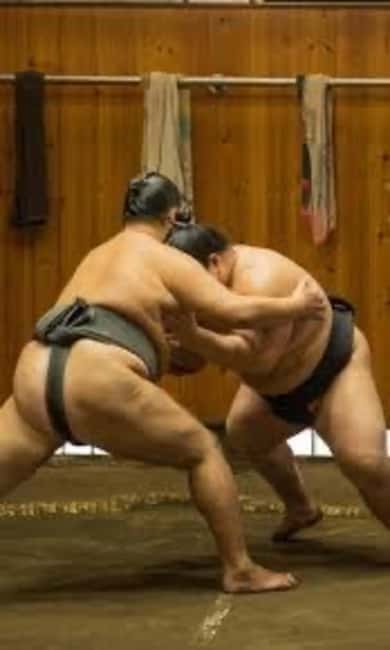
Tokyo Grand Sumo Tournament Viewing Tour with Tickets
Read our review →
Luxury Sumo Show Experience & Japanese cuisine & Drink
Read our review →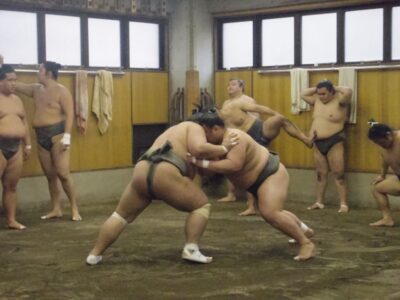
Browse the lists this tour appears in