
Review · SUMO EXPERIENCES IN TOKYO
Tokyo Sumo Culture Tour with Chanko-Nabe Lunch in Ryogoku
Ryogoku is the place to learn what sumo means beyond the ring. This small-group walk connects stables, shrines, temples, an Edo-era sumo site, and the famous Kokugikan Arena before ending with chanko-nabe, the hearty hot pot associated with wrestlers’ diets. I like the personal scale, with no more than eight people, and the way lunch gives the morning a satisfying finish.
I also like that guides such as Jeff, Taka, and Aki bring different stories to the walk, from shrine rituals to wrestler-sized bicycles. The main catch is important: you see stables and the arena from outside, but actual practice and matches are not included. Sunday scheduling can also limit access to training facilities.
Key points at a glance
- Eight-person maximum: A small group makes it easier to hear the guide and ask questions.
- Ryogoku’s sumo landmarks: The route includes Hakkaku-beya, Kasuganobeya, Nominosukune Shrine, Kokugikan Arena, and more.
- Sumo beyond the bouts: You learn about rules, rituals, wrestler status, training, and the sport’s Edo-period past.
- A full-scale dohyo: Ryogoku Edo Noren offers a close look at a sumo ring without entering a tournament.
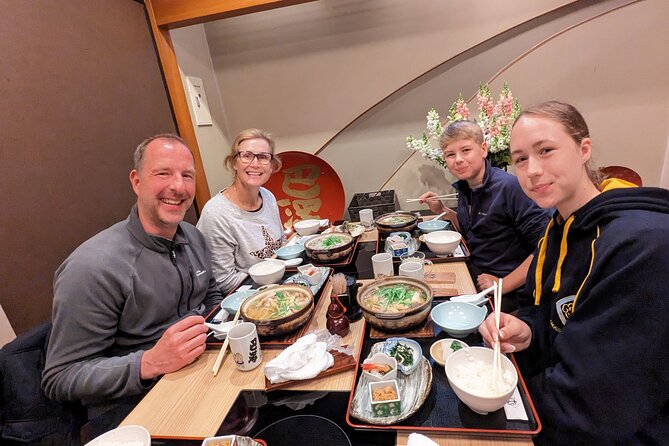
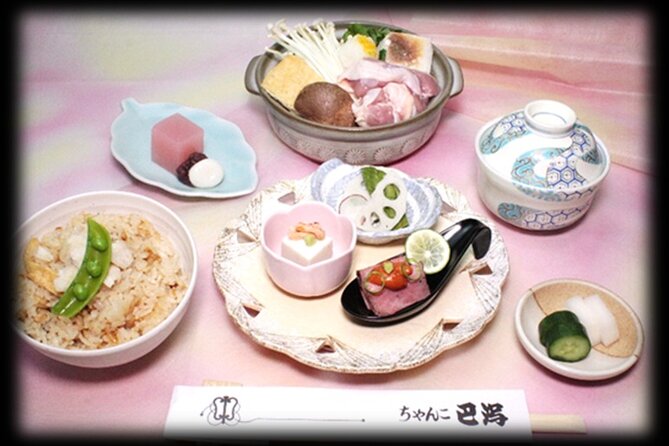
- Chanko-nabe included: The tour ends with a one-hour lunch at Tomoegata Chanko.
- No live sumo viewing: This is a cultural walking tour, not a ticketed match, practice visit, or stable workout.
Why Ryogoku makes a good sumo classroom
If you want to understand sumo, Ryogoku is the right neighborhood. The district is home to the Kokugikan, several sumo stables, shrines tied to the sport, and places that recall how tournaments worked before modern Tokyo took shape.
I appreciate the route because it does not treat sumo as only a two-minute bout between large athletes. You learn how the sport developed, how its rules changed, why ritual matters, and how wrestlers fit into Japanese social life.
The 3.5-hour format gives the guide time to connect the stops. You are not simply shown a building, given a name, and hurried onward. At Nominosukune Shrine, for example, the guide explains the legendary founder of sumo and how the sport’s rules developed over roughly 1,500 years.
The group limit matters here. With eight people or fewer, a guide can keep the pace together while still answering individual questions. Jeff has been especially good at making the walk feel relaxed and personal, while Taka and Aki have also led informative visits focused on the sport’s customs and culture.
More Sumo Experiences in Tokyo
- Tokyo: Sumo Show and Dining Experience
★ 4.8 · 2,742 reviews - the SUMO show
★ 5.0 · 1,960 reviews - Tokyo Shinjuku Sumo Show & Experience with Photo
★ 5.0 · 1,750 reviews
Starting at Hakkaku-beya, where wrestlers train
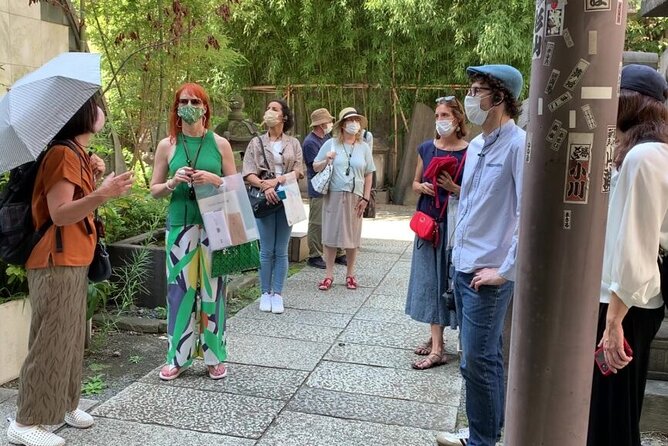
The first stop is Hakkaku-beya, a well-known sumo stable. You view it from outside, so set your expectations correctly. This is not an invitation to enter the training room or watch a morning practice.
Still, the stop helps you understand what a stable is. It is where wrestlers live and train, and seeing one in the neighborhood makes the sport feel less like a distant stadium event. Your guide can explain the stable system and the daily world behind the bouts.
The planned visit lasts about 15 minutes. That is enough time for an introduction, but not enough for a long stop. I would treat it as a scene-setter for the rest of the morning.
This is also where the distinction between a cultural tour and a practice experience matters most. If your priority is watching wrestlers train, this tour will not meet that goal. The experience does not include actual sumo viewing.
Nominosukune Shrine and the roots of sumo
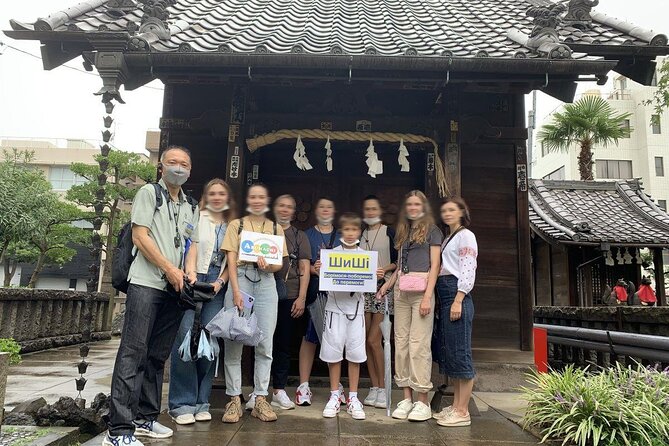
Nominosukune Shrine gives the walk its historical backbone. The shrine honors the figure regarded as the founder of sumo, and the guide explains how the sport began and how its rules were refined over the centuries.
For me, this is one of the most useful stops because it places modern sumo in a much older setting. You start to see why the ring, the gestures, and the formal behavior around a bout carry so much weight.
The visit lasts about 30 minutes. That gives you time to look around while the guide explains the relationship between sumo and Shinto tradition. The shrine is not presented as a detached sightseeing stop. It is part of the story of how sumo became both a contest and a ritual practice.
You will get more from this stop if you ask questions. Sumo has many terms and customs, and a small group makes it easier to pause when something is unfamiliar.
Outside Kokugikan, the heart of modern tournaments
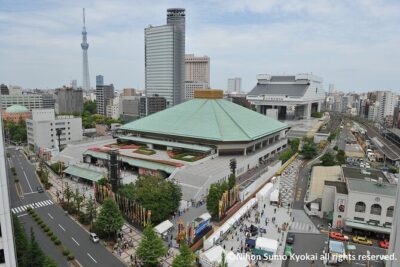
Ryogoku Kokugikan is the best-known sight on the route. The arena hosts three Grand Sumo tournaments each year and is widely regarded as the sport’s main home in Tokyo.
You view the building from outside rather than entering for a match. Your guide fills in the details, including the arena’s role in modern sumo and the traditions tied to major tournaments.
The exterior visit takes about 30 minutes. That may seem long if you only want a photograph, but it works well for anyone trying to understand how the tournament calendar and arena culture fit together.
Timing is important. This tour does not include tournament tickets, and it does not promise a live event. If your main aim is to watch a bout, you will need a separate ticket and a different plan. If you want context before attending a tournament, this stop can make the later experience easier to follow.
Same city, a different fixture:
- Tokyo: Sumo Show and Experience in Shinjuku
★ 4.8 · 1,001 reviews - Tokyo Grand Sumo Tournament Viewing Tour with Tickets
★ 5.0 · 692 reviews - Tokyo Sumo Wrestling Tournament Experience
★ 5.0 · 660 reviews - Tokyo:Luxury Sumo Show Experience & Japanese cuisine & Drink
★ 4.7 · 577 reviews
A close look at the ring at Ryogoku Edo Noren
Ryogoku Edo Noren recreates the atmosphere of old Edo, the former name for Tokyo, and includes a full-scale sumo ring. This is one of the more visual parts of the route.
Seeing the ring up close helps you understand its proportions and the space in which wrestlers perform. On television, the dohyo can look simple. In person, its size, raised platform, and ritual use become easier to grasp.
The guide uses the ring to explain details about observing sumo. You may learn why the ring is arranged as it is, how the space shapes a bout, and how ceremony fits around the physical contest.
The stop is scheduled for about 30 minutes. It is a useful counterpoint to Kokugikan. At the arena, you learn about modern competition. Here, you get a clearer physical sense of the ring itself.
Ekoin Temple and sumo in the Edo period
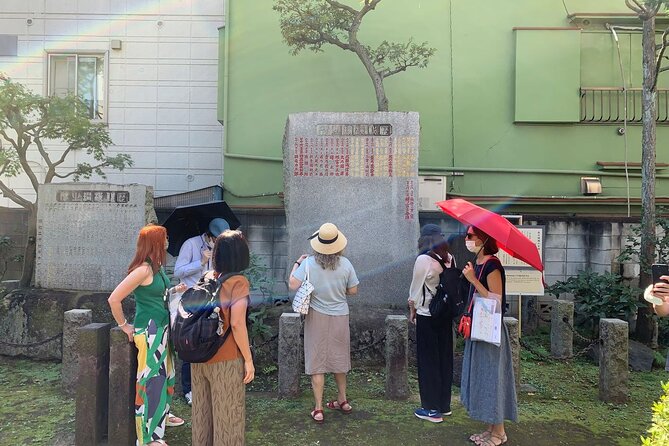
Ekoin Temple recalls a time when sumo tournaments were held during the Edo period. The guide explains where those events took place and how the sport looked before the modern tournament system developed.
This stop adds social context. You learn about the status of wrestlers and the way public tournaments were organized in the samurai era. That makes the sport’s past more concrete than a simple list of dates and names.
The visit lasts around 15 minutes, so it is brief. I see that as a benefit in a walking tour with many stops. The temple adds another layer without taking over the morning.
It also gives you a chance to compare old and new sumo. You have already seen the modern arena and the full-scale ring. At Ekoin, the guide links those familiar images to earlier forms of competition.
Kasuganobeya and the everyday side of wrestler life
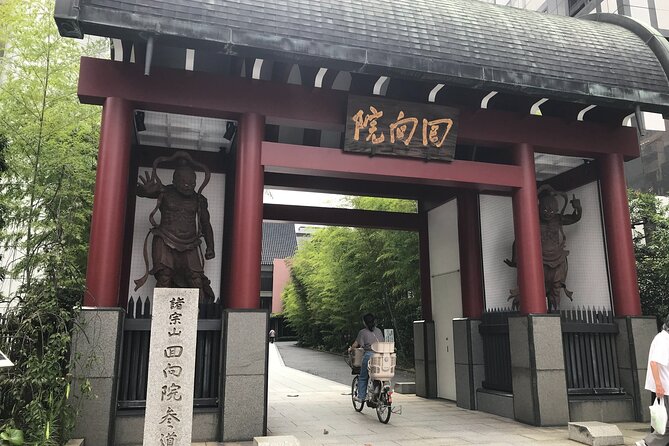
At Kasuganobeya, you view another sumo stable from outside. One memorable detail is the sight of wrestler-size bicycles used in daily life.
That small detail can say more than a formal explanation. Sumo wrestlers are known for their size, but a bicycle built for their proportions makes that fact immediately practical. It gives the walk a touch of humor without reducing the sport to spectacle.
The planned stop lasts about 15 minutes. You should expect an outside view, not access to a training session. The stable visit works best when you are interested in how wrestlers live as well as how they compete.
The route’s two stable stops also let your guide explain that training happens within a stable structure. You see the buildings where wrestlers live and work, but you do not enter their private routine.
Chanko-nabe at Tomoegata Chanko
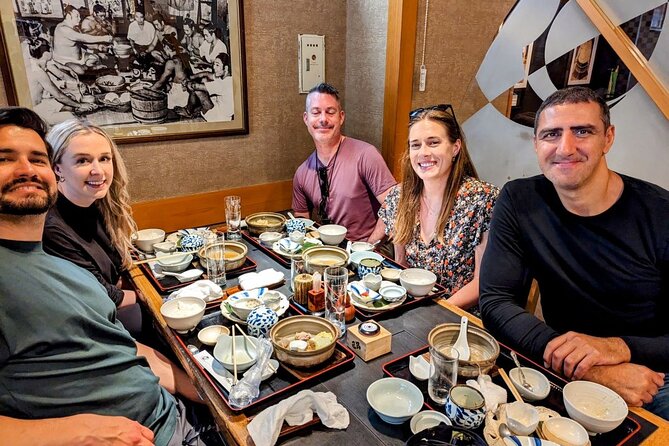
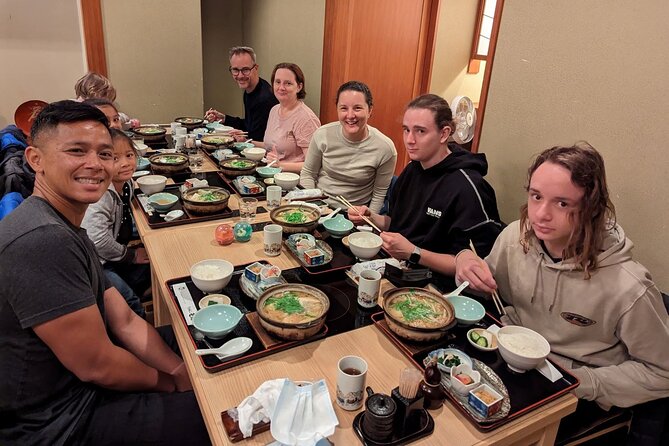
The final stop is Tomoegata Chanko, where you sit down for a one-hour lunch. Chanko-nabe is a hot-pot dish closely linked with sumo wrestlers’ efforts to build size and strength.
This is more than a convenient meal added to the booking. It gives you a direct way to connect food with the sport. During lunch, the guide explains why this nutrient-filled dish is part of wrestlers’ diets and how it supports the physical demands of training.
I like the placement at the end. After a morning on foot, a hot meal feels earned, and the restaurant gives you time to ask follow-up questions. The lunch also makes the price easier to assess because the tour includes a substantial cultural stop rather than only a guided neighborhood walk.
Alcohol is not included, so budget separately if you want drinks. The tour ends at the restaurant, not back at the starting station. That makes it easy to continue your day from Ryogoku, but you should plan your onward route yourself.
What the $131.12 price buys you
At $131.12 per person, this is not a cheap neighborhood stroll. The value depends on how much structure and explanation you want.
You are paying for about 3.5 hours with a specialist guide, a small group capped at eight, a planned route through several sumo sites, and a chanko-nabe lunch. You also avoid spending time researching the district or working out how to connect the stops.
The small group is the strongest value point. In a large tour, the shrine and ring explanations could become hard to hear. With eight people or fewer, the guide can point out details, answer questions, and adjust the conversation to your interests.
The price is harder to justify if you want live sumo. No match, practice session, or inside-stable visit is included. A person focused on watching wrestlers may prefer to spend the money on a tournament ticket or a dedicated practice experience when one is available.
For someone who wants cultural background, the calculation is better. You get the neighborhood, the sport’s history, the religious setting, the social context, and lunch in one morning.
Timing, pace, and practical planning
The tour starts at 9:30 a.m. at Ryogoku Station, at 1-chome-4-29 Yokoami in Sumida City. It finishes at Tomoegata Chanko, at 2-chome-17-6 Ryogoku.
The route includes several walking stops, each lasting 15 or 30 minutes, followed by a one-hour meal. Wear comfortable shoes and plan for a morning spent moving between sites. The activity is near public transportation, and most people can participate.
The group maximum is eight. Group discounts are available, and a mobile ticket is offered, which keeps the arrival process simple.
Calendar planning matters. The tour runs between tournament periods, and Sundays can be a weak choice if you hoped to add a training facility visit. One person found that Sunday closures meant even training tours were unavailable. That does not cancel the value of the neighborhood walk, but it removes one possible sumo-related option.
A museum may also be closed on your date. The route still includes the shrines, arena exterior, Edo Noren, temple, stables, and lunch, but you should not build your plans around every nearby attraction being open.
The booking confirmation arrives at the time of booking. Free cancellation is available until 24 hours before the start time. Changes or cancellations inside that 24-hour window are not accepted for a refund.
The guides make the difference
The strongest part of this experience is the guide-led explanation. Jeff has been a particularly effective guide for families and small private groups, combining humor with clear stories about Ryogoku and sumo. Taka has also led the route with a strong grasp of sumo culture, while Aki has focused on customs and the sport’s ways of life.
Guide assignments can vary, so you should not assume a particular person will lead your date. Still, the presence of named guides in the experience gives you a sense of its personal character.
I would book this for someone who asks why wrestlers behave in certain ways, how tournaments developed, and what life around a stable looks like. I would not book it for someone who only wants ringside action.
Who should book this Ryogoku walk
This tour suits first-time visitors who want a clear introduction to sumo without spending a full day on research. It also works well for families and small groups, since the route mixes buildings, stories, a shrine, a temple, and lunch.
It is a good fit if you enjoy walking and want to see a district through one theme. Sumo provides the thread, but the morning also covers religion, social rank, food, architecture, and Tokyo’s Edo-era past.
You may want another plan if your goal is a practice session, a tournament match, or an inside look at a stable. Those are specifically outside the scope of this experience.
Should you book it?
Book this tour if you want context, conversation, and a well-planned introduction to sumo in its home district. The small group, skilled guides, and included chanko-nabe make the morning feel more substantial than a basic sightseeing walk.
Skip it if $131.12 feels high for outside views or if you need guaranteed live sumo. For everyone else, especially first-time visitors who want to understand the sport before seeing a match, this is a well-focused way to spend a morning in Ryogoku.
FAQ
How long does the Tokyo Sumo Culture Tour last?
The tour lasts approximately 3 hours and 30 minutes, including the walking route and one-hour chanko-nabe lunch.
What time does the tour start?
The tour starts at 9:30 a.m.
Where does the tour begin?
It begins near Ryogoku Station at 1-chome-4-29 Yokoami, Sumida City, Tokyo.
Where does the tour end?
The tour ends at Tomoegata Chanko, at 2-chome-17-6 Ryogoku, Sumida City. Hotel transportation is not included.
How many people can join the tour?
The tour has a maximum of eight participants.
Is lunch included?
Yes. Chanko-nabe lunch at Tomoegata Chanko is included.
Are alcoholic drinks included?
No. Alcoholic beverages are not included in the tour price.
Can I watch sumo practice or a match?
No. Actual sumo practice and matches are not included. Stable and arena visits are viewed from outside.
Can I visit a sumo stable during the tour?
You visit the areas outside Hakkaku-beya and Kasuganobeya. The experience does not include entry into a stable or guaranteed training access.
Can I cancel for a full refund?
Yes, if you cancel at least 24 hours before the experience start time. Cancellations or changes made less than 24 hours before the start are not refunded.
More Lunch Experiences in Tokyo
- Tokyo: Sumo Experience and Chanko Nabe Lunch
★ 4.8 · 257 reviews - Tokyo: Family Sumo Workshop & Live Wrestling Show with Lunch
★ 4.9 · 99 reviews - Ryogoku: Sumo Town Guided Walking Tour with Lunch
★ 4.8 · 9 reviews - The SUMO Show & Experience with Hot pot lunch
★ 5.0 · 4 reviews
Just added for fans in Tokyo
- Tokyo: Grand Sumo Morning Training Tour★ 4.9 · 12 reviews
- Sumo Training Watching Experience in Tokyo★ 4.5 · 8 reviews
- Tokyo: Visit Sumo Morning Practice with English Guide★ 4.5 · 22 reviews
- Tokyo Sumo Experience with Live Show & Audience Challenge★ 5.0 · 38 reviews
- Kickboxing & Body Training with EX-Pro Fighter★ 5.0 · 4 reviews
- Tokyo Shinjuku Sumo Show and Experience with Drinks and Photo★ 4.0 · 21 reviews
- Tokyo Sumo History Tour with Chanko Nabe Lunch★ 5.0 · 3 reviews
- 【SUMO FESTIVAL】Tokyo Ginza: Sumo Show & Photo Experience★ 4.5 · 41 reviews
Sumo Experiences in Tokyo, compared.
Tokyo Shinjuku Sumo Show & Experience with Photo
Read our review →
Tokyo Grand Sumo Tournament Viewing Tour with Tickets
Read our review →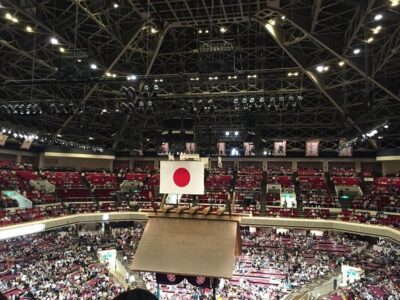

Luxury Sumo Show Experience & Japanese cuisine & Drink
Read our review →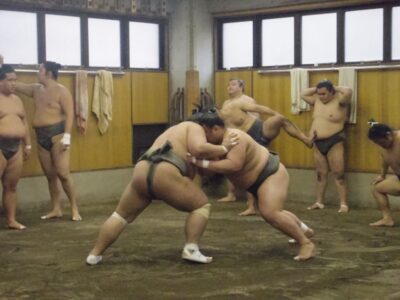
Browse the lists this tour appears in