
Review · SUMO EXPERIENCES IN TOKYO
【SUMO FESTIVAL】Tokyo Ginza: Sumo Show & Photo Experience
Tokyo’s Ginza Sumo Festival brings sumo close enough to feel the salt, hear the stomps, and watch wrestlers work just a few steps away. The two-hour program combines demonstrations, simple explanations, audience games, and a chance to enter the ring against a retired sumo wrestler.
I like the clear English commentary and the way the show lets you try sumo customs instead of only watching them. I also like the all-seat view of the ring, with a front-row upgrade for people who want maximum contact with the action.
The main caution is that this is a staged cultural show, not a formal tournament. If you want long bouts or serious competition, the host’s talking and the relatively small number of wrestlers may feel like too much of the program.
Key points to know before booking
- Two hours in central Ginza: The venue is at Ginza INZ 1, basement level B1, near public transportation.
- English and Japanese commentary: The MC explains sumo moves and keeps the program easy to follow.
- Hands-on sumo activities: You can try shiko stomping, salt throwing, and basic body-collision practice.
- A possible ring challenge: You may wrestle a retired sumo wrestler, but participation can be decided by lottery when demand is high.
- Food is optional: A welcome drink is included, while meals and additional food cost extra.
- The venue can be hard to find: Search for TokyoSumoFestival on Google Maps rather than relying only on the street address.
What this Ginza sumo show really offers
At $63.41 per person, this is not the cheapest cultural stop in Tokyo. You are paying for a compact, hosted show with close seating, English explanation, audience participation, and access to wrestlers in a small setting.
I would think of it as a live introduction to sumo rather than a substitute for attending a professional tournament. You will not get a full day of official matches or the formal atmosphere of a major sumo hall. Instead, you get a guided look at the sport, a few demonstrations, and the chance to take part.
That distinction matters. Some people want to understand why sumo wrestlers stomp, throw salt, and hold their ground. Others mainly want to see powerful bouts. This experience serves the first group better, though the live demonstrations and crowd challenges add enough action to keep the show moving.
The program is also useful for a first visit to Japan because the MC explains what is happening in English and Japanese. Several parts are designed for people who know little about sumo. The tone can be playful and simplified, which works well for families and mixed-age groups, but it may feel too basic if you already follow the sport closely.
More Sumo Experiences in Tokyo
- Tokyo: Sumo Show and Dining Experience
★ 4.8 · 2,742 reviews - the SUMO show
★ 5.0 · 1,960 reviews - Tokyo Shinjuku Sumo Show & Experience with Photo
★ 5.0 · 1,750 reviews
Finding TokyoSumoFestival in Ginza
The listed address is 1-3-1 Ginza, Chuo City, Tokyo, at Ginza INZ 1, B1. The practical tip is simple: search for TokyoSumoFestival on Google Maps before leaving your hotel.
The venue is close to public transportation, but the entrance is not perfectly obvious. The Ginza area has large department stores, underground passages, shopping arcades, and several buildings with similar-looking entrances. A street address alone may not guide you to the correct basement location.
I would allow extra time to find it, especially if you are visiting with children or have a fixed start time. Save the venue name on your phone and keep your mobile ticket ready. The ticket is mobile, and confirmation is sent within 48 hours of booking, subject to availability.
This is one of those small Tokyo logistics points that can affect the whole experience. Arriving calm and early is better than reaching Ginza at the last minute and searching through several connected buildings.
Watching the opening sumo demonstrations
The show begins with an introduction to sumo and a look at basic training movements. You will see the wrestlers demonstrate techniques and learn how certain actions relate to winning a bout.
The shiko, or sumo stomp, is one of the easiest parts to understand. The wrestler raises one leg and stamps it down with force. In sumo, this is more than a theatrical pose. It is a recognizable part of the sport’s physical preparation and ceremony.
You will also see salt throwing. The gesture has ceremonial meaning and gives you a quick sense of how sumo mixes athletic effort with ritual. The show keeps these elements visible and understandable rather than assuming you already know the rules.
The demonstrations are close-up, and every seat offers a view of the ring. That is a real advantage in a small performance. You are not watching tiny figures from a distant grandstand, and you can see the wrestlers’ footwork and balance.
The limitation is pacing. The host does a large share of the talking, and some parts can feel over-explained. If you came mainly for uninterrupted wrestling, you may wish the demonstrations were longer and the commentary shorter.
Learning techniques without a rulebook
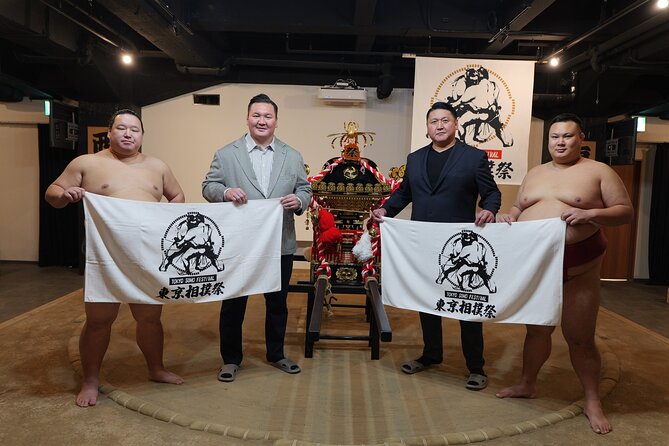
The educational side focuses on simple winning techniques and basic sumo principles. The MC explains what the wrestlers are trying to do and gives the audience a way to follow each demonstration.
That makes the show a good choice for families, first-time visitors, and anyone who has seen sumo on television but never understood the structure. You do not need prior knowledge to know what to watch for.
The explanations are intentionally accessible. They are not a full lesson in sumo history, ranking systems, or tournament customs. If those subjects are important to you, the program may leave you wanting more context. The emphasis is on moves, physical strength, and crowd participation.
I find that approach useful when you are sightseeing with people who have different interests. One person can enjoy the athletic display, another can learn the basics, and children can wait for the interactive parts rather than sit through a long formal talk.
Same city, a different fixture:
- Tokyo: Sumo Show and Experience in Shinjuku
★ 4.8 · 1,001 reviews - Tokyo Grand Sumo Tournament Viewing Tour with Tickets
★ 5.0 · 692 reviews - Tokyo Sumo Wrestling Tournament Experience
★ 5.0 · 660 reviews - Tokyo:Luxury Sumo Show Experience & Japanese cuisine & Drink
★ 4.7 · 577 reviews
Entering the ring for hands-on activities
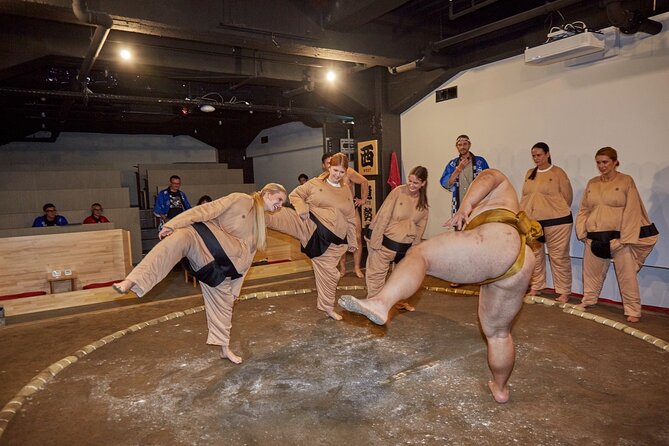
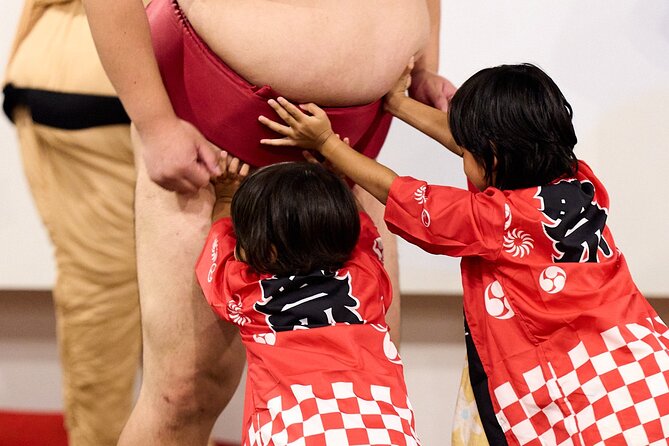
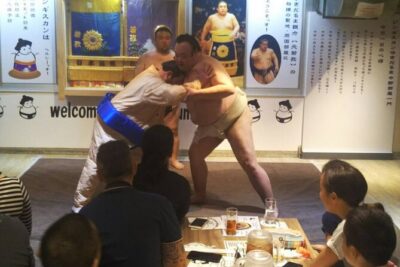
The strongest part of the program for many people is the chance to participate. You may try shiko stomping, throw salt, and practice the body collision used in sumo.
These activities turn the show from a performance into a short practical lesson. You feel how controlled the movements are, and you gain a better sense of the strength required to keep your balance. The body-collision practice is especially memorable because it shows that sumo is not simply about being heavy. Timing, stance, and force all matter.
You can also volunteer to challenge a retired sumo wrestler. This is not guaranteed. Participation is limited, and if many people apply, the names may be selected by lottery.
That rule is worth taking seriously. Do not book this expecting a personal match as part of the guaranteed package. You might get into the ring, but you might also watch someone else take the challenge. Even if you are not selected, the audience remains involved through the demonstrations and other activities.
The possibility of participation works particularly well for families and groups of friends. It creates a shared moment, and the wrestlers use humor to keep the atmosphere relaxed. You should expect a show designed for fun, not a serious athletic contest.
The wrestlers and the tone of the performance
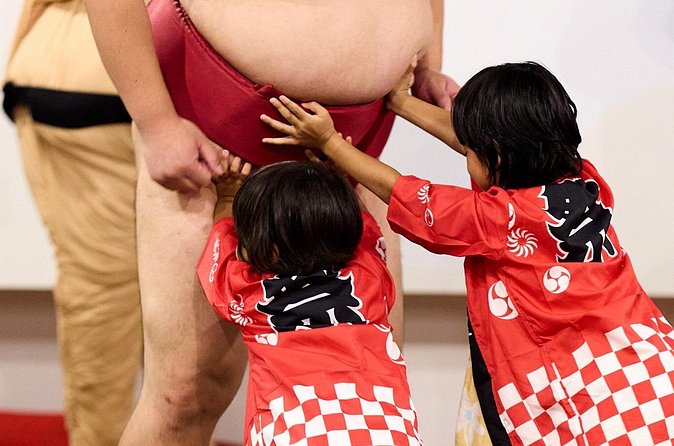
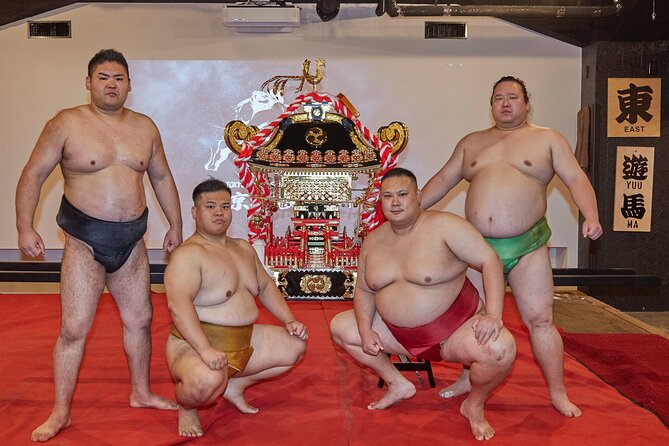
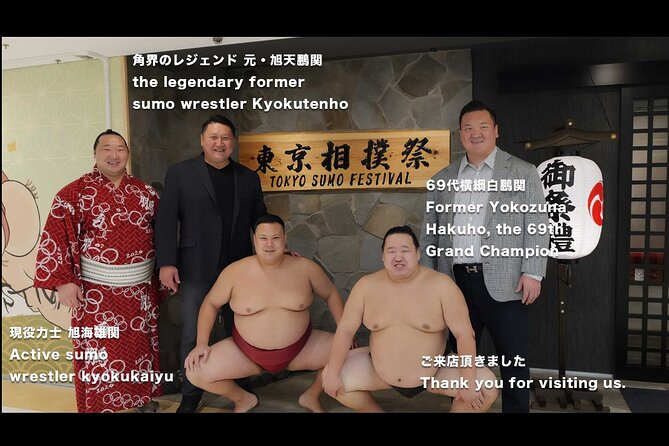
The wrestlers are the main reason this works. Their size, movement, and comic timing give the program energy even when the explanations run long. Yuma and Kaito are among the wrestlers associated with the performance, and their interaction with the audience adds warmth to the show.
The tone is friendly rather than formal. You will see sumo presented as a sport, a cultural tradition, and a form of entertainment. That makes it approachable, but it also means the show may include deliberately silly moments.
I would not choose this for a solemn presentation of Japanese history. The program offers some cultural explanation, but it spends more time on the basic techniques and audience activities. The mikoshi segment near the end continues that festive approach.
Carrying a mikoshi after the show
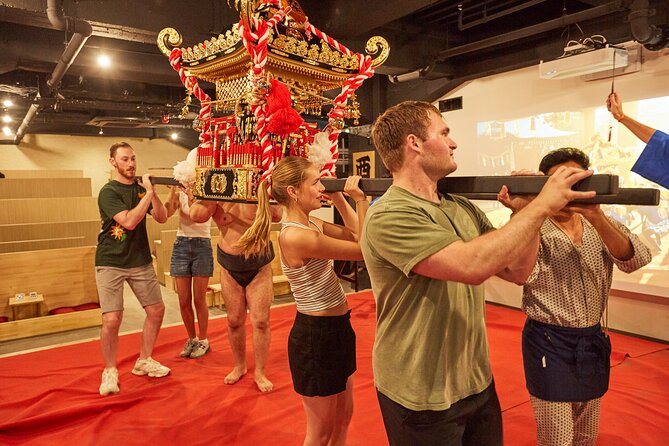
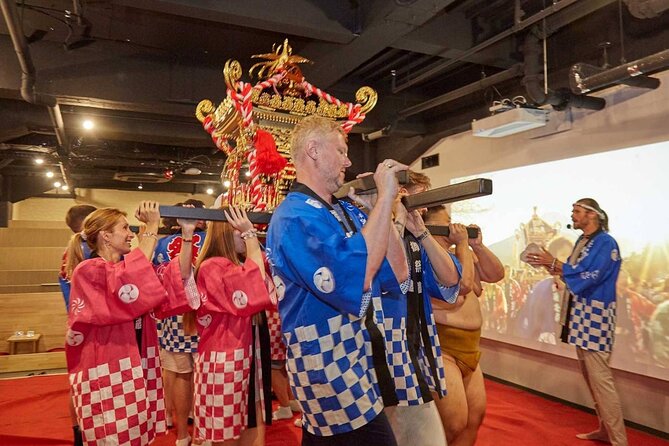
After the sumo portion, you get to handle a mikoshi, the portable shrine carried during Japanese festivals. This adds a second Japanese tradition to the visit and gives the audience one more chance to work together physically.
The mikoshi is not part of a sumo match, so some people may find it a welcome change of pace while others may see it as an extra segment that lengthens the show. I think its value depends on what you want from the booking.
If you are looking for a broad cultural activity, it makes sense. You get a taste of festival participation along with the sumo demonstrations. If your priority is wrestling time, the mikoshi portion may feel less essential.
Food, drinks, and the overall value
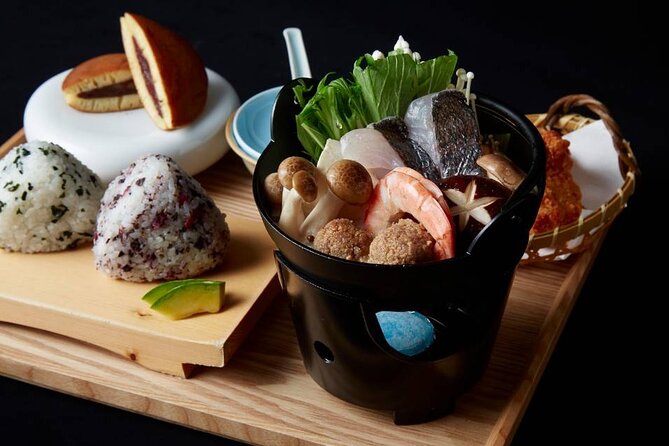
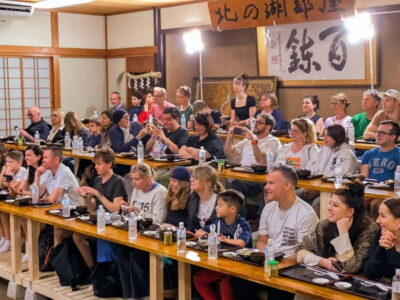
A welcome drink is included. Meals are not included in the admission price, but food and appetizers are available for an additional charge.
The food has received mixed impressions. Some diners found the meal filling and delicious, while another description called it mediocre. That tells me you should treat the food as a convenient add-on, not the main reason to book.
Some people enjoyed ordering appetizers during the show and found them reasonably priced. If you want a meal before or after the event, Ginza gives you many options. I would compare the extra menu cost with nearby restaurants rather than assuming food is part of the $63.41 ticket.
The value is strongest when you plan to take part. You are getting English commentary, close seating, live wrestlers, several guided activities, and a chance at the ring challenge. The value is weaker if you mainly want to sit quietly and watch extended bouts.
A front-row upgrade is available. Standard seating still provides a close view, so I would only pay more if being directly beside the ring is important to you or you want the most intense visual experience.
Who will enjoy this most
I would recommend this show to:
- Families looking for a cultural activity with audience participation
- First-time visitors who want sumo explained in English
- Couples or friends who enjoy playful, hands-on performances
- People visiting Tokyo outside the official sumo tournament schedule
- Anyone curious about sumo customs but not ready for a full tournament day
I would be more cautious about recommending it to serious sumo fans. You may appreciate seeing the wrestlers at close range, but the explanations are basic and the wrestling portion is limited.
It also suits people who want a central Tokyo activity. Ginza is easy to combine with shopping, department stores, restaurants, and other sightseeing. The compact two-hour length makes it easier to fit into a busy day than a full sporting event.
Timing, booking, and cancellation details
The experience lasts about two hours. Confirmation arrives within 48 hours of booking, subject to availability, so do not assume that payment alone guarantees an immediate confirmed place.
Free cancellation is available up to 24 hours before the start time. Cancellations or changes made less than 24 hours in advance are not accepted for a refund. The cut-off follows Tokyo local time.
Most people can participate, but the ring challenge itself is limited. If you are hoping to wrestle, understand that the activity may be assigned by lottery when there are many applicants.
Is the Ginza Sumo Festival worth booking?
Book it if you want a friendly, interactive introduction to sumo with clear English commentary, close seating, and several chances to join in. The best parts are the demonstrations, the physical activities, and the humor from the wrestlers. It is also a smart option when no official sumo tournament fits your Tokyo dates.
Skip it if your main goal is to watch serious, extended wrestling. The host talks often, the number of wrestlers is limited, and the show includes a mikoshi activity that is not directly about sumo.
For most first-time visitors, I would call it a good-value cultural performance at the right price only if you want participation and explanation. Save the venue in Google Maps, arrive early, and treat the optional meal as a separate decision. With those expectations, the show offers a lively way to get close to one of Japan’s most distinctive sports.
FAQ
Where is the Tokyo Ginza Sumo Festival held?
It is held at TokyoSumoFestival in Ginza INZ 1, B1, at 1-3-1 Ginza, Chuo City, Tokyo, Japan.
How long does the sumo experience last?
The experience lasts approximately two hours.
Is English commentary available?
Yes. The MC provides commentary in both English and Japanese.
Can I wrestle a sumo wrestler?
You may be able to challenge a retired sumo wrestler, but participation is limited and may be decided by lottery if many people apply.
What sumo activities are included?
The included activities feature shiko stomping, salt throwing, and practice with sumo body collision. The show also includes live demonstrations.
Is food included in the ticket?
Meals are not included. Food and appetizers are available for an additional charge, and a welcome drink is included.
Do all seats have a view of the ring?
Yes. All seats offer a close-up view of the sumo ring. A front-row upgrade is available for a more immediate view.
Is the venue easy to find?
The venue is near public transportation, but the entrance can be difficult to locate. Search for TokyoSumoFestival on Google Maps instead of relying only on the street address.
Can I cancel for a full refund?
Yes. You can cancel for a full refund at least 24 hours before the experience start time. Changes or cancellations made less than 24 hours before the start are not refunded.
Just added for fans in Tokyo
- Tokyo: Grand Sumo Morning Training Tour★ 4.9 · 12 reviews
- Sumo Training Watching Experience in Tokyo★ 4.5 · 8 reviews
- Kickboxing & Body Training with EX-Pro Fighter★ 5.0 · 4 reviews
- Tokyo: Visit Sumo Morning Practice with English Guide★ 4.5 · 22 reviews
- Tokyo Sumo Experience with Live Show & Audience Challenge★ 5.0 · 38 reviews
- Tokyo Sumo History Tour with Chanko Nabe Lunch★ 5.0 · 3 reviews
- Tokyo Shinjuku Sumo Show and Experience with Drinks and Photo★ 4.0 · 21 reviews
- Tokyo Grand Sumo Tournament 2026 with a Sumo Expert Guide★ 5.0 · 29 reviews
Sumo Experiences in Tokyo, compared.
Tokyo Shinjuku Sumo Show & Experience with Photo
Read our review →
Tokyo Grand Sumo Tournament Viewing Tour with Tickets
Read our review →
Luxury Sumo Show Experience & Japanese cuisine & Drink
Read our review →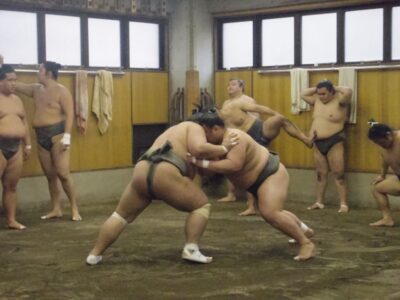
Browse the lists this tour appears in