
Review · SUMO EXPERIENCES IN TOKYO
Tokyo: Visit Sumo Morning Practice with English Guide
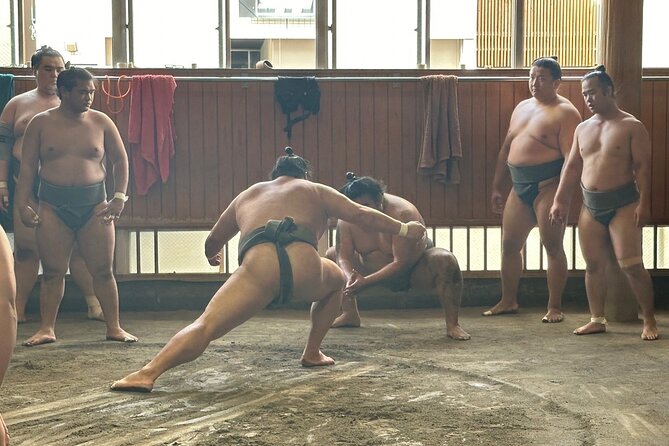
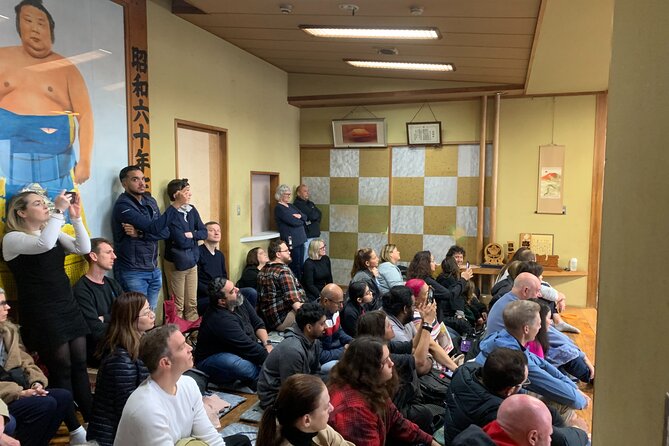
The special part of this morning is the close view of real sumo training. You are not watching a staged show or a distant tournament bout. At Takasago Stable, you sit near the practice room and hear the slap of bodies, the heavy footwork, and the sharp shouts of wrestlers working through serious drills.
I like two things here: the guide gives you enough sumo context to understand what you are seeing, and the small setting lets you feel the force of the training. The commemorative photo adds a pleasant finish. The main consideration is comfort: seating can be on the floor or on small seats, and the room may feel crowded if another group or a Japanese fan club arrives.
Key points before you book
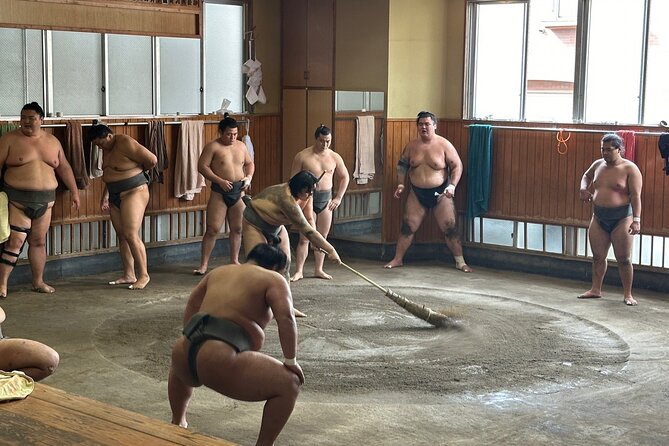
- Training at Takasago Stable: Watch wrestlers practice in a working sumo stable, not in a theater built for tourists.
- Powerful close-range action: Stretching, warm-ups, drills, and practice bouts can lead to intense collisions only a short distance away.
- English guidance: Guides explain sumo customs, terms, and training details, with Naomi receiving special praise for answering many questions.
- Early meeting time: Meet near Ryogoku Station at about 7:45 a.m. for the 8:00 a.m. start, and allow extra time to find the correct station exit.
- Traditional seating: Expect floor-style or low seating in a compact room. This is authentic, but not the easiest arrangement for every visitor.
- Photo and onward plans: A commemorative photo with wrestlers is included, and the guide can show you how to continue to your next stop.
Why morning practice beats a distant tournament view
A sumo tournament gives you ceremony, crowds, formal bouts, and the thrill of competition. This visit gives you something different. You see the daily work behind the public spectacle.
The wrestlers begin with preparation and stretching before the harder practice starts. Then younger wrestlers may challenge one another, followed by bouts involving larger and more experienced athletes. The order and exact content can vary, since this is a working training session rather than a performance arranged for your schedule.
That uncertainty is part of the appeal. You are watching athletes follow their own routine. The room is small, so you may hear the impact of each collision and see the effort in the wrestlers’ faces. The setting can feel much more immediate than a large arena.
You should also set your expectations correctly. This is not a lesson where you try sumo yourself, and it is not a polished show with a host explaining every minute. Much of the visit involves sitting quietly and watching. The guide helps you understand the action, but the wrestlers are there to train.
That makes this a strong choice for anyone who respects sport, discipline, and traditional Japanese culture. You do not need previous sumo knowledge. A short handout or fact sheet can help you follow the basic terms and exercises, while your guide can answer questions before and after the session.
More Sumo Experiences in Tokyo
- Tokyo: Sumo Show and Dining Experience
★ 4.8 · 2,742 reviews - the SUMO show
★ 5.0 · 1,960 reviews - Tokyo Shinjuku Sumo Show & Experience with Photo
★ 5.0 · 1,750 reviews
Finding the guide near Ryogoku Station
The meeting point is listed at 1-chōme-4-29 Yokoami in Sumida City, near Ryogoku Station. The practical detail matters: the group gathers early, and the guide may leave the station area at exactly 7:45 a.m. for the short walk to the stable.
Give yourself extra time to locate the correct station exit, especially if you arrive by train and come out on the wrong side. The A3 exit is specifically mentioned as the meeting area. A large sign should make the guide easier to spot, and two staff members may be waiting, but you should not treat that as permission to arrive late.
The walk from the station to Takasago Stable takes about 10 minutes. One guide may accompany the group, and the group size can reach 20 people. That is small enough for personal help, but it is not a private visit. If you want the least stressful start, arrive early, check the station exit in advance, and keep your phone available for the contact details sent before the tour.
Some people choose to take a taxi directly to the area. That can be easier if you are staying far from Ryogoku or carrying luggage, but the official arrangement begins near the station. Follow the meeting instructions you receive after booking.
Inside Takasago Stable, where the training happens
Takasago Stable is the heart of the visit. The stable has produced champion wrestlers, and it functions as a serious training space rather than a sightseeing attraction. You enter with a guide, take your place, and watch the practice from nearby.
The room is compact. That is good for atmosphere, since you are close enough to notice the sound and effort of the training. It also creates the main comfort issue. You may sit on the floor or use a small seat, and the position can feel awkward for a long period if you are not used to traditional Japanese seating.
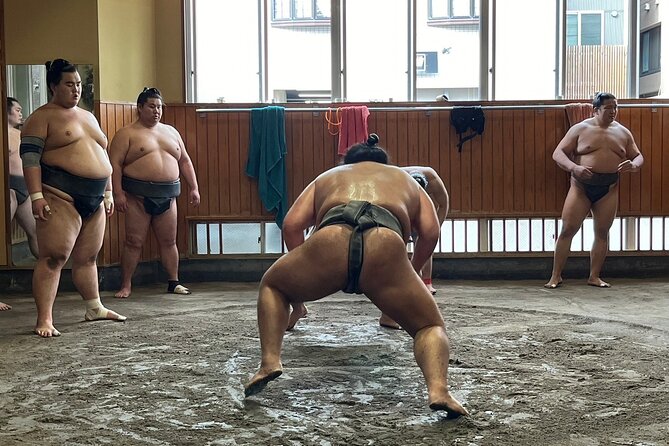
The practice generally includes about 30 minutes of stretching and body preparation before the more forceful bouts begin. You may then see younger wrestlers challenge one another, followed by stronger wrestlers in more intense exchanges. The exact timing is not guaranteed, and the session can last around 90 minutes or a little longer.
Your guide’s role is important here. Without context, you may see a series of exercises and collisions without knowing what they mean. With explanations, you can start to notice how the wrestlers prepare their bodies, how they use balance and force, and how much work comes before a formal bout.
The best guides make room for questions without disturbing the training. Naomi is singled out for warm, helpful service and for answering more than 20 questions from one group. Another guide was praised for speaking English, French, and Japanese. The guide you receive may differ, but English support is part of the experience.
What makes the wrestling so intense
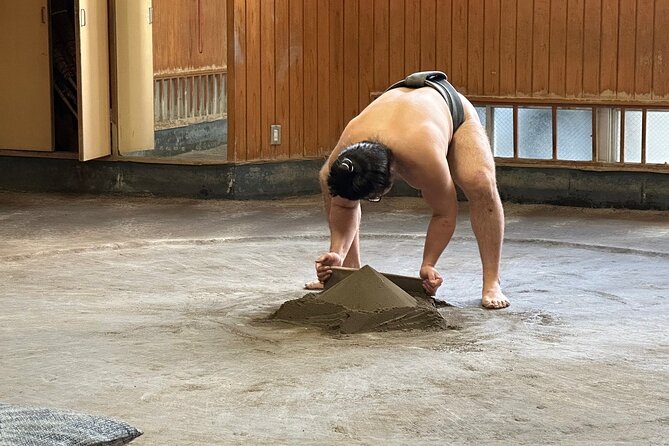
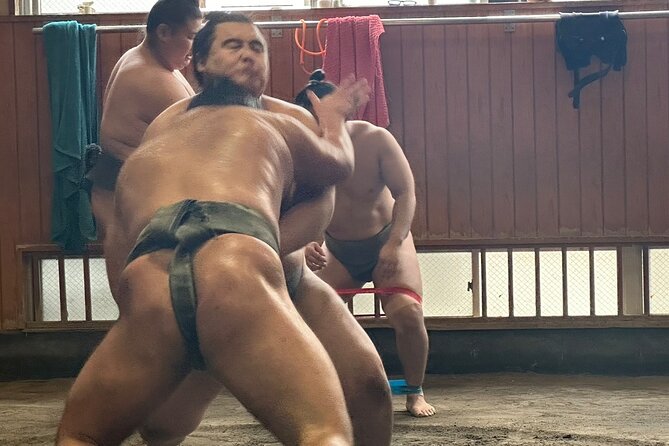
Sumo can look slow from a distance. Up close, the power is easier to understand. A practice bout may last only a short time, yet the initial charge can be explosive. The body contact is heavy, and the wrestlers use strength, timing, balance, and position rather than simply trying to push forward.
The training also shows the less glamorous side of the sport. You see repetition, fatigue, preparation, and younger wrestlers working to improve. That is one reason I prefer this kind of visit to a simple photo opportunity. The wrestlers are not posing for most of the session. They are doing their job.
Still, do not expect constant action. The early stretching and preparation can feel slow if you want nonstop bouts. If you appreciate the process, it gives useful context. If you only want to see a match, a tournament ticket may suit you better.
The guide can also explain the history and traditions of sumo, but the depth may depend on your questions and the guide’s approach. You should arrive ready to ask. A useful question can turn a quiet pause into a better understanding of what the wrestlers are doing.
Same city, a different fixture:
- Tokyo: Sumo Show and Experience in Shinjuku
★ 4.8 · 1,001 reviews - Tokyo Grand Sumo Tournament Viewing Tour with Tickets
★ 5.0 · 692 reviews - Tokyo Sumo Wrestling Tournament Experience
★ 5.0 · 660 reviews - Tokyo:Luxury Sumo Show Experience & Japanese cuisine & Drink
★ 4.7 · 577 reviews
The photo at the end
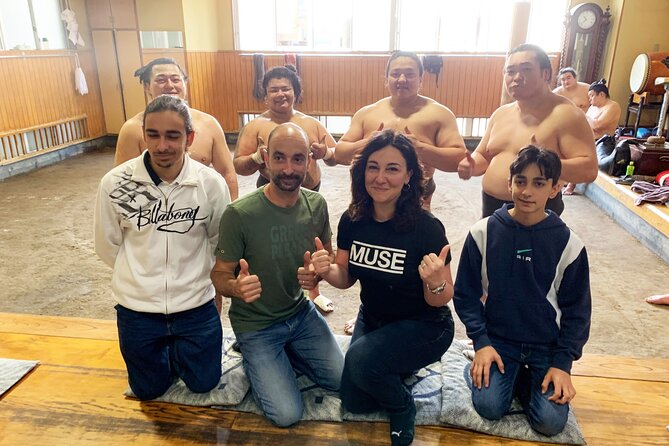
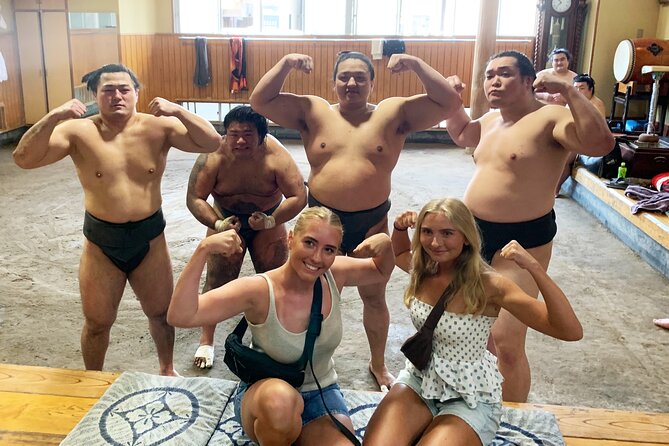
After practice, you can take a commemorative photo with the wrestlers. This is a nice benefit because the viewing itself is quiet and formal, while the photo gives you a clear memory of the visit.
Keep your expectations sensible. The photo session comes after training, and the stable remains a working place. It is not a long meet-and-greet or a private conversation with each wrestler. You may have a brief opportunity for a picture, but the main purpose of the tour is still observation.
For families, the photo can give younger visitors a concrete souvenir from an otherwise calm, focused morning. Teenagers in particular may find the close action more exciting than a standard museum visit. For adults, the picture marks a rare chance to stand near athletes who usually appear only in a large arena.
How the price measures up
At $98.53 per person, this is not a cheap add-on. You are paying for access that is normally closed to spectators, an English-speaking guide, help with the station-to-stable route, explanations during the session, and the commemorative photo.
The value depends on what you want from Tokyo. If you only want a quick look at sumo, the price may feel high for a visit that mainly involves sitting and watching. One unhappy participant expected more active involvement and felt the session was simply an hour and a half of observation.
I see the value more clearly if you treat this as access to a private working environment. A tournament shows sumo at its public peak. This visit shows the routine that makes that spectacle possible. The guide also removes much of the language barrier, which matters when you are trying to understand a sport with its own terms and customs.
The experience becomes a better deal if sumo is a priority for you, especially if you are not in Tokyo during a tournament or cannot obtain arena tickets. It is a weaker deal if you want a broad sightseeing tour, lots of movement, or a packed schedule of attractions.
Combining the morning with Asakusa
The tour ends at Takasago Stable, not back at the station. Your guide shows you how to reach your next destination, and you can continue sightseeing in nearby Asakusa if you wish.
That makes the timing useful. You finish early enough to build the rest of your day around the area. Do not assume the guide will provide a full Asakusa tour, though. The sumo visit and the onward directions are the main service.
Plan your next stop before you arrive. After sitting in one position for the practice, you may appreciate a walk and a change of pace. Asakusa can provide that, but the tour information does not promise admission to any additional attraction or a guided visit there.
Crowds, seating, and the main drawbacks
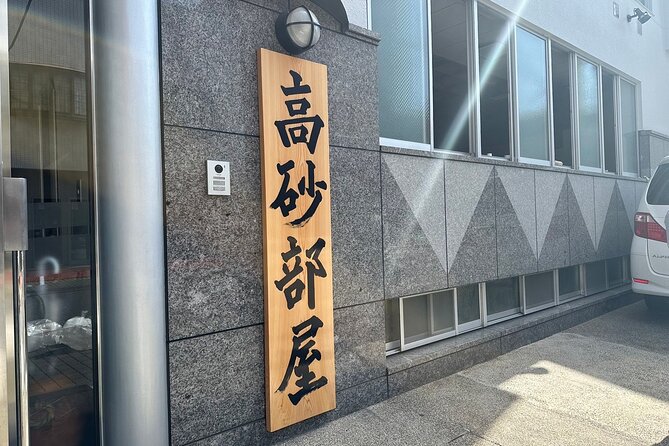
The most important drawback is that access to the training room can change. The group is limited to a maximum of 20, but unexpected Japanese fan clubs or another tour group may arrive. When that happens, seating can become tight, and people joining partway through may reduce the sense of personal space.
This is not necessarily a deal breaker. The stable is small, and the crowd is part of the setting. But you should know that front row does not always mean a spacious chair with a clear view in every direction.
The floor-style seating deserves equal attention. If you have trouble sitting low for 90 minutes, the traditional arrangement may be uncomfortable. The provided information does not promise standard chairs, so ask before booking if seating is a serious concern.
There have also been occasional meeting-point problems. A guide was reported to have left the group, requiring a phone call and help from Japanese-speaking participants. The meeting instructions have since been clarified, but you should still arrive 15 minutes early and keep the tour contact number with you.
These issues are practical, not reasons to dismiss the visit. They simply show why this experience suits flexible visitors who value authenticity more than polish.
Who will enjoy this sumo morning
I would choose this for you if you:
- Want to see sumo outside a formal tournament
- Enjoy watching athletes train rather than only watching final competition
- Appreciate close-range cultural experiences
- Want an English-speaking guide who can explain terms and customs
- Are comfortable with early mornings and low seating
- Plan to visit the Ryogoku or Asakusa area afterward
I would hesitate if you:
- Need a chair with back support
- Want to participate physically
- Expect a full sightseeing tour
- Dislike quiet observation
- Need a guaranteed uncrowded room
- Are likely to arrive late at the meeting point
Families can find this memorable, especially with older children and teenagers who can sit quietly and follow the action. The small room and serious tone may be less suitable for very young children who need to move around.
Booking details worth knowing
Confirmation is provided when you book, and the activity uses a mobile ticket. Public transportation is nearby, and most people can take part.
The listed start time is 8:00 a.m., but plan to be at the meeting point by 7:45 a.m. The guide takes the group from the station to the stable, so arriving after the walk begins can cause real trouble even if the formal start time has not passed.
The session lasts about one hour and 30 minutes, with some visits running closer to two hours. Afterward, you are dismissed at the stable. The guide can explain how to continue to your next destination.
You can cancel for a full refund if you do so at least 24 hours before the local start time. Cancellations or changes made later are not accepted for a refund.
Should you book this experience?
Book it if you want the real training room rather than the polished arena. The close view, hard physical work, helpful English guidance, and photo make this one of Tokyo’s more unusual cultural activities.
Skip it if your ideal morning requires comfortable chairs, nonstop entertainment, or hands-on participation. This is quiet, traditional, and sometimes crowded. For the right visitor, those limits are part of the point. For everyone else, they can make $98.53 feel like too much for sitting and watching.
FAQ
Where does the sumo morning practice take place?
The practice takes place at Takasago Stable in Tokyo’s Sumida City. The tour begins near Ryogoku Station, and the guide walks the group to the stable.
What time should I meet the guide?
The listed start time is 8:00 a.m., but you should arrive around 7:45 a.m. The group may leave the station area at that time, and finding the correct A3 exit can take extra minutes.
How long does the experience last?
The viewing lasts about one hour and 30 minutes. The full experience may run between one hour and 30 minutes and two hours.
Is the tour conducted in English?
Yes. An English-speaking guide accompanies the group, explains sumo terms and traditions, and answers questions. Some guides may speak additional languages, but English support is the stated feature.
Can I take photos with the wrestlers?
Yes. A commemorative photo with the sumo wrestlers is included after the practice session.
Is seating provided?
You should expect traditional seating, which may mean sitting on the floor or using a small seat. The compact room can also feel crowded if other groups are present.
Can I continue to Asakusa afterward?
Yes. Asakusa is nearby, and you can go sightseeing there after the viewing if you wish. The guide can show you how to reach your next destination.
What is the cancellation policy?
You can receive a full refund if you cancel at least 24 hours before the experience’s local start time. Cancellations or changes made less than 24 hours before the start are not accepted for a refund.
Just added for fans in Tokyo
- Tokyo: Grand Sumo Morning Training Tour★ 4.9 · 12 reviews
- Sumo Training Watching Experience in Tokyo★ 4.5 · 8 reviews
- Kickboxing & Body Training with EX-Pro Fighter★ 5.0 · 4 reviews
- Tokyo Sumo Experience with Live Show & Audience Challenge★ 5.0 · 38 reviews
- Tokyo Sumo History Tour with Chanko Nabe Lunch★ 5.0 · 3 reviews
- 【SUMO FESTIVAL】Tokyo Ginza: Sumo Show & Photo Experience★ 4.5 · 41 reviews
- Tokyo Shinjuku Sumo Show and Experience with Drinks and Photo★ 4.0 · 21 reviews
- Tokyo Grand Sumo Tournament 2026 with a Sumo Expert Guide★ 5.0 · 29 reviews
Sumo Experiences in Tokyo, compared.
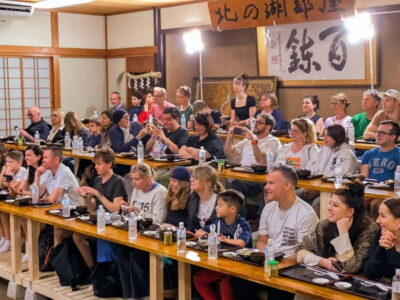
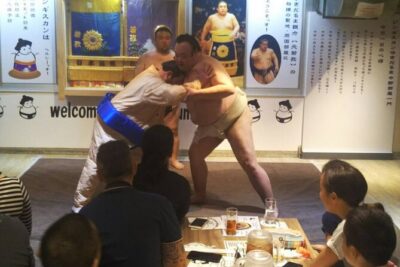
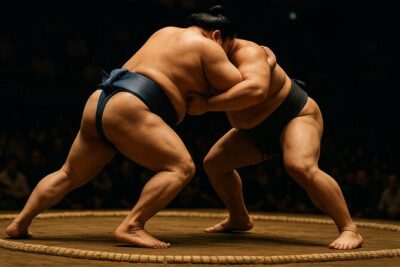
Tokyo Shinjuku Sumo Show & Experience with Photo
Read our review →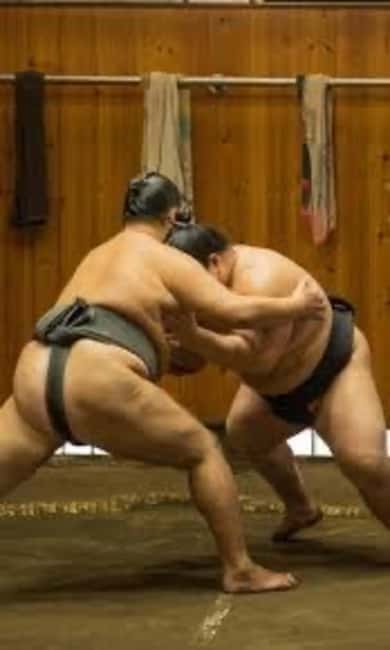
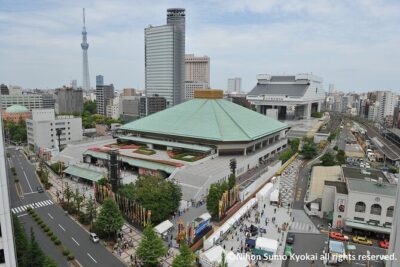
Tokyo Grand Sumo Tournament Viewing Tour with Tickets
Read our review →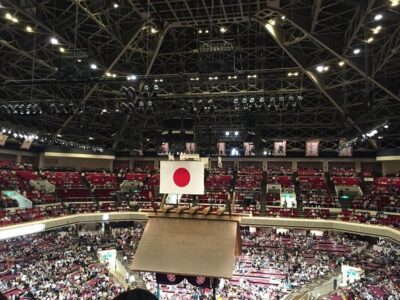

Luxury Sumo Show Experience & Japanese cuisine & Drink
Read our review →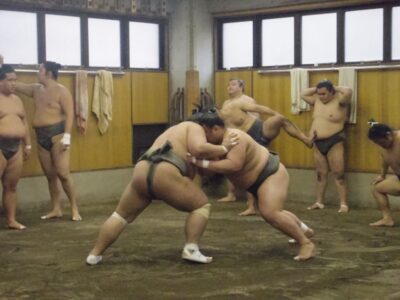
Browse the lists this tour appears in