
Review · SUMO EXPERIENCES IN TOKYO
Sumo Training Watching Experience in Tokyo
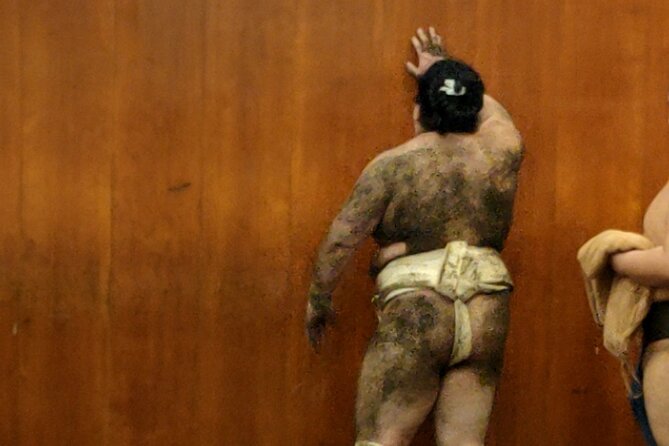
Real sumo training is the heart of this experience. You sit close to active wrestlers as they stretch, build strength, repeat basic moves, and work through match-style practice. This is a serious morning at a working stable, not a staged show for tourists.
I like the small group of up to eight and the close view of the practice area. I also like the clear visual explanations from guide Alisa, which help you follow the rituals and techniques even if you know little about sumo. The main drawback is the strict etiquette: you sit on the floor, stay quiet, arrive on time, and cannot eat or drink inside.
Key points before you book
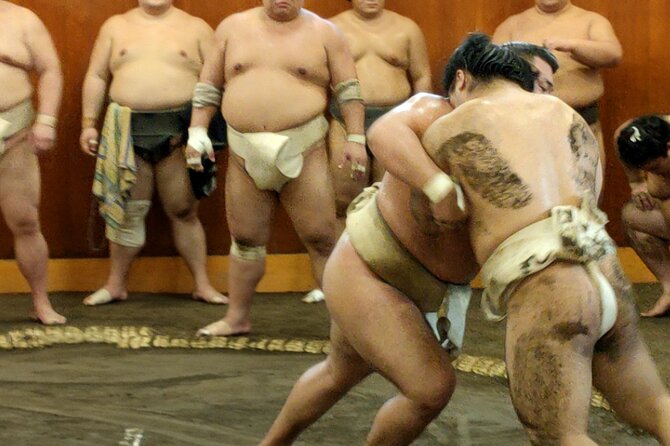
- Watch real wrestlers train: This is a working practice session with active sumo wrestlers, not a demonstration with performers.
- Sit close to the action: You use cushions on the floor, which puts you near the sound, force, and heat of the training.
- Arrive at 7:45 for the full program: Early arrivals can see stretching, strength work, basic training, match-style practice, and photos.
- A small group makes a difference: The maximum is eight people, so the viewing area feels personal rather than crowded.
- Prepare for strict rules: Keep silent, set your phone to silent mode, avoid revealing clothing, and do not bring food or drinks into the stable.
- Photos with wrestlers may be possible: This depends on the situation after training and is not guaranteed.
Why this is different from watching sumo at the Kokugikan
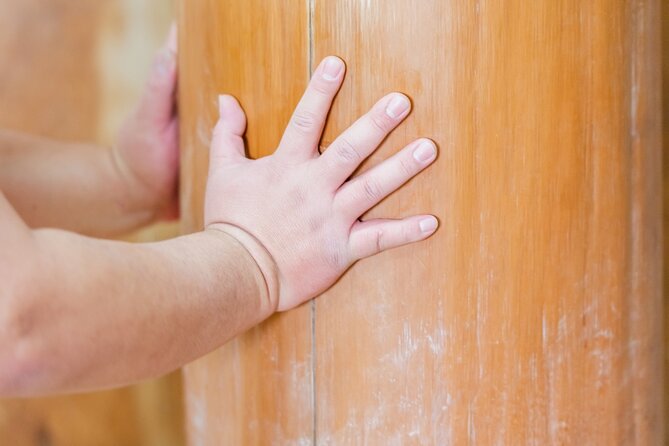
At a tournament, you see sumo from a seat in a large hall. Here, you watch practice at close range. That changes the experience completely. You hear the impact of bodies meeting, notice the repeated footwork, and see how much preparation goes into a bout before anyone enters a ring for a formal match.
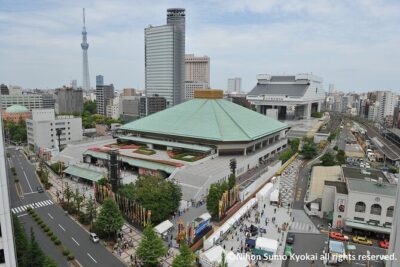
This is also not near the Kokugikan, Tokyo’s famous sumo arena. You meet near Ryogoku Station and walk roughly 7 to 10 minutes to the stable. One useful point is that the meeting location is not the JR station itself, so check the exact directions carefully before setting out.
Sumo carries religious and cultural meaning in Japan, and the stable is treated as a serious place of training. You are entering a private working environment, not a tourist attraction designed around constant conversation and camera flashes. That explains the quiet rules and the need to follow the guide closely.
I think this setting is especially useful if you want to understand sumo as a discipline rather than simply watch a match. The experience shows the work behind the sport: repeated exercises, physical conditioning, balance, timing, and controlled contact.
More Sumo Experiences in Tokyo
- Tokyo: Sumo Show and Dining Experience
★ 4.8 · 2,742 reviews - the SUMO show
★ 5.0 · 1,960 reviews - Tokyo Shinjuku Sumo Show & Experience with Photo
★ 5.0 · 1,750 reviews
Meeting Alisa near Ryogoku Station
The experience begins near Ryogoku Station. From there, you walk to the stable with Alisa of NicoTour Japan. The walk is short, but allow enough time to find the meeting point and arrive before the departure time. The group leaves on schedule and cannot wait for late arrivals.
This strict start matters because the training is already underway once the group enters. If you arrive at 7:45, you can take part in the full viewing program. If you arrive at 8:20, you generally begin with basic training, missing the opening stretching and strength work.
That difference is important. The program lasts about 2 hours and 20 minutes overall, but the time inside the stable varies. An early arrival can mean roughly 60 to 120 minutes of viewing. A later arrival may give you only 30 to 90 minutes.
The walk from the station is not difficult, but you should treat the meeting time as firm. This is not the kind of activity where you can arrive casually and catch up with the group later.
Stretching and strength work at 7:45
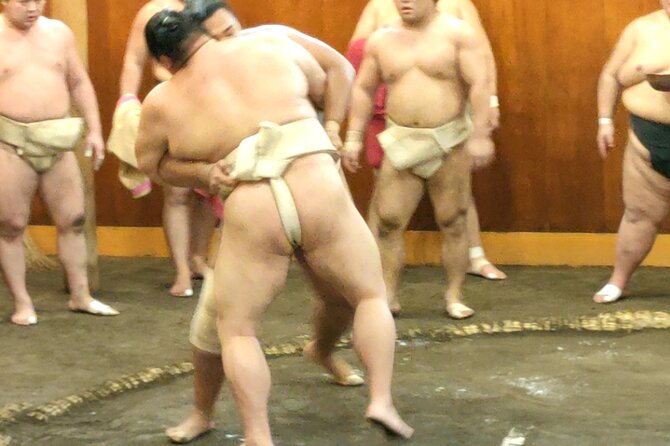
The first part of the session is stretching and strength training. These exercises give you a better sense of how much preparation comes before a sumo bout. The movements may look simple at first, but their repetition and intensity show the physical demands placed on the wrestlers.
Arriving early lets you see this opening stage. It also gives you time to settle into the quiet viewing style before the more forceful practice begins. The stable is not a place for running commentary or free conversation, so the first minutes help you adjust.
Alisa provides live explanations with original documents and visual materials. That support is useful because you may not know the names or purpose of each movement. Instead of guessing what you are seeing, you can follow the basic ideas behind the exercises and training sequence.
Keep your phone on silent. You can take photos, but you should use a silent camera setting. The point is to record the experience without breaking the concentration of the wrestlers or disturbing the stable.
Basic training and the sound of impact
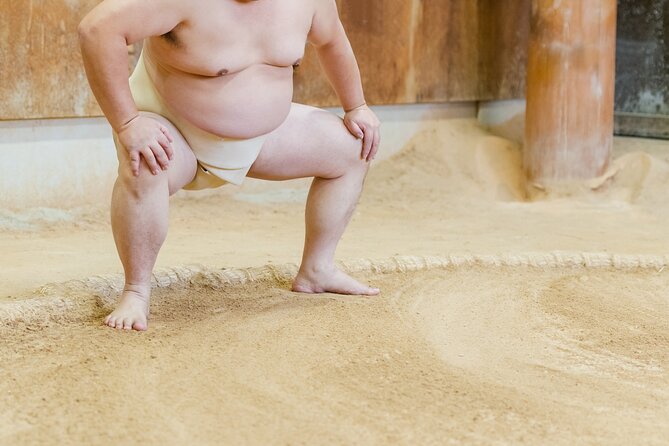
After the opening exercises comes basic training. This is where the physical nature of sumo becomes especially clear. You are close enough to hear the contact and feel the force of the practice in a way that a large arena cannot provide.
The viewing area is near the practice space, but you must remain quiet. Sumo training requires concentration, and the stable’s rules reflect that. You are there to observe, not to chat through the session or call out to the wrestlers.
Alisa’s explanations help connect the movements to the wider sport. Her visual documents are particularly useful for people who have never watched sumo closely. You can learn what to watch for without needing a long lecture in the middle of the practice.
I like this balance. The experience gives you context, but the wrestlers remain the focus. You are not pulled away from the training by a performance built for an audience.
Same city, a different fixture:
- Tokyo: Sumo Show and Experience in Shinjuku
★ 4.8 · 1,001 reviews - Tokyo Grand Sumo Tournament Viewing Tour with Tickets
★ 5.0 · 692 reviews - Tokyo Sumo Wrestling Tournament Experience
★ 5.0 · 660 reviews - Tokyo:Luxury Sumo Show Experience & Japanese cuisine & Drink
★ 4.7 · 577 reviews
Match-style practice at close range
The later part of the program includes match-style training. This is likely to be the most exciting section for many people because you see wrestlers test their technique against one another. It is still practice, not a tournament bout, but the effort is real.
Close viewing makes small details easier to notice. You may find yourself watching balance, foot placement, posture, and the way each wrestler reacts to pressure. The force of a bout is not only in the final push. It is also in the preparation, the timing, and the ability to keep control.
The setting can feel intense because you are not separated from the action by a distant seat. That closeness is the main reason to choose this experience over a general introduction to sumo. It also means you must respect the rules more carefully.
Do not expect the group to talk freely during this part. The format is observation first, with explanations added by the guide when appropriate. If you want a lively, interactive show, this may feel restrained. If you want to see serious training as it happens, the quiet is part of the value.
Photos after training
After the practice, you might be able to take photos with the wrestlers. This opportunity depends on the situation at the stable, so it should not be treated as a guaranteed part of the schedule.
The listed end time may not include extra time for photos. One practical account noted that the experience ended around 10 a.m., while the photo period was separate. Plan your morning with some flexibility if taking a photo is important to you.
Use a silent camera setting from the start, not only at the end. The same courtesy applies during photos. Follow Alisa’s instructions, keep the process brief, and do not assume every wrestler will be available.
This closing moment can add a personal touch, but the training itself is the main event. I would book this for the practice session, then regard a photo as a possible bonus.
Floor cushions, silence, and stable etiquette
You sit directly on cushions on the floor rather than on chairs. This Japanese-style seating is a major practical point. If you have bad knees or a bad back, or if you are pregnant, think carefully before booking.
The same applies to children. The minimum age is six, but age alone does not guarantee that a child will manage the setting. Even children older than eight who cannot sit still are not allowed to participate. The stable is quiet and formal, and a restless child can disrupt the training.
The rules are simple:
- Do not eat or drink inside the stable.
- Keep your phone on silent.
- Use a silent camera setting.
- Do not talk during the tour unless the guide indicates otherwise.
- Avoid revealing clothing.
- Cancel if you have a cold or infectious illness.
- Arrive on time, because the group will not wait.
If someone ignores these rules, they may be asked to go outside temporarily. That is not meant to be harsh. The stable is a working space, and the wrestlers need to focus.
Is the $84.70 price fair?
The price is $84.70 per person. That is not a bargain for a two-hour activity, but the value depends on how much you care about seeing real sumo practice from close range.
You are paying for access to a setting that is not easy to visit independently, a small group capped at eight people, a guide, live explanations, and the chance to watch active wrestlers train. You are not paying for a long sightseeing route, a meal, or a staged cultural performance.
For a first-time visitor who wants a clear introduction to sumo, the price can make sense. The guide removes uncertainty about where to go and how to behave, while the visual material helps you understand what is happening. The small group also matters when the viewing area is limited.
The value is weaker if you mainly want a photo opportunity or a casual show. Photos with wrestlers are only possible after training and are not promised. The session is also short compared with a full day of sightseeing, and much of it takes place in silence on the floor.
I would compare this cost with the price of a tournament ticket, but they are different experiences. A match gives you the formal spectacle. This tour gives you access to the daily work behind it.
Who should book this experience?
I would recommend it to adults and older children who can sit quietly, follow rules, and appreciate a serious cultural setting. It suits people who want a close look at Japanese sport, physical training, and tradition rather than a loud entertainment show.
It is also a good choice if you are curious about sumo but cannot visit during one of Tokyo’s tournament periods. Sumo matches are held only at certain times, and training camps can affect when a stable is available. The date is therefore subject to the stable’s schedule, and date requests are not accepted.
You may want to skip it if you need chair seating, dislike strict schedules, or want a highly interactive activity. You should also avoid booking if you are unwell, since anyone with a cold or infectious disease is asked to cancel.
The small group is a strong point for anyone who prefers a focused experience. With no more than eight people, you are less likely to feel lost in a crowd, and the guide can explain what you are seeing without competing with a large tour group.
Booking and cancellation details
Confirmation is sent within 48 hours of booking, subject to availability. The activity is near public transportation, begins and ends at the meeting point, and uses a mobile ticket.
Free cancellation is available up to 24 hours before the start time for a full refund. Cancellations or changes made less than 24 hours before the start are not accepted, and the amount paid is not refunded.
Book ahead if this is a priority. The experience is booked, on average, 77 days in advance, and stable access depends on a limited schedule.
Should you book this sumo training visit?
Book it if you want the real working side of sumo: close viewing, strong physical contact, quiet observation, and useful explanations from Alisa. The chance to watch training inside a stable is unusual, and the small group keeps the experience personal.
Skip it if you want a relaxed show with flexible arrival, ordinary chairs, food, or constant conversation. This experience asks you to behave like a respectful observer.
For the right visitor, $84.70 buys more than a view of wrestlers. It gives you a short look at the discipline behind Japan’s national sport, in a setting most people cannot simply enter on their own.
FAQ
Where does the sumo training experience begin?
You meet near Ryogoku Station at 1-chōme-4-29 Yokoami, Sumida City, Tokyo 130-0015. From the meeting point, you walk about 7 to 10 minutes to the sumo stable.
How long does the experience last?
The overall activity takes about 2 hours and 20 minutes. Time inside the stable varies from about 60 to 120 minutes for early arrivals, or 30 to 90 minutes for those who arrive later.
What happens if I arrive at 8:20?
You generally begin with the basic training section rather than the full program. To see stretching and strength training as well, arrive at the 7:45 meeting time.
What does the training program include?
The program includes stretching and strength training, basic training, match-style training, and possible photos with wrestlers afterward.
Can I take photos inside the stable?
Yes, photos are allowed, but your phone must be on silent and you should use a silent camera setting. Photos with wrestlers may be possible after training but are not guaranteed.
Do I sit on chairs during the training?
No. You sit directly on cushions on the floor in the Japanese style. People with bad knees or backs, and pregnant women, should consider this before booking.
Can children participate?
Children must be at least six years old. Children who cannot sit still are not allowed to participate, including children over eight.
Can I eat or drink inside the stable?
No. Eating and drinking are not allowed inside the stable.
What is the cancellation policy?
You can cancel up to 24 hours before the local start time for a full refund. Cancellations or changes made less than 24 hours before the start are not accepted or refunded.
Just added for fans in Tokyo
- Tokyo: Grand Sumo Morning Training Tour★ 4.9 · 12 reviews
- Kickboxing & Body Training with EX-Pro Fighter★ 5.0 · 4 reviews
- Tokyo: Visit Sumo Morning Practice with English Guide★ 4.5 · 22 reviews
- Tokyo Sumo Experience with Live Show & Audience Challenge★ 5.0 · 38 reviews
- Tokyo Shinjuku Sumo Show and Experience with Drinks and Photo★ 4.0 · 21 reviews
- Tokyo Sumo History Tour with Chanko Nabe Lunch★ 5.0 · 3 reviews
- 【SUMO FESTIVAL】Tokyo Ginza: Sumo Show & Photo Experience★ 4.5 · 41 reviews
- Tokyo Walking Tour : Sumo, Sushi, Tea, Temples and Tokyo Tower★ 5.0 · 21 reviews
Sumo Experiences in Tokyo, compared.
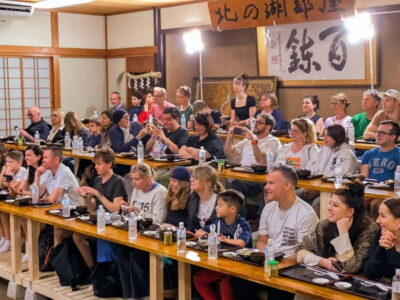
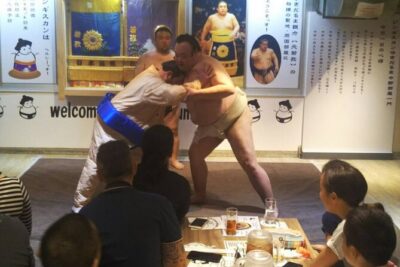
Tokyo Shinjuku Sumo Show & Experience with Photo
Read our review →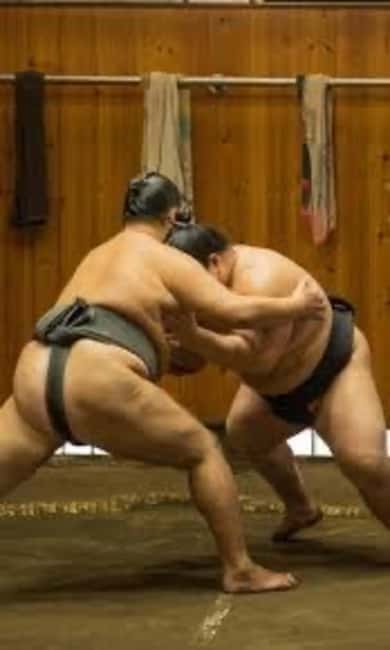
Tokyo Grand Sumo Tournament Viewing Tour with Tickets
Read our review →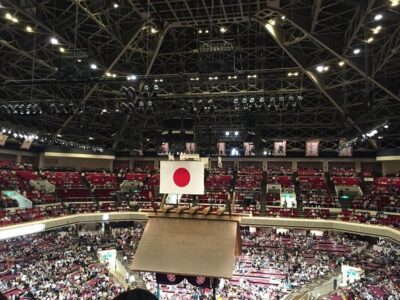

Luxury Sumo Show Experience & Japanese cuisine & Drink
Read our review →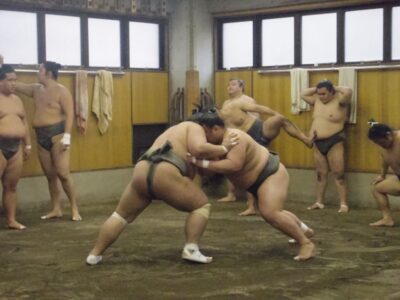
Browse the lists this tour appears in