
Review · SUMO EXPERIENCES IN TOKYO
Tokyo: Sumo Experience and Chanko Nabe Lunch
Tokyo’s sumo experience puts you close enough to feel the force of the sport without asking you to sit through a full tournament. Former professional wrestlers explain the rituals, show how bouts work, and may invite you into the ring for a playful match. The session is in English, so you can follow the meaning behind the bows, stamps, and ring ceremonies rather than simply watch a large man push another large man around.
I especially like the small-group format and the chance to ask questions directly. I also like that the lunch is part of the experience, with chanko nabe prepared by the wrestlers themselves. The main consideration is that this is a friendly demonstration, not a serious training session or official sumo match, and the location changes by day.
Key points at a glance
- Former professionals lead the session: Learn about sumo from retired wrestlers who can explain both the sport and its customs.
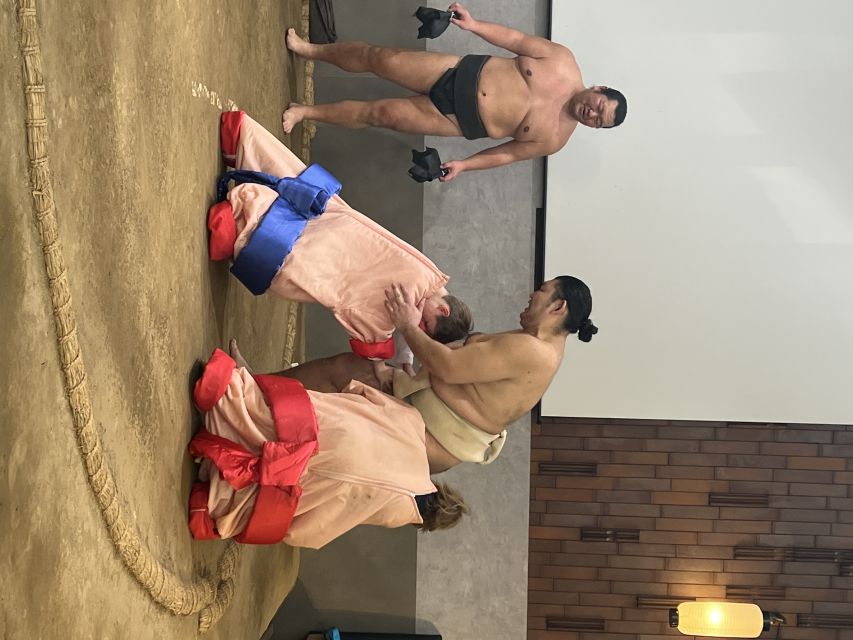
- Playful bouts are part of the fun: Some participants may put on a sumo costume and enter the ring for a demonstration.
- Chanko nabe is made by the wrestlers: The hot pot lunch gives the activity a clear food and culture component.
- English explanations throughout: You will learn the rules, rituals, training, and competition side of sumo without a language barrier.
- Different Tokyo neighborhoods by day: The Monday session takes place in Asakusa, while Thursday sessions are held in Ryogoku.
- Two hours, $95 per person: Lunch, admission, and participation are included, but transportation to and from the meeting point is not.
Why this sumo session works for first-time visitors
Sumo can be hard to read if you have never seen it before. A bout may last only seconds, and the ceremony before it can seem longer and more mysterious than the contest itself. This experience gives you the missing background.
The former wrestlers explain what the wrestlers are doing and why. You learn about the sport’s long traditions, the ring rituals, the training side, and the basic competition rules. That context matters. Once you understand what to watch for, the ceremony feels less like a delay and more like part of the contest.
The tone is light. The wrestlers use humor and audience participation to keep the presentation moving. That makes this a useful choice for families and mixed-age groups, especially if some people in your party know nothing about sumo.
It also gives you a rare look at the sport from close range. You are not watching from the distant seats of a stadium. You are meeting retired professionals, seeing their strength in demonstrations, and having time for photographs afterward.
More Sumo Experiences in Tokyo
- Tokyo: Sumo Show and Dining Experience
★ 4.8 · 2,742 reviews - the SUMO show
★ 5.0 · 1,960 reviews - Tokyo Shinjuku Sumo Show & Experience with Photo
★ 5.0 · 1,750 reviews
What happens during the two-hour visit
The activity begins promptly at 1:00 PM. The door opens at 12:40 PM, so plan to arrive before the start rather than cutting it close. Your exact meeting point and map arrive with the voucher, and there is no hotel pickup or drop-off.
Once inside, you receive an English introduction to sumo. The session covers the sport’s traditions and rituals, along with the practical side of training and competition. The explanations are designed for people who are new to Japan and new to sumo, not for specialists who already know the rules.
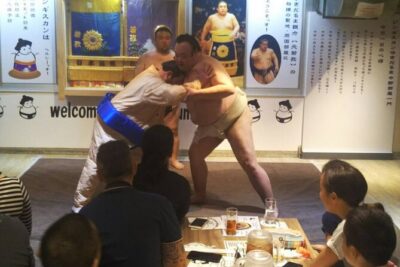
The demonstrations are the heart of the program. You see how the wrestlers use their bodies, how a bout is approached, and how much strength is involved. The presentation is educational, but it is also deliberately funny and social. That balance keeps the event from feeling like a lecture.
At some point, audience members may be invited to take part. A participant might put on a sumo wrestler costume and help with the demonstration. Not everyone can be selected, so do not book this expecting a guaranteed turn in the ring. Still, the format allows people who want to try a playful bout to volunteer, and children have been included in the fun.
The bout is not a serious fight. The retired wrestlers control the action and keep it safe and entertaining. Even a strong adult can expect to discover how difficult it is to move a trained sumo wrestler. That contrast makes the demonstration memorable without turning it into a risky physical challenge.
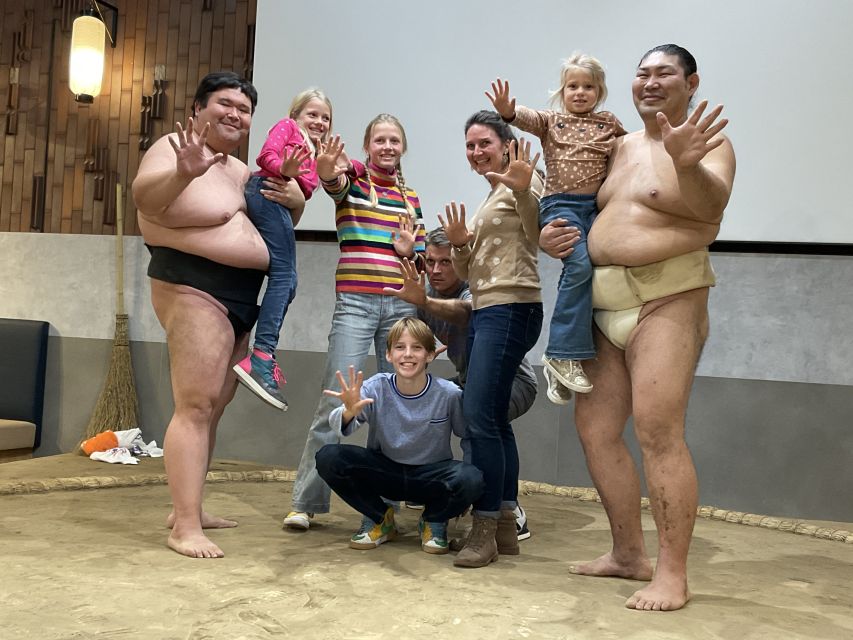
The session leaves time for photographs with the wrestlers. If you are celebrating a birthday or marking a special trip, this is one of the better parts of the experience because the interaction is personal rather than a quick photo taken from a distance.
The ring and the rituals make more sense here
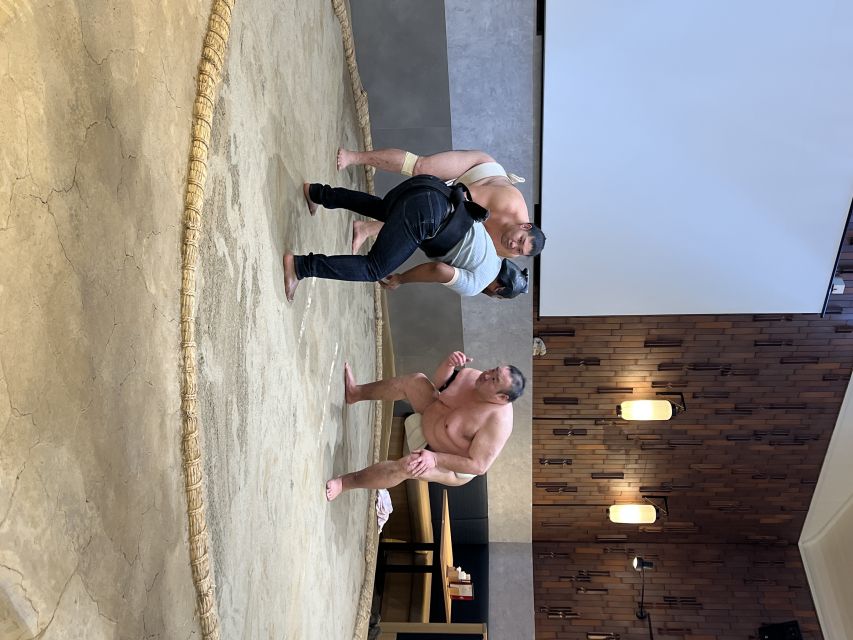
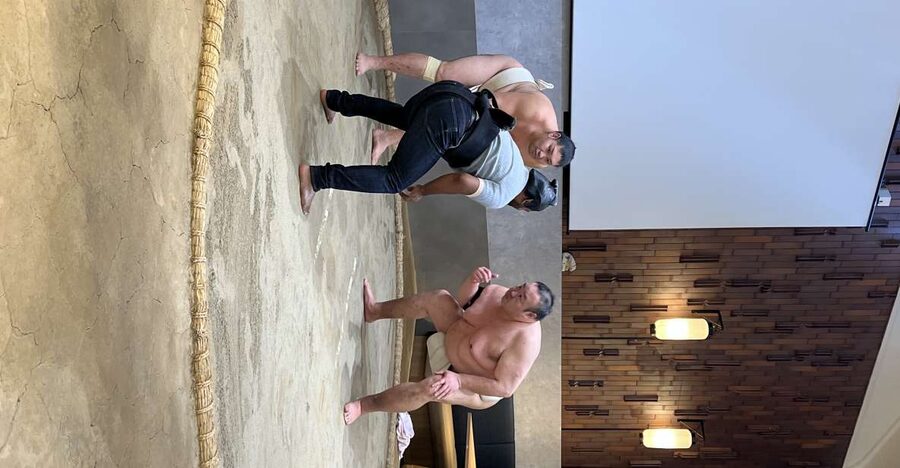
The ring is not just a platform for pushing. Sumo has a formal structure, and the ceremony carries meaning. The wrestlers show you enough of that world to make a later tournament visit more rewarding.
You will hear about the rituals that take place before the bout and see how the wrestlers prepare themselves. The explanations help you understand why movements that look theatrical to a first-time viewer are treated with such care.
This is also where the former wrestlers add value. A standard sightseeing talk can explain what happens, but a retired professional can demonstrate the physical side. You get a better feel for balance, timing, stance, and power when the person explaining it has actually competed.
The experience does not pretend to recreate a full professional tournament. It is a cultural lesson with a live demonstration and a meal. I see that as a strength for most people visiting Tokyo for a short stay, but serious sumo fans may want to pair it with a visit to an official tournament or training-related activity if one fits their schedule.
Chanko nabe gives the visit a satisfying finish
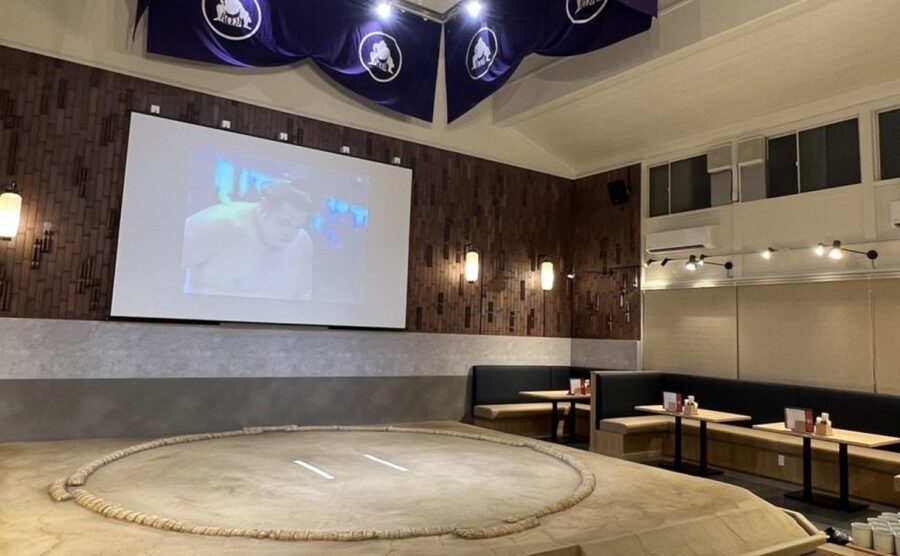
After the presentation, you sit down for chanko nabe, the hot pot associated with sumo wrestlers. The wrestlers prepare it themselves, which gives the meal a direct link to the sport rather than treating lunch as an unrelated add-on.
Chanko nabe is known as a hearty dish intended to provide stamina. It is served hot and shared from a pot, making it a natural meal after the lively demonstration. The meal is described as plentiful and delicious, and some sessions include a more complete lunch service with dessert or drinks.
You should tell the operator when booking if you need a vegetarian or Halal meal. The request must be made in advance, at least two days before the participation date. Do not wait until you arrive, since the kitchen needs time to prepare an alternative.
The lunch also slows the pace of the visit. That is useful because the first part is active and full of information. You get time to eat, talk, and take in the experience without being pushed straight out the door.
If you are seeking a highly formal Japanese meal, this may not be the right choice. The appeal here is the connection between the food and the wrestlers, along with the chance to eat in the same setting as the demonstration. Think cultural lunch with entertainment, not a quiet restaurant meal.
Same city, a different fixture:
- Tokyo: Sumo Show and Experience in Shinjuku
★ 4.8 · 1,001 reviews - Tokyo Grand Sumo Tournament Viewing Tour with Tickets
★ 5.0 · 692 reviews - Tokyo Sumo Wrestling Tournament Experience
★ 5.0 · 660 reviews - Tokyo:Luxury Sumo Show Experience & Japanese cuisine & Drink
★ 4.7 · 577 reviews
Asakusa on Monday, Ryogoku on Thursday
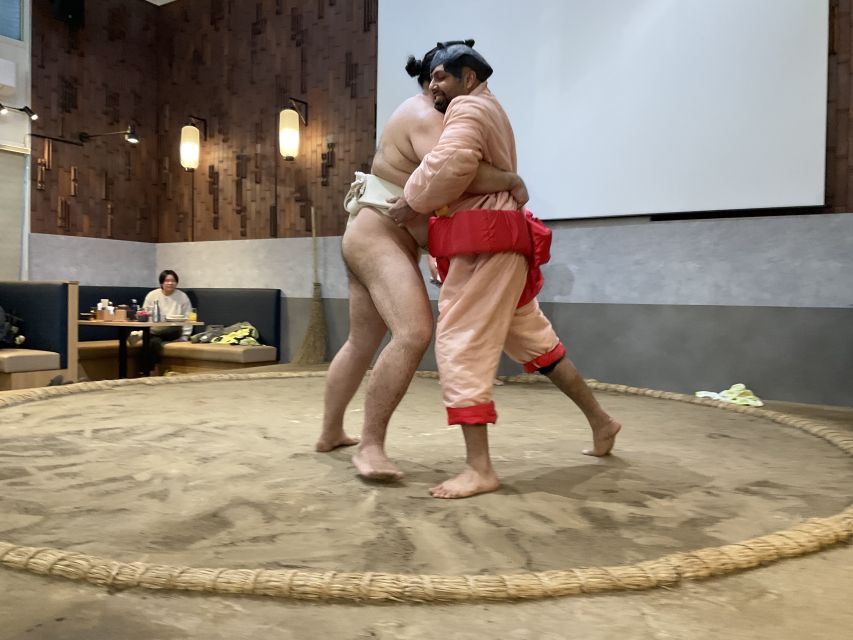
The location depends on the day. Monday sessions take place in Asakusa, while Thursday sessions are held in Ryogoku. Both are useful Tokyo bases, but the change matters when you plan your day.
Asakusa is known for its traditional sights and is easy to combine with temple visits and older Tokyo streets. If you are already sightseeing there on Monday, this sumo session can fit naturally into your schedule.
Ryogoku has the strongest direct connection with sumo culture. A Thursday session there can pair well with a day focused on sumo and the eastern side of Tokyo. Check the voucher carefully for the exact meeting point because the activity does not include transportation or a guide to collect you from your hotel.
The exact address is sent with a map, rather than being stated in the basic activity details. Give yourself extra time to find the venue, especially if you are unfamiliar with Tokyo’s train stations and exits. Arriving before the 1:00 PM start is important because the activity begins on time.
Small group, but not necessarily a private lesson
The advertised group limit is six participants, which is a major advantage if you want direct contact with the wrestlers. A small group makes it easier to hear the English explanations, ask questions, and get a turn during the interactive section.
At the same time, the room may be arranged with several tables, giving the event more of a hosted lunch-show feel than a private coaching session. That is not a problem for most people, but it is worth knowing if you expect an exclusive appointment with one wrestler.
The wrestlers are the main reason this format works. The tone is friendly and approachable, and the presentation allows plenty of interaction. You are not simply watching a scripted show from a fixed seat.
The English is intended for an international audience. The explanations cover the sport clearly, and the humor helps bridge cultural gaps. If you have children, expect them to understand the basic idea even if they do not remember every detail about the rules.
Who will enjoy this experience most
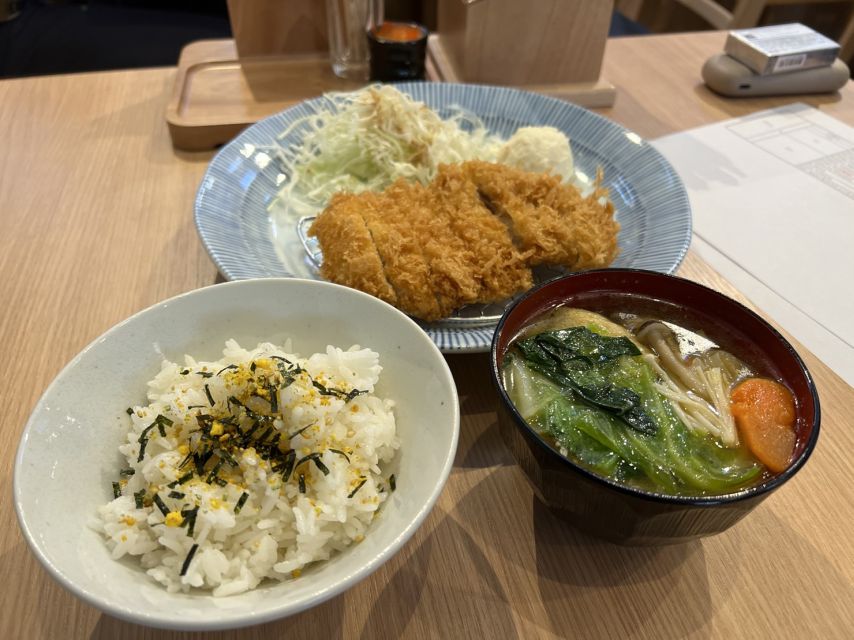
I would recommend this to first-time visitors to Japan who want one activity that combines sport, food, history, and personal contact. You do not need prior sumo knowledge, and you do not need to be physically fit to enjoy it.
Families are a particularly good match. The playful demonstrations, costume, photos, and chance to see a child or adult try the ring give the session a broad appeal. Children may remember the wrestling more clearly than the cultural explanation, but they still get an approachable introduction to a major Japanese tradition.
It also suits couples and small groups looking for something different from temples, shopping, and observation decks. The birthday surprise described by one participant is a good example of how the event can work as a special occasion activity.
You should think twice if you dislike audience participation or do not want any chance of being asked to take part. Participation is voluntary, and not everyone is chosen, but the event is built around interaction. It is not a passive theater performance.
Likewise, skip it if you want to watch authentic competitive sumo between active wrestlers. The people leading the event are former professionals, and the bouts are playful demonstrations. The value is in access, explanation, humor, and food.
Is $95 a fair price?
At $95 per person, the price is not cheap for a two-hour activity. But the fee includes admission, the full presentation, participation, and lunch, so you are paying for several parts at once.
A regular meal alone would not give you the demonstrations, the English instruction, or the chance to meet former professionals. A sports show alone would not include a meal prepared by the athletes. The combination makes the price reasonable for visitors who want a planned cultural activity rather than another restaurant stop.
The value is strongest if you use the educational side. Take time to ask questions, watch the rituals closely, and pay attention to the explanation of training and competition. If you only want a quick photo with a large wrestler, the cost will feel high.
The small group and direct contact also help justify the fee. You are not simply sitting in a large arena with hundreds of people. You get a closer look and a more personal introduction to sumo.
Practical details before you book
The session lasts two hours and begins at 1:00 PM. Check availability for the exact starting time when booking, then arrive before the door opens at 12:40 PM.
The meeting point is supplied with your voucher and map. There is no pickup or drop-off, so plan your own route. The activity ends back at the meeting point.
The experience is wheelchair accessible. If you need a vegetarian or Halal lunch, note it in your reservation or contact the operator by email at least two days ahead.
Cancellation is free up to 10 days before the activity for a full refund. That is useful if your Tokyo schedule is still changing, but the deadline is early, so mark it when you book.
Should you book this sumo experience?
Book it if you want a friendly, accessible introduction to sumo with real former professionals, a playful chance to enter the ring, and a hot chanko nabe lunch. It is especially good for families, first-time visitors, and anyone who wants more context than a photograph outside a sumo venue can provide.
Do not book it expecting a tournament, a guaranteed bout, or a private lesson. The interaction is voluntary, the demonstrations are playful, and the setting may feel more like a small hosted event than a quiet meal.
For most visitors, the mix is the point. You learn why sumo matters, see its rituals explained in English, feel the strength of the wrestlers at close range, and finish with the food associated with their lives. At $95, it is a worthwhile splurge if that combination fits your Tokyo plans.
FAQ
Where does the sumo experience take place?
The Monday session takes place in Asakusa. The Thursday session takes place in Ryogoku. Your voucher includes a map showing the exact meeting point.
How long does the activity last?
The experience lasts two hours.
What time does the activity start?
The activity starts at 1:00 PM and begins on time. The door opens at 12:40 PM, so you should arrive before the start.
Is the experience conducted in English?
Yes. The instructor language is English, and the former wrestlers explain the sport, rituals, training, and competition in English.
Is lunch included?
Yes. Lunch is included, along with the entrance fee and participation fee. The meal is chanko nabe, a Japanese-style hot pot prepared by the wrestlers.
Can I request a vegetarian or Halal meal?
Yes. Note the requirement in your reservation or contact the operator by email at least two days before the activity date.
Will I definitely wrestle a sumo wrestler?
No. Some audience members may be selected to wear a sumo wrestler costume and help with the demonstration, but participation is not guaranteed for everyone.
Is the activity wheelchair accessible?
Yes. The activity is listed as wheelchair accessible.
More Lunch Experiences in Tokyo
- Tokyo: Family Sumo Workshop & Live Wrestling Show with Lunch
★ 4.9 · 99 reviews - Tokyo Sumo Culture Tour with Chanko-Nabe Lunch in Ryogoku
★ 5.0 · 26 reviews - Ryogoku: Sumo Town Guided Walking Tour with Lunch
★ 4.8 · 9 reviews - The SUMO Show & Experience with Hot pot lunch
★ 5.0 · 4 reviews
Just added for fans in Tokyo
- Tokyo: Grand Sumo Morning Training Tour★ 4.9 · 12 reviews
- Sumo Training Watching Experience in Tokyo★ 4.5 · 8 reviews
- Kickboxing & Body Training with EX-Pro Fighter★ 5.0 · 4 reviews
- Tokyo: Visit Sumo Morning Practice with English Guide★ 4.5 · 22 reviews
- Tokyo Sumo Experience with Live Show & Audience Challenge★ 5.0 · 38 reviews
- Tokyo Shinjuku Sumo Show and Experience with Drinks and Photo★ 4.0 · 21 reviews
- Tokyo Sumo History Tour with Chanko Nabe Lunch★ 5.0 · 3 reviews
- 【SUMO FESTIVAL】Tokyo Ginza: Sumo Show & Photo Experience★ 4.5 · 41 reviews
Sumo Experiences in Tokyo, compared.
Tokyo Shinjuku Sumo Show & Experience with Photo
Read our review →
Tokyo Grand Sumo Tournament Viewing Tour with Tickets
Read our review →
Luxury Sumo Show Experience & Japanese cuisine & Drink
Read our review →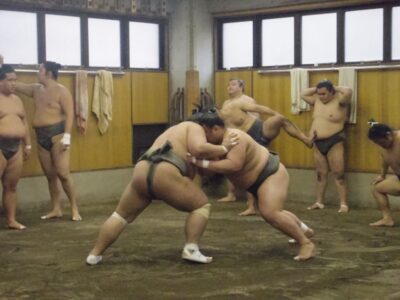
Browse the lists this tour appears in