
Review · SUMO EXPERIENCES IN TOKYO
Tokyo: Family Sumo Workshop & Live Wrestling Show with Lunch
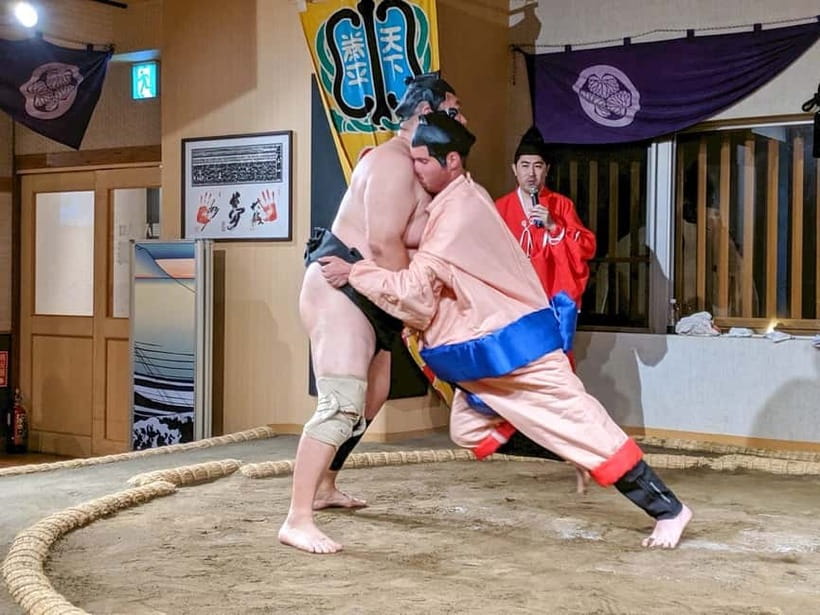
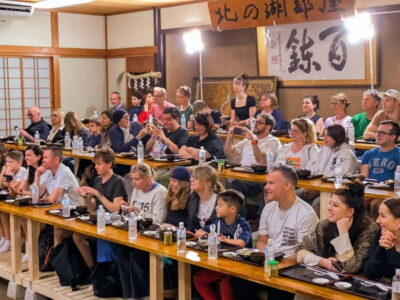
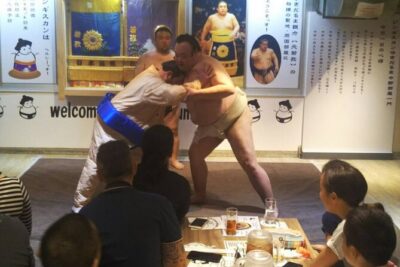
The best part of this Ryogoku sumo workshop is the short distance between you and the action. You watch former professionals collide at full speed, then step onto the dohyo yourself for footwork drills or a comic but safe showdown in a padded suit. I especially like the clear English commentary and the way children can take part without needing to understand every rule.
I also like the hearty chanko hotpot and the chance to eat the kind of meal linked to sumo training. The main consideration is that this is an entertainment-focused introduction, not a formal sumo tournament or a serious athletic class. Ring drills are optional, and the event may not run if too few people book, so check the arrangement before building your day around it.
Key points at a glance
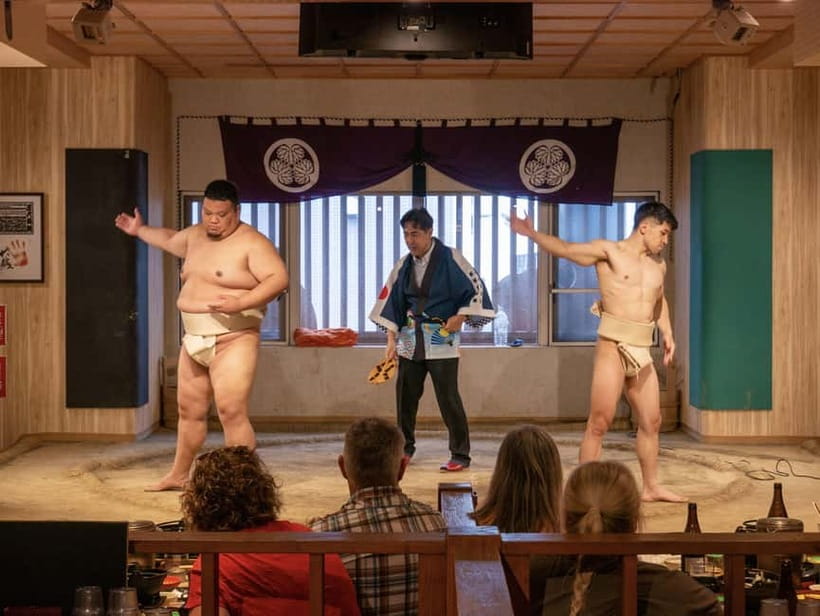
- Former pros in a small ring: Watch wrestlers train and perform far closer than you would in a large stadium.
- Three beginner drills: Try shiko leg stomps, teppo pushing practice, and suri-ashi sliding steps.
- Optional padded-suit bout: Volunteer to challenge a wrestler, or stay seated and film the action.
- English guidance with humor: Hosts including Alyssa, Alisa, Ko, and Rio have helped explain the rules and traditions.
- Chanko lunch included: Expect a generous mini hotpot, with dietary requests arranged at least 48 hours ahead.
- Family-friendly timing: The 105-minute experience gives you a lively cultural activity without consuming half your day.
Why Ryogoku is the right place for a sumo introduction
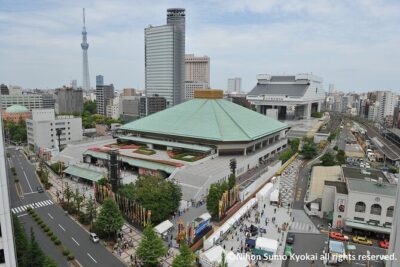
Ryogoku is the spiritual home of sumo in Tokyo. This is the district to choose when you want more than a quick photo of a wrestler in costume or a distant glimpse from stadium seating.
The workshop places you inside a venue with a dohyo, the raised ring where sumo bouts happen. You remove your shoes before entering the ring, and that small rule matters. It gives the activity a sense of ceremony, even when the next moment involves a child trying to push a padded wrestler out of the circle.
You meet former professional wrestlers rather than actors playing a part. They demonstrate the sport’s strength, balance, and ritual in a way that makes the basic movements easy to understand. The experience is still designed for families and first-time visitors, so you do not need prior knowledge or special fitness.
The setting also helps you understand why sumo is more than two large men crashing into each other. The salt throwing, leg stomping, footwork, and pushing exercises all have a place in the sport’s ritual and training. An English-speaking host explains those details as the wrestlers demonstrate them.
More Sumo Experiences in Tokyo
- Tokyo: Sumo Show and Dining Experience
★ 4.8 · 2,742 reviews - the SUMO show
★ 5.0 · 1,960 reviews - Tokyo Shinjuku Sumo Show & Experience with Photo
★ 5.0 · 1,750 reviews
What happens in the first hour
The ring program lasts about 60 minutes. It begins with an introduction to sumo traditions and the wrestlers, then moves into a live exhibition.
Expect the demonstration to include quick movement, heavy impacts, and the sharp sound of hand strikes. The contrast is part of the appeal. Sumo wrestlers look slow only until they launch forward. In the ring, their balance and timing become as interesting as their size.
The host explains customs such as the salt toss and shiko, the high leg lift and stomp associated with sumo training. You also learn the basics of suri-ashi, the sliding walk used to keep the feet close to the ground. Teppo practice shows how wrestlers work on pushing power and body position.
I like this combination of action and explanation. A show with no context would be amusing for a few minutes, but the commentary gives you a reason to notice what is happening. Hosts named in participant feedback include Alyssa, Alisa, Ko, Rio, and other English-speaking presenters. The exact host can vary, but the format is built around simple explanations, questions, and humor.
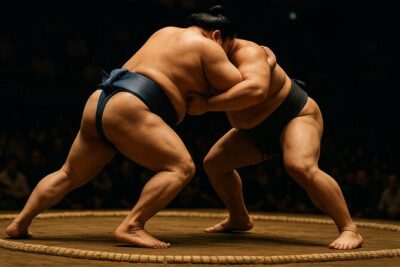
The full-speed bout is the main visual event. It is not a tournament match, and you should not book this expecting the formal scale or silence of a major competition. Instead, you get a controlled exhibition that brings the movement right in front of you.
Trying shiko, teppo, and suri-ashi
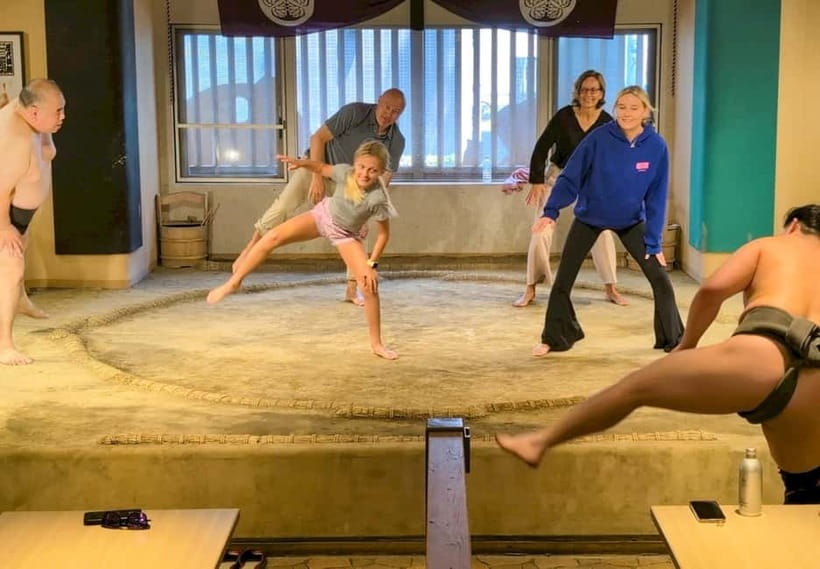
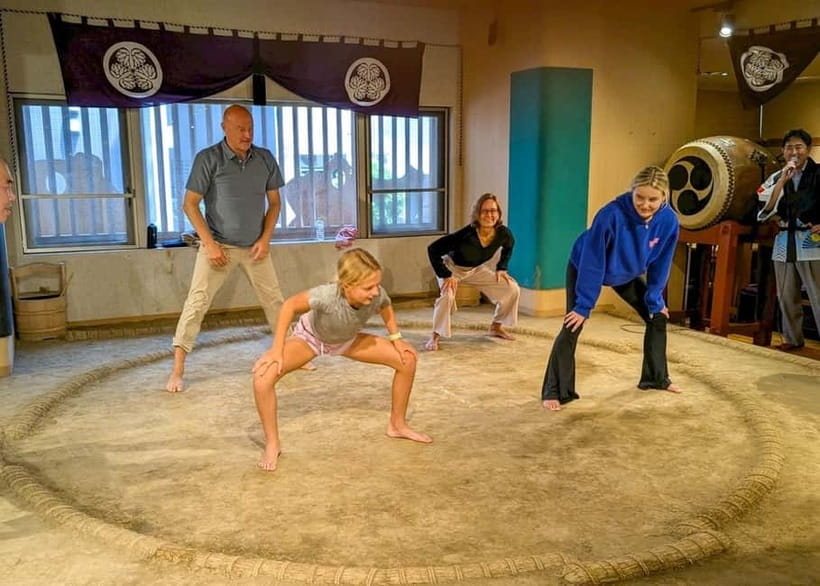
After watching the professionals, you can try some of the same basic movements. The exercises are simple in concept but surprisingly hard to perform well.
Shiko asks you to raise one leg and stamp it down with control. It looks easy when a trained wrestler does it. You may find that balance and flexibility are the real challenge. The movement also gives the host a chance to explain its ritual meaning, including the idea of driving away evil spirits.
Teppo is linked to pushing practice. You work on using your legs and body rather than relying only on your arms. This is useful because it changes your view of sumo. The sport is not just about being the heaviest person in the ring. Position, force, and timing matter.
Suri-ashi is the most approachable drill for many people. You slide your feet instead of lifting them, keeping your body stable. It is a good activity for children and adults who do not want to wrestle.
You should wear loose sports clothing. Shoes come off before you enter the ring, and volunteer challengers need to be in good health. Nobody has to participate. You can remain seated, watch the drills, and record the action with your phone.
The padded-suit challenge
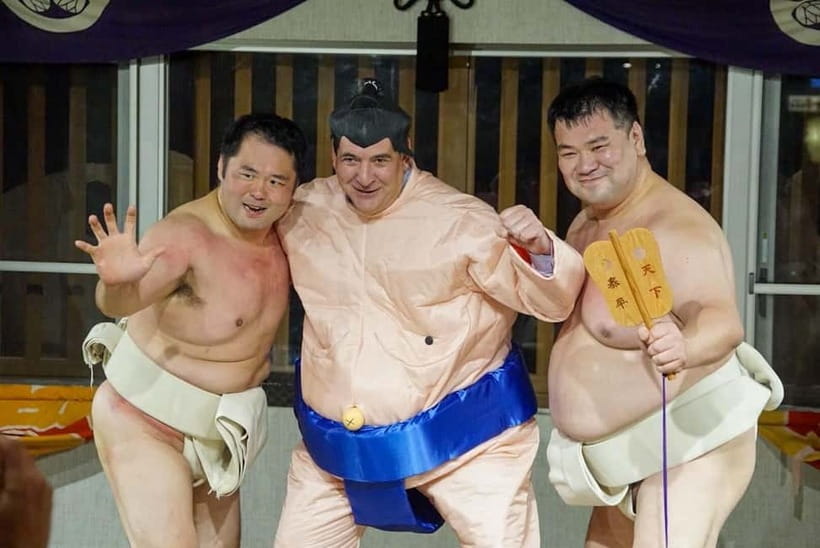
The optional wrestling bout is the part most families remember. A volunteer puts on a padded sumo suit and tries to move a wrestler out of the ring. The suit keeps the contest safe and adds a layer of comedy, since you are trying to maneuver a bulky costume while facing someone who has trained for this sport.
The challenge is not presented as a fair athletic match. A former professional wrestler, potentially weighing around 160 kilograms, has a clear advantage. That is exactly why the activity works. You get a safe way to feel the force of a sumo push without pretending you can defeat a trained professional.
Adults may join, and children can have fun watching or taking part when appropriate. A parent can also film the moment. If you prefer not to be the center of attention, you still get good entertainment from watching other volunteers make their attempt.
The group format means the number of people who enter the ring can depend on time and participation. Several participants may get a turn, and the hosts aim to include people who want to join. Still, I would not book this solely on the promise of a personal bout. Think of the match as an optional bonus, not a guaranteed private wrestling session.
Same city, a different fixture:
- Tokyo: Sumo Show and Experience in Shinjuku
★ 4.8 · 1,001 reviews - Tokyo Grand Sumo Tournament Viewing Tour with Tickets
★ 5.0 · 692 reviews - Tokyo Sumo Wrestling Tournament Experience
★ 5.0 · 660 reviews - Tokyo:Luxury Sumo Show Experience & Japanese cuisine & Drink
★ 4.7 · 577 reviews
Meeting the wrestlers after the show
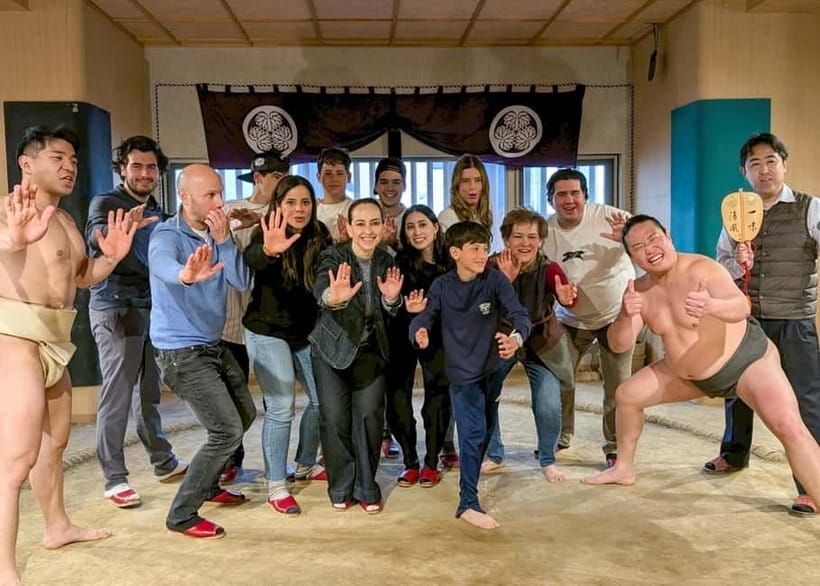
Photo time follows the ring activities. You can take pictures with the wrestlers using your own phone or camera, which keeps the process easy and personal.
This is one of the better features for families. A stadium match gives you atmosphere, but it rarely gives you a relaxed photo with the athletes. Here, you can preserve a picture of the children in the ring or standing beside the wrestlers after the demonstration.
The wrestlers are part of the entertainment, so expect a friendly and playful mood rather than a formal lecture. There is also time for questions. You can ask about training, rules, and the life of a wrestler, while the host translates or explains in English.
The tone is deliberately light. Hosts and wrestlers use humor to keep younger children interested, but the explanations still cover useful basics. If you want a scholarly lesson on sumo law or the professional ranking system, this will feel too brief. If you want a clear first look at the sport, the balance is right.
Chanko hotpot is more than a meal
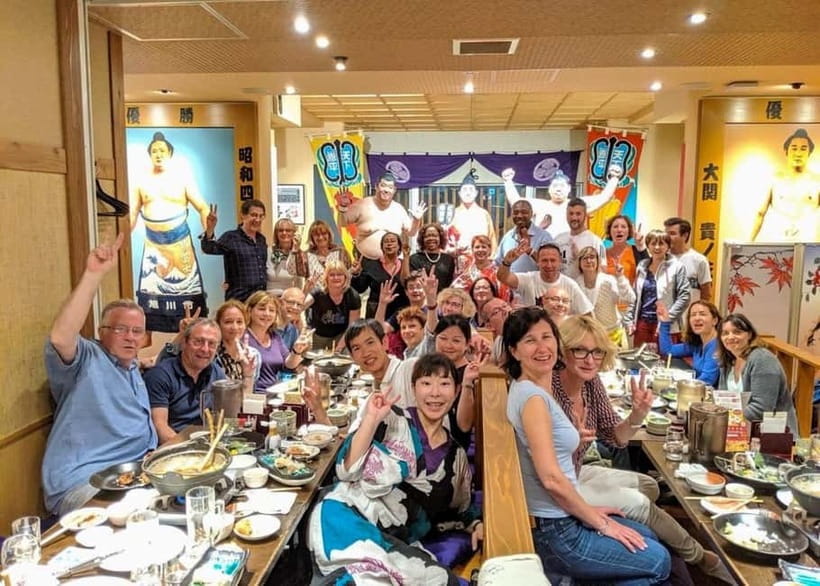
After the ring program, you sit down for a mini serving of chanko nabe, the hotpot associated with sumo wrestlers. The dish contains meat and vegetables in a warm broth, and it is meant to reflect the filling, protein-rich meals that support a wrestler’s training.
The meal is often described as generous, so I would avoid eating a large lunch beforehand. The food is not just a token snack added to the ticket. It gives the host a chance to explain how wrestlers eat and why chanko is part of their daily routine.
The atmosphere changes at this point. The noisy show gives way to a shared meal, and you can talk with your group about the drills and bouts. For families, this pause is useful. Younger children can settle down, and adults get time to ask follow-up questions.
Vegetarian, vegan, and other allergy-friendly options can be arranged, but you need to request them at least 48 hours in advance. Halal requests require careful attention. The kitchen can avoid pork and alcohol, but the meal does not have official Halal certification and cannot guarantee protection from cross-contamination when strict avoidance is required.
That limitation is important. Do not wait until you arrive to explain a serious allergy or dietary restriction. Send the request ahead of time and understand exactly what the provider can and cannot accommodate.
Is $60 a good value?
At $60 per person, this is a strong value if you want a compact activity that combines a cultural explanation, live entertainment, hands-on participation, photos, and lunch.
The price becomes especially reasonable when you compare it with booking separate activities. You are not paying only for a demonstration. The ticket includes admission, access to the ring, former professional wrestlers, an English-speaking host, training equipment, the padded suit, photo time, and chanko hotpot.
It is also efficient. The total duration is 105 minutes, so you can fit it into a morning or afternoon alongside other Tokyo plans. That matters in a city where long transfers can quickly consume your sightseeing time.
The value is lower if you want to watch an official tournament. This is an exhibition and workshop, not a ticket to a professional competition. It also may not suit someone who dislikes audience participation or staged humor. You can sit out the drills, but the atmosphere still depends on a lively group setting.
The high rating reflects the qualities that matter most here: funny wrestlers, clear hosts, delicious food, and the chance to enter the ring. I would regard the meal and participation as the strongest parts of the price, not simply the wrestling demonstration alone.
Who should book this experience?
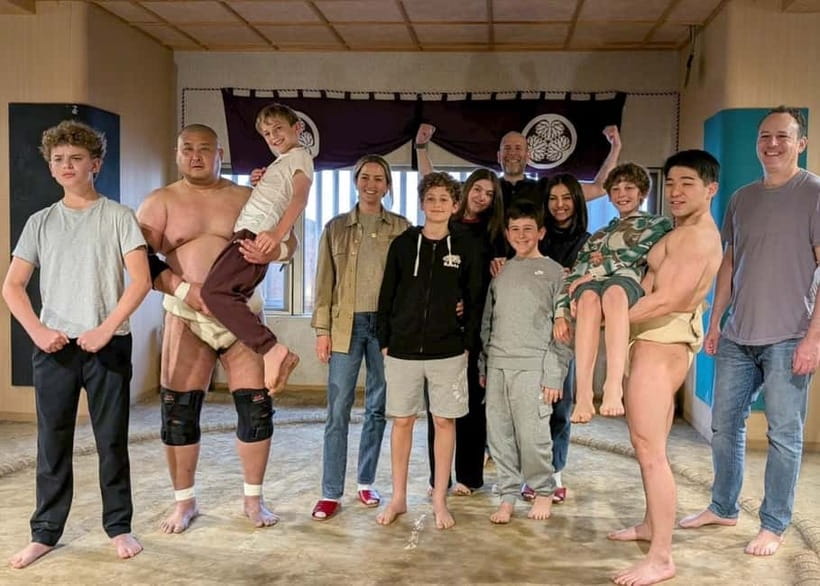
I would recommend it most strongly to families with school-age children, first-time visitors to Japan, and adults who want a cultural activity with a physical element.
It works well for mixed-age groups because everyone can choose a level of participation. One person can try the drills, another can film, and a child can watch from the side before deciding to join. The format has also worked for solo participants, since the group setting creates easy chances to laugh and ask questions.
The activity suits you if you enjoy:
- Learning through demonstration rather than a long museum lecture
- Meeting performers and asking questions
- Trying a simple sport or cultural practice
- Taking photos with the people leading the experience
- Eating a filling Japanese meal
- Keeping an afternoon or morning free for other Tokyo sights
It may not suit you if you need a quiet, highly formal presentation. The wrestlers are encouraged to be funny and theatrical, and the padded-suit bout is intentionally playful. You should also think twice if you have a serious mobility, health, or dietary concern that the provider cannot safely address.
The workshop is wheelchair accessible, but ring drills require removing shoes and stepping into the dohyo. If you need specific assistance, confirm the details before booking.
Practical details that make the morning easier
The meeting point is in front of the face-in-hole photo board at the shop. Look for the guide holding a smartphone displaying AlvaJapan. You are asked to wait outside and not enter the store before 10:00 AM.
Do not plan to arrive casually late. One participant was helped after taking the wrong train, but you should treat that as good fortune rather than a policy. If you get lost, the instructions provide a WhatsApp contact for help.
Transport to the venue is not included, and alcohol and extra menu items cost more. The guide language is English. You can cancel up to 24 hours ahead for a full refund, and a reserve-now, pay-later option is available.
The event has a minimum participation requirement. If you need certainty that it will run, choose the private reservation option rather than relying on a small shared departure.
For children, pay close attention to the age rules. Children under five do not receive meals under the child rate, so book them at the adult rate if they need lunch. Children aged six and older cannot use the child rate.
Should you book the Ryogoku sumo workshop?
Book it if you want a fun, well-paced introduction to sumo that lets you get close to the wrestlers instead of watching from a distant seat. The mix of drills, live bouts, photo time, and chanko hotpot gives you several reasons to feel the $60 is well spent.
I would make this a priority for families and anyone who has never seen sumo up close. Just keep your expectations straight: this is a lively cultural show with optional participation, not an official tournament or serious wrestling lesson. Arrange dietary needs early, wear loose clothes, and do not count on the padded-suit bout as a guaranteed private match.
FAQ
How long does the sumo workshop last?
The experience lasts 105 minutes. The ring program takes about 60 minutes, followed by photo time and a chanko hotpot meal.
What is included in the $60 price?
The price includes admission, ring access, former professional wrestlers, English and Japanese commentary, interactive training, padded-suit challenge equipment, photo time, and a mini chanko hotpot lunch.
Do I have to wrestle a sumo wrestler?
No. Ring drills and the wrestling challenge are optional. You can remain seated, watch, and film the activities.
Is the workshop suitable for children?
Yes. The activity is designed for families, and children can watch or take part in suitable activities. Children under five do not receive meals under the child rate, while children aged six and older cannot be booked at the child rate.
Are vegetarian or vegan meals available?
Yes, vegetarian, vegan, and allergy-friendly meals can be arranged if requested at least 48 hours before the experience.
Can the meal be made Halal?
The kitchen can avoid pork and alcohol, but the meal does not have official Halal certification. Strict cross-contamination avoidance cannot be guaranteed.
Where do I meet the guide?
Meet in front of the face-in-hole photo board at the shop. The guide will hold a smartphone displaying AlvaJapan. You should wait outside and not enter before 10:00 AM.
Is the activity wheelchair accessible?
Yes, the experience is listed as wheelchair accessible. Ring drills are optional, and you should remove your shoes before entering the dohyo.
More Workshops in Tokyo
- Sumo Wrestling Tournament A-Class Seats & ExpertGuide | Tokyo MAY
★ 5.0 · 14 reviews - Bangkok: Muay Thai Boxing Introduction Class for Beginners
★ 4.8 · 394 reviews - Patong: Muay Thai Boxing Class at Rachai Muay Thai Gym
★ 4.9 · 197 reviews - Bangkok: Muay Thai Boxing Class for Beginners
★ 5.0 · 189 reviews
More Lunch Experiences in Tokyo
- Tokyo: Sumo Experience and Chanko Nabe Lunch
★ 4.8 · 257 reviews - Tokyo Sumo Culture Tour with Chanko-Nabe Lunch in Ryogoku
★ 5.0 · 26 reviews - Ryogoku: Sumo Town Guided Walking Tour with Lunch
★ 4.8 · 9 reviews - The SUMO Show & Experience with Hot pot lunch
★ 5.0 · 4 reviews
Just added for fans in Tokyo
- Tokyo: Grand Sumo Morning Training Tour★ 4.9 · 12 reviews
- Sumo Training Watching Experience in Tokyo★ 4.5 · 8 reviews
- Kickboxing & Body Training with EX-Pro Fighter★ 5.0 · 4 reviews
- Tokyo: Visit Sumo Morning Practice with English Guide★ 4.5 · 22 reviews
- Tokyo Sumo Experience with Live Show & Audience Challenge★ 5.0 · 38 reviews
- Tokyo Sumo History Tour with Chanko Nabe Lunch★ 5.0 · 3 reviews
- 【SUMO FESTIVAL】Tokyo Ginza: Sumo Show & Photo Experience★ 4.5 · 41 reviews
- Tokyo Shinjuku Sumo Show and Experience with Drinks and Photo★ 4.0 · 21 reviews
Sumo Experiences in Tokyo, compared.
Tokyo Shinjuku Sumo Show & Experience with Photo
Read our review →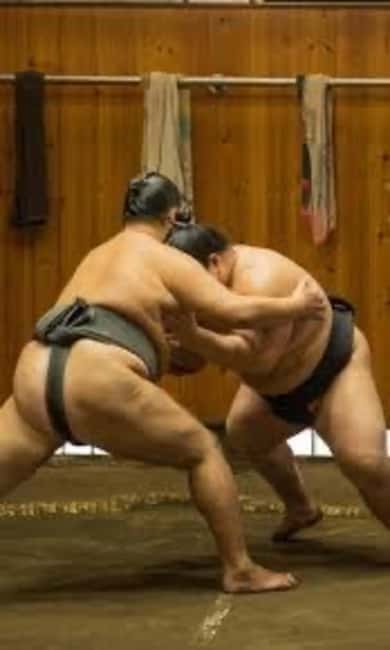
Tokyo Grand Sumo Tournament Viewing Tour with Tickets
Read our review →
Luxury Sumo Show Experience & Japanese cuisine & Drink
Read our review →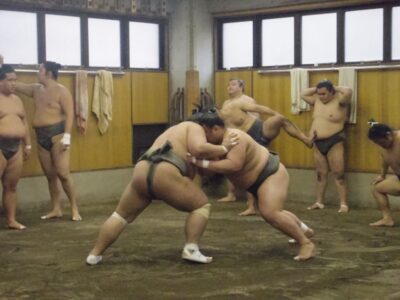
Browse the lists this tour appears in